
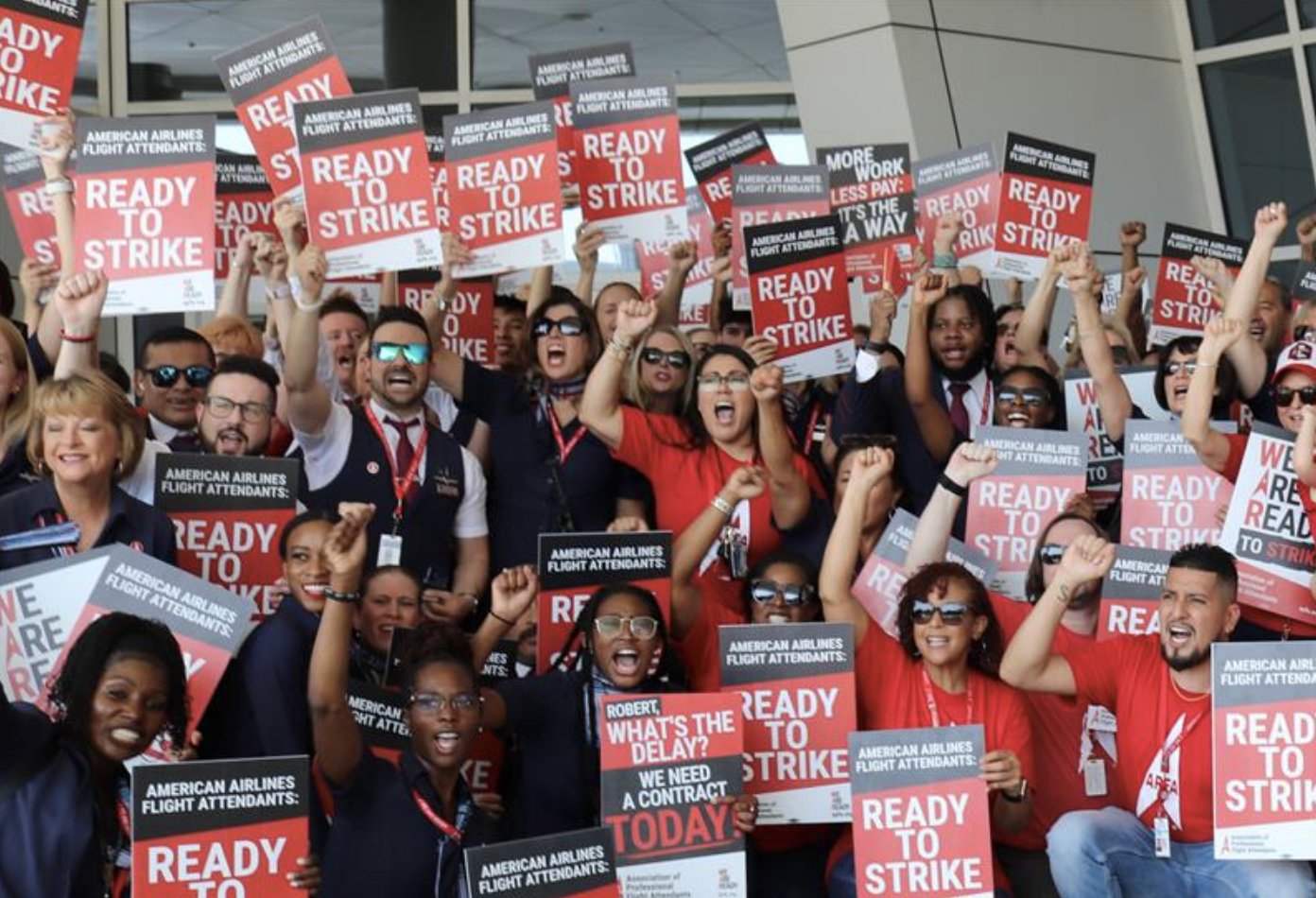
Warning: Global Aviation Strike Set for March 7th
A 24-hour total walkout by air traffic controllers and ground staff is about to hit major hubs—here is your backup plan.
On March 7, 2026, the global aviation network is scheduled to hit a wall. The Air Traffic Trade Association has officially confirmed a 24-hour total walkout following a winter of escalating industrial action, and if you have a ticket for that Tuesday, you are likely looking at a "no-fly" day.
This isn't just a minor localized disruption or a single airline dealing with a pilot shortage. When air traffic controllers (ATC) and ground staff walk out simultaneously, the system doesn't just slow down; it freezes. I’ve sat on the tarmac at Madrid-Barajas for four hours during a "work-to-rule" strike, and that was just a slowdown. A 24-hour total stoppage is a different beast entirely. It creates a vacuum that takes three to four days to stabilize.
If you are booked to fly on March 7th—or even the evening of the 6th or the morning of the 8th—here is exactly how you need to handle the next few days to avoid being the person sleeping on a yoga mat in Terminal 5.
The ATC Domino Effect: Why Your Flight is at Risk
Most travelers assume that if their airline isn't on strike, they’re safe. That is a dangerous misconception. Air Traffic Control is the "invisible" infrastructure. If French or German controllers go on strike, it doesn’t just affect flights landing in Paris or Frankfurt; it affects every single aircraft that needs to pass through their airspace.
A flight from London (LHR) to Dubai (DXB) might normally cruise over European sectors that are suddenly "dark." To stay in the air, pilots have to reroute around the closed airspace, adding hours of fuel burn and flight time. Eventually, the schedule collapses because the plane that was supposed to take you from New York to London is still stuck in Istanbul because it couldn't get across the continent.
The 48-Hour "Get Out of Jail Free" Card
Airlines are currently playing a game of chicken with the unions, hoping the strike is called off at the last minute. They won't officially cancel your flight until they absolutely have to, because they don't want to trigger mass refund requirements prematurely.
However, once a strike is "confirmed" by a major trade association—as this March 7th action has been—most major carriers (Lufthansa, Air France, BA, Delta) will eventually issue a "travel waiver."
Do not wait for the cancellation email. If you have a non-negotiable meeting or a wedding, call your airline now and ask if they have opened the rebooking window for the strike period. Often, you can move your flight to March 5th or March 9th for free before the rest of the 200 passengers on your plane realize what’s happening. I’ve found that the best way to do this is via the airline’s app or their Twitter/X DM support, which is often faster than the hellscape of a 4-hour phone queue.
The Counterintuitive Strategy: The "Ghost Route"
Here is something most travelers don't consider: during a massive strike, the "hub-and-spoke" model is your worst enemy. If you are flying through a major hub like Heathrow, Charles de Gaulle, or Amsterdam Schiphol, you are walking into a bottleneck. Even if your flight departs, the ground staff strike means your bags might not.
If you absolutely must travel on the 7th, look for "point-to-point" flights on budget carriers that use secondary airports. Airports like London Stansted (STN), Brussels South Charleroi (CRL), or New York Stewart (SWF) often have different staffing contracts and less "overflight" congestion than the major hubs.
Another pro tip: If you're in Europe, the rail network is your escape hatch. A six-hour TGV or ICE train ride is infinitely better than a 12-hour wait in a terminal for a flight that might never come. If you're planning to pivot to a car, book it now. On strike days, renting a car becomes nearly impossible as everyone has the same "brilliant" idea at 9:00 AM on the day of the strike.
The Insurance Trap: Read the Fine Print Today
I cannot stress this enough: if you don’t have travel insurance yet, buying it today might already be too late for this specific strike. Most policies have a "known event" clause. Once a strike is announced in the news (like the February 23rd announcement for this March 7th strike), it becomes a "foreseen event," and new policies won't cover claims related to it.
If you already have a policy, check for the words "Industrial Action." You want to see if they cover "Travel Abandonment"—this is the sweet spot that allows you to cancel the whole trip and get your money back if the delay exceeds 12 or 24 hours. If you're traveling for a high-stakes event, Travel Insurance is the only thing that will keep you from losing thousands on non-refundable hotels while you're stuck at home.
Technical Survival: Tracking the "Inbound"
The biggest mistake people make during a strike is looking at their own flight status. Your flight status is a lie until about two hours before departure.
Instead, use a tool like PingWing to track the inbound flight. Every plane has a "tail number." If you are flying from JFK to LHR on the evening of the 7th, find out where that specific physical airplane is coming from earlier that day. If that plane is currently grounded in a strike zone like Berlin, it isn't magically appearing in New York to pick you up.
By tracking the physical aircraft rather than the flight number, you can see the cancellation coming three to five hours before the airline sends the automated text. This gives you a massive head start on the line at the service desk.
What to do if you get stranded at the airport
If the worst happens and you’re stuck at the gate when the "Cancelled" sign flashes:
- Double-team the problem: Get in the physical line at the service desk, but stay on the phone with the international customer service line (e.g., if you're in the US, call the airline's UK or German office via Skype—they often have shorter queues).
- Know your rights (EU261/UK261): If your flight is departing from the EU/UK or is on an EU/UK carrier, the airline is legally required to provide "duty of care." This means food vouchers and hotel accommodation. However, they do not have to pay cash compensation for "extraordinary circumstances" like an ATC strike. Don't waste your energy arguing for the €600 check; focus on getting the hotel voucher.
- The eSIM lifesaver: If you end up being rerouted through a country you didn't plan for—say, a 24-hour layover in Istanbul because that was the only way home—don't get hit with roaming charges while trying to rebook your life. I always keep a global eSIM ready on my phone for exactly these "plan B" scenarios.
The "Day After" Hangover
The strike might end at midnight on March 7th, but the chaos will peak on March 8th. This is known as "positioning." Planes will be in the wrong cities, and flight crews will have timed out of their legal working hours.
If you have the flexibility, the smartest move you can make right now is to move your travel to March 10th. By then, the "backlog" of frustrated passengers will have cleared, and the ATC sectors will be back to normal capacity.
Aviation is a fragile ecosystem. On March 7th, that ecosystem is taking a day off. Treat this news not as a suggestion to "wait and see," but as a directive to change your plans while you still have the leverage. I’ve seen enough "airport floor" photos to know that the person who acts ten days early is the only one who sleeps in their own bed.
Check your flight status, watch the inbound tail numbers on PingWing, and if you see red on the map—pivot. Fast.