
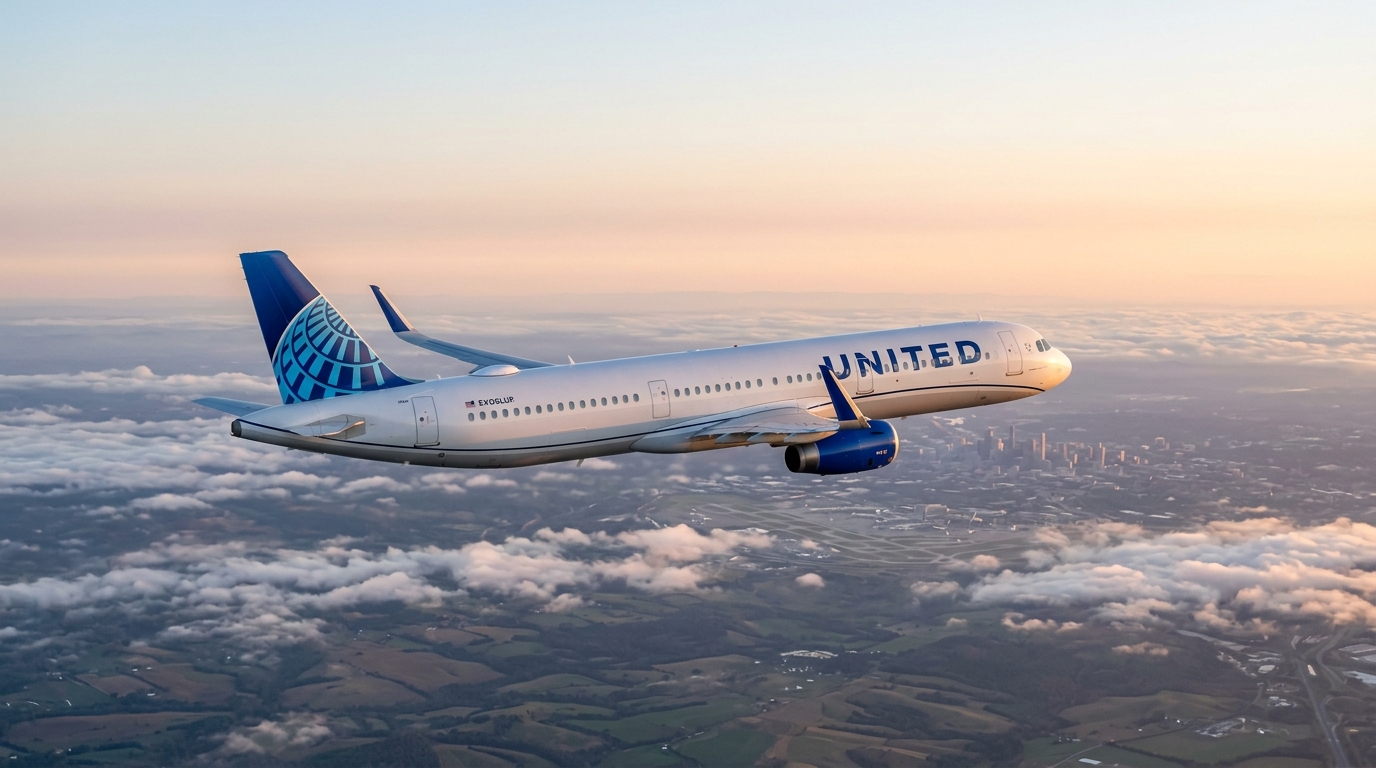
United’s Born to Explore XLR Hits the Skies Tomorrow: The Domestic Routes Getting the First Taste
United is debuting its brand-new A321XLR on domestic routes starting September 1st before taking it international—here is where to find it.
September 1st isn’t just another Tuesday on the aviation calendar. Tomorrow, a specific tail fin will lift off from Newark Liberty International (EWR), marking a shift in how we’ll be crossing the Atlantic for the next decade. United Airlines is finally throwing the doors open on its brand-new Airbus A321XLR—aptly branded "Born to Explore"—and while this plane is designed to conquer 11-hour hauls to places like Porto or Nice, you don’t need a passport to be among the first to sit in its pristine leather seats.
According to a report from Runway Girl on August 29, 2026, United is plying domestic routes with the A321XLR starting this September before the aircraft transitions to its intended international service in December. This is the "shakedown" phase. It’s when the airline tests the galleys, trains the crew on the new layout, and works out the kinks on short hops between major hubs. For the savvy traveler, it is a rare window to experience a long-haul, flagship cabin for the price of a domestic economy ticket.
The Domestic Hunting Grounds: Where to Find the XLR Tomorrow
United isn’t exactly shouting the tail numbers from the rooftops, but the schedule data doesn’t lie. For the month of September, the A321XLR is primarily slated to run "hub-to-hub" connectors. This allows the plane to return to a maintenance base every night while getting maximum cycles for the flight attendants.
If you’re looking to catch the XLR tomorrow or later this week, set your sights on these three corridors:
- Newark (EWR) to Chicago O’Hare (ORD): The classic business shuttle.
- Newark (EWR) to San Francisco (SFO): A transcontinental "lite" route.
- Chicago O’Hare (ORD) to Denver (DEN): Occasional afternoon rotations to keep the crews fresh.
The trick is looking for the equipment code. When you’re scrolling through the United app or searching for your next flight, keep an eye out for the "321X" or "32Q" designation. If you see a seat map in Business Class that features a 1-1 configuration—meaning every seat has direct aisle access—you’ve found the unicorn.
Why a Narrow-Body "Extra Long Range" Jet Matters to You
You might be thinking, “It’s a single-aisle plane. Why should I care?”
Historically, narrow-body planes (like the 737s or standard A320s) were the workhorses of the domestic skies—cramped, loud, and lacking the "wow" factor of a double-aisle 787 Dreamliner. The XLR changes the math. Because it is designed to fly for up to 11 hours, United has outfitted it with its "Signature Interior."
In the Polaris cabin, you’re getting a lie-flat suite that feels more like a private pod than an airplane seat. In Economy, the bins are larger (the "Airspace XL" bins), the LED lighting is designed to reduce jet lag, and the seatback screens are 4K. Even on a two-hour flight to Chicago, the difference in air quality and noise reduction compared to a twenty-year-old 757 is palpable.
The Counterintuitive Hack: The "Dead Leg" Upgrade
Here is something most travelers miss: during these domestic "familiarization" periods, United often doesn't sell the "Premium Plus" (Premium Economy) cabin as a separate class of service.
Instead, they frequently code those purple-cladded, extra-legroom seats as "Economy Plus." If you have United Premier status, or if you’re willing to pay the small upcharge for an Economy Plus seat, you might actually end up sitting in a hard product designed for an 8-hour flight to London. You get the footrest, the deep recline, and the extra width, all while the person five rows behind you is paying the same price for a standard coach seat.
Always check the seat map 24 hours before departure. If the seat map shows a 2-2-2 configuration in the middle of the plane that looks suspiciously spacious, jump on it.
How to Spot the XLR in the Wild (Using PingWing)
Because this is a brand-new airframe, tail numbers are your best friend. United’s first few XLRs are being delivered with specific registrations. You can plug these into the PingWing search bar to see exactly where the aircraft is at any given moment.
If you see a flight delayed at EWR, check the incoming aircraft's tail number. If it’s one of the new A321XLRs, the delay might actually be a blessing in disguise—it means you’re about to be one of the first humans to breathe that "new plane smell" at 35,000 feet.
Navigating the Hubs
If you find yourself on an XLR rotation through Newark, don't just sit at the gate. The Newark United Polaris Lounge is arguably one of the best in the country, but keep in mind that during this domestic "shakedown" phase, a domestic first-class ticket usually won't get you in. You’ll need to be on the actual international leg starting in December for that privilege.
However, if you are transiting through Denver, the new United Club Fly is a great spot to grab a quick espresso and a snack before boarding your XLR hop to Chicago.
The Shift to December: Going Global
Come December 2026, the party ends for domestic travelers. United will shift these planes to their "thin and long" routes. These are destinations that don't have enough demand for a massive 300-seat Boeing 777 but are too far for a standard jet.
Expect to see the XLR popping up on routes like:
- Washington Dulles (IAD) to Edinburgh (EDI)
- Newark (EWR) to Ponta Delgada (PDL)
- Newark (EWR) to Malaga (AGP)
If you’re planning one of these transatlantic hops once the XLR goes international, remember that your data needs will change. Instead of relying on expensive roaming or hunting for spotty airport Wi-Fi, you can grab a United States eSIM or a regional Europe pack to stay connected the second you touch down.
Is the XLR Actually Better than a Wide-Body?
There is a heated debate among frequent flyers: Would you rather fly a narrow-body A321XLR or a wide-body 767 across the ocean?
The wide-body feels more spacious because of the "vaulted" ceilings and the two aisles. You don't feel as "trapped." However, the A321XLR is a much younger aircraft. It features better humidity controls—meaning you won't wake up with that "sandpaper throat" feeling—and the engines are significantly quieter.
Personally, I’ll take a brand-new narrow-body over a thirty-year-old wide-body any day. The technology in the cockpit and the cabin air filtration systems have come a long way since the 1990s. Plus, boarding a plane with only 160 people is a dream compared to the 300-person cattle call of a Boeing 777.
What to Pack for the "Born to Explore" Experience
If you manage to snag a seat on tomorrow's inaugural domestic runs, remember that while the plane is new, the service is still domestic. You won't be getting the Saks Fifth Avenue bedding or the cooling gel pillows just yet.
- Bring your own USB-C cable: The XLR features high-wattage USB-C ports at every seat. You can actually charge a laptop from the seat power, which is a game-changer for those EWR-SFO transcontinental runs.
- Bluetooth Headphones: The new United Signature interior allows you to pair your AirPods or Bose directly to the seatback screen. No more fumbling with those flimsy two-prong adapters.
- The PingWing App: Keep the tracker open. New aircraft are notorious for last-minute equipment swaps. If the airline swaps your XLR for an old 737-800, you’ll want to know immediately so you can try to rebook or at least temper your expectations.
Final Thoughts
The arrival of the A321XLR is the beginning of the end for the "boring" domestic flight. As United integrates more of these jets into the fleet, the gap between "domestic" and "international" service quality will continue to shrink.
Tomorrow is the first step. If you’re at EWR, ORD, or SFO, keep your eyes on the tarmac for that "Born to Explore" livery. It’s a small plane with a very long reach, and for the next few months, it’s the best-kept secret in the American skies.
Don't wait until December to fly it when everyone else is clambering for a seat to Lisbon. Book a random Tuesday flight to Chicago, find that "321X" code, and enjoy the future of flight before it becomes the norm. The only thing worse than a long flight in a bad seat is knowing there was a better one just one gate over.