
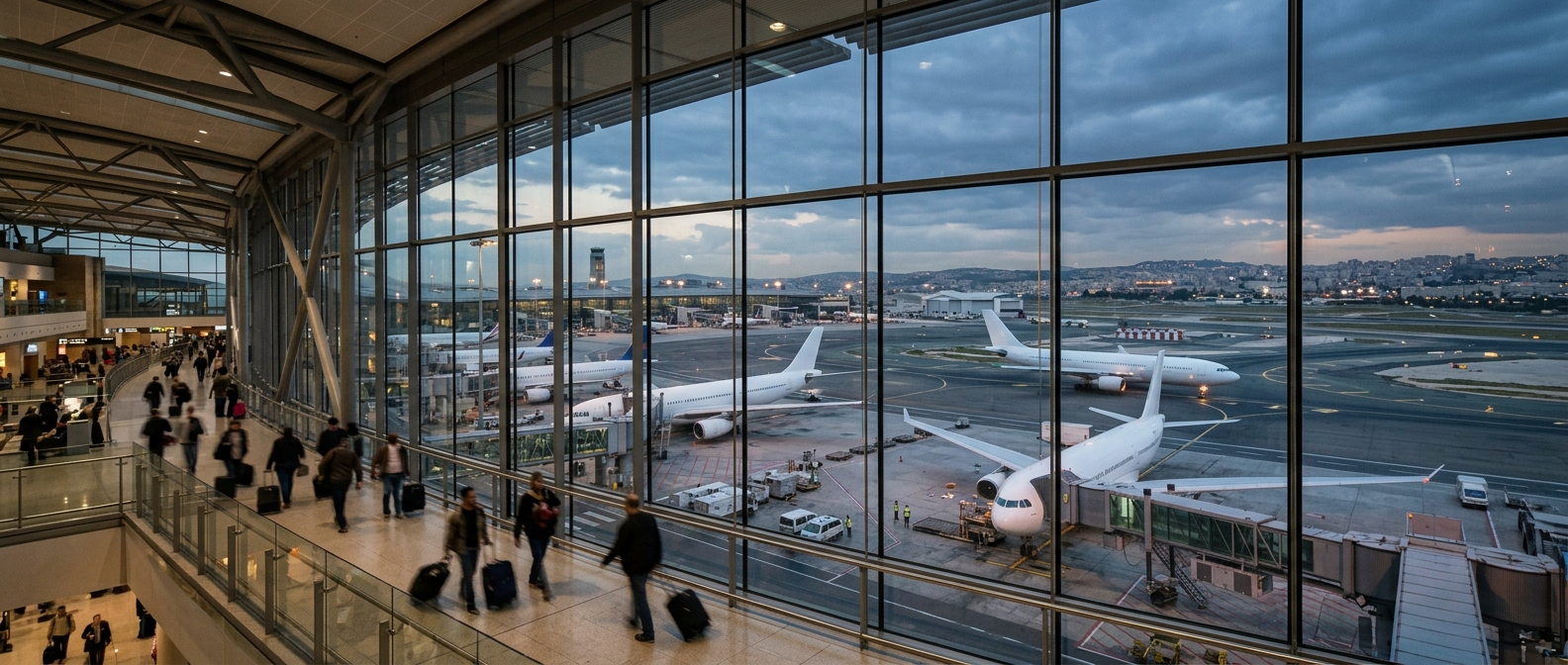
The Middle East Flight Blackout: Why Your Mediterranean Layover Just Got Rerouted
Major carriers have extended flight suspensions to regional hubs through late October, forcing thousands of travelers onto long-haul detours.
The Middle East Flight Blackout: Why Your Mediterranean Layover Just Got Rerouted
The flight path on your seatback screen just took a sharp, jagged turn over the Mediterranean. What used to be a straight shot from Frankfurt to the Gulf is now a sweeping detour over Egypt or a northern arc through Turkey. This isn’t a pilot’s whim; it’s the new geometry of the sky.
Lufthansa Group and United Airlines have officially extended their suspension of flights to Tel Aviv and Beirut through October 31, 2026, citing persistent regional security concerns. This isn’t just a localized headache for travelers headed to Israel or Lebanon. It is a structural shift in how we cross the globe, turning formerly efficient hubs into "dead zones" and forcing thousands of passengers into long-haul detours that are rewriting the rules of the autumn travel season.
The Ripple Effect of a "No-Fly" Zone
When major carriers like Lufthansa (including Swiss, Austrian, and Brussels Airlines) and United pull the plug on a hub for an entire month, the industry doesn't just lose two destinations. It loses a vital corridor.
The Eastern Mediterranean is currently a jigsaw puzzle with missing pieces. Because carriers are avoiding specific airspaces, the "bottleneck" effect over Turkey and Cyprus has reached a fever pitch. If you’re flying from London (LHR) to Mumbai (BOM) or Paris (CDG) to Bangkok (BKK), you might notice your flight time has crept up by 45 to 90 minutes. Airlines are burning more fuel to skirt the edges of the conflict zones, and those costs—along with the reduced seat capacity—are being passed directly to your credit card statement.
The "Mediterranean Layover" used to be a savvy way to break up a long trip. Now, those stopovers are being rerouted to Athens, Istanbul, or Cairo, often with little notice. If you had a ticket booked through a codeshare partner, you might find yourself on a "ghost itinerary"—a flight that still appears in your app but has no chance of taking off.
The Survival Strategy: Beyond the Rebooking Link
When the notification hits your phone that your flight is cancelled, don’t just click the first "Rebook Me" button the airline app offers. That button is programmed to find the cheapest path for the airline, not the most comfortable or fastest path for you.
1. The "Duty of Care" Loophole Under EU 261/2004 (which applies to Lufthansa), a cancellation due to "extraordinary circumstances" like regional security usually exempts the airline from paying you a cash settlement (the €600 payout). However—and this is where most travelers lose out—it does not exempt them from their "Duty of Care." If they rebook you on a flight 24 hours later, they are legally required to provide hotel accommodation, meals, and transport. United, operating under US DOT rules, has different obligations, but they are increasingly matching these standards to stay competitive. If you're stuck, keep every receipt.
2. The Larnaca Pivot If you absolutely must get to the Levant region, look at Larnaca (LCA). Cyprus has become the unofficial "waiting room" for the Middle East. Local carriers like Cyprus Airways and Aegean are still running "bridge" flights when the security windows open. You might spend a night near the Larnaca Marina before catching a short-hop prop plane into the region. It’s stressful, yes, but it’s currently the most reliable backdoor.
3. The Insurance Trap Most standard travel insurance policies have a "Force Majeure" or "Act of War" exclusion clause. If you booked your trip after the tensions escalated, your provider might argue the disruption was "foreseeable." To navigate this, look for policies that specifically offer "Cancel for Any Reason" (CFAR) upgrades. Given the volatility of the current schedule through late 2026, securing comprehensive Travel Insurance is no longer an optional luxury; it is the only way to ensure a refund when the airline claims their hands are tied by geopolitics.
The Surprising Tip: The "Reverse Open-Jaw" Hack
Here is something most travel agents won’t tell you: when a major hub like Tel Aviv (TLV) goes dark, the surrounding hubs often see a temporary price drop for last-minute seats to fill the vacuum left by connecting passengers.
If your flight to the region is cancelled, instead of trying to force a rebooking to the same city, ask the airline to fly you into a "nearby" hub like Amman (AMM) or even Cairo (CAI) and refund the difference. You can then use a local carrier or overland transport (where safe) to complete the journey. Airlines are often so desperate to clear their rebooking queues that they will agree to "co-terminal" switches they would normally charge thousands for.
Why October 31st Matters
The choice of October 31, 2026, isn't arbitrary. It marks the end of the aviation "Summer Season" and the transition to the "Winter Schedule." Airlines use these dates to reset their crew rotations and aircraft leasing contracts. By cancelling everything through the end of October, Lufthansa and United are essentially admitting that they don’t expect a return to "business as usual" for the duration of the current operational cycle.
For the traveler, this means the "wait and see" approach is dead. If you have a flight booked through these hubs in the coming weeks, assume it isn't happening. Start looking at the alternatives now.
Monitoring the "Ghost" Flights
How do you know if your flight is actually going to fly? Don't trust the "On Time" status on the airport departure board—that only updates once the plane is physically at the gate (or not).
Use a real-time tracker like PingWing to watch the inbound tail number. If your flight is LH682, look for where that specific aircraft is coming from. If the airline has been "ferrying" that plane to a different route for three days straight, your flight is a ghost. It exists on paper, but the metal isn't there to fly it.
The Middle East blackout has turned the Eastern Mediterranean into a high-stakes game of logistical chess. The winners aren't the ones with the most miles or the highest status; they’re the ones who see the detour coming before the pilot even announces it.
If you're still planning to navigate the region, perhaps to visit the historic Hamra Street once corridors reopen, keep your bags packed light and your digital documents ready. The sky is currently written in pencil, not ink.
The reality of 2026 travel is that the "shortest distance between two points" is no longer a straight line—it's whatever path the insurance underwriters and security analysts decided was flyable at 4:00 AM this morning. Bookmark the trackers, read the fine print on your policy, and maybe get used to the view over the Egyptian desert. It's going to be a long autumn.