
The September 30th Italy Blackout: Why Your Flight to Rome Just Got Grounded
A 4-hour national air traffic control strike is hitting Italy today, combined with volcanic ash diversions at Catania.
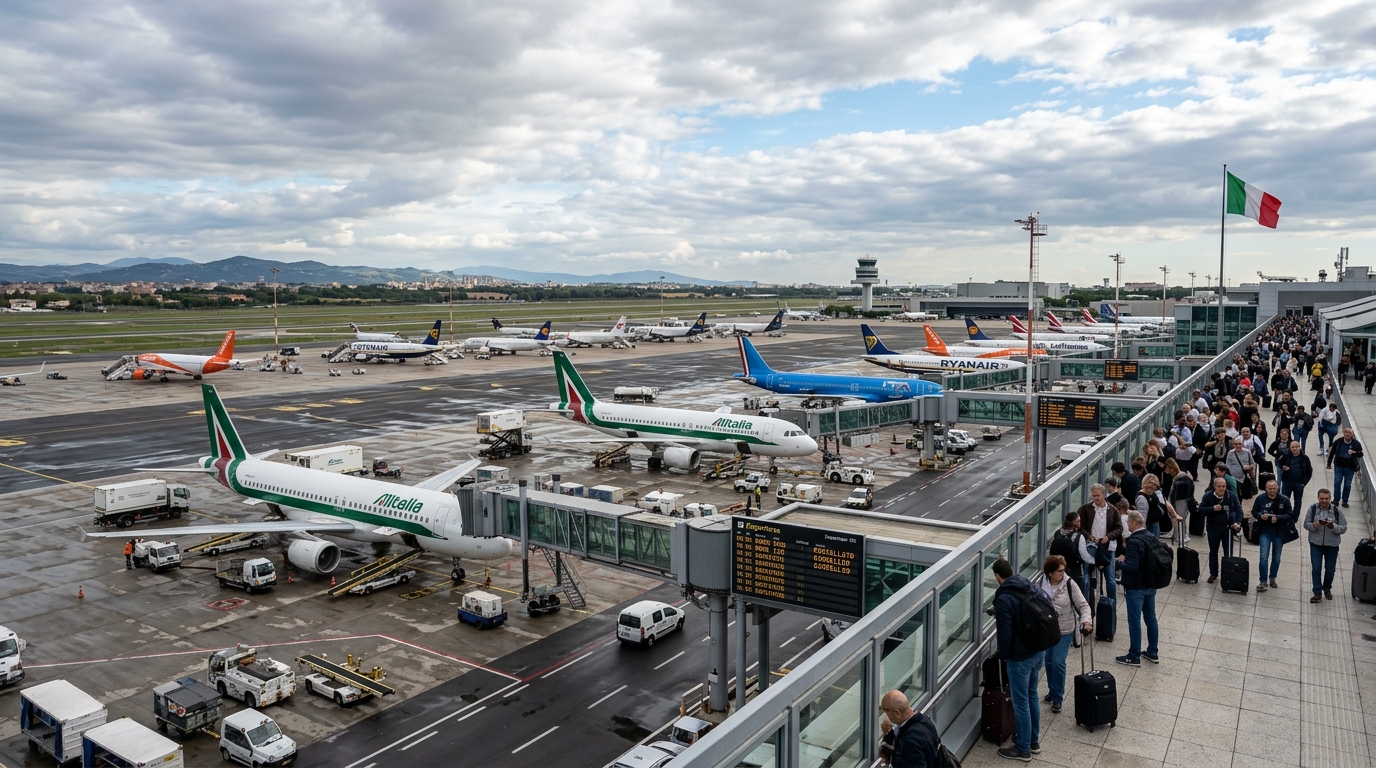
If you are standing in Terminal 3 at Rome Fiumicino right now, staring at a departure board bleeding red with "CANCELLATO" notices, you’ve just become a statistic in the September 30th Italy blackout.
A four-hour national air traffic control strike has effectively put a cork in the Italian airspace bottle between 1:00 PM and 5:00 PM local time. Compounding the chaos, Mount Etna is acting up again, sending plumes of volcanic ash over Sicily and forcing diversions away from Catania-Fontanarossa. It is the perfect storm of human labor disputes and tectonic temper tantrums.
But while the news reports focus on the "why," you need to focus on the "what now." In Italy, air travel disruptions follow a very specific, almost rhythmic pattern. If you know the rules of the game, you can be the person sipping a Negroni in a piazza by sunset while everyone else is sleeping on a terminal floor.
The "Fasce Orarie": Your Secret Weapon
Italy has a legal quirk that is a lifesaver for travelers, provided you know it exists. By law, the Italian Civil Aviation Authority (ENAC) mandates "guaranteed windows" (fasce orarie) during which flights must operate, even on strike days.
These windows are 7:00 AM to 10:00 AM and 6:00 PM to 9:00 PM.
If your flight was scheduled for 8:30 AM, you likely got out before the gates slammed shut. If your flight is at 7:30 PM, the airline is legally obligated to try and run it. The danger zone is the "afternoon slump"—that 1:00 PM to 5:00 PM window where the controllers walk off the job. If you are booked in that window, don't just sit there. Start looking for the first flight after 6:00 PM. The scramble for those seats starts the moment the strike is announced, and by the time the "Canceled" sign hits the board, those seats are usually gone.
The Catania Ash Trap
While the strike is a timed event, the volcanic ash over Catania (CTA) is an atmospheric wildcard. When Etna blows, the airspace doesn't just "slow down"—it closes. Usually, flights are diverted to Comiso (CIY), which is a tiny airport two hours away, or Palermo (PMO), which is four hours away.
If you are diverted to Comiso, do not wait for the airline-provided bus. They are notoriously slow and often under-sized for a full A320 load. If you can find three other stranded passengers, split a private transfer. It’s the difference between reaching your hotel in Taormina by midnight or spending the night in a hot bus terminal.
The Surprising "Ghost Flight" Strategy
Here is something most travelers don’t realize: airlines often cancel more flights than they technically "have" to during a short strike. Why? Because they need to keep their planes and crews in the right places for the next day's schedule.
However, they sometimes run "ferry flights"—empty planes moved from one city to another to reset the network. If you see an airline staff member at the gate, ask if there is an "operational positioning flight" happening later that evening. Occasionally, if the strike ends early or the crew is already timed out but the plane needs to move, they might allow passengers on at the last minute to clear the backlog. It’s a long shot, but in a blackout, long shots are all you have.
Don't Join the "Line of Death"
When a strike hits, the instinct is to join the 200-person deep line at the customer service desk. This is a tactical error.
- Call the International Line: If you’re flying Lufthansa, don’t call the Italian support number; call the German one. If you’re on United, call the US desk. They have the same access to the rebooking system but aren't currently being screamed at by 500 people in a physical terminal.
- Use the App, but Verify: Most airline apps will try to rebook you automatically. Often, their algorithm picks the "next available" flight, which might be three days away. If you find a better route through a nearby hub like Munich (MUC) or Zurich (ZRH), call and tell them the specific flight numbers you want.
- The EU261 Loophole: Because an air traffic control (ATC) strike is considered "extraordinary circumstances," you aren't usually entitled to cash compensation for the delay itself. However, you are still entitled to "Duty of Care." This means the airline must provide meals, refreshments, and hotel accommodation if you are stuck overnight.
If they tell you "the strike isn't our fault, so no hotel," they are lying. The cause of the delay doesn't matter for Duty of Care; only for the extra cash payout. If you end up paying out of pocket for a hotel because the airline refused, keep every single receipt. You can later claim flight compensation for these expenses through specialized services that know how to squeeze the airlines for what they owe.
Making the Pivot: Trains vs. Planes
If you are traveling within Italy—say, Rome to Milan or Florence to Naples—stop looking at flights immediately. The Italian high-speed rail network (Frecciarossa and Italo) is world-class and is rarely affected by the same strikes that hit the airports.
A train from Roma Termini to Milano Centrale will take you about 3 hours and 10 minutes. By the time you factor in the 4-hour ATC strike, the security lines, and the commute to Fiumicino, the train is faster even on a good day. On a strike day, it’s a miracle. If you're stuck, book a train ticket on your phone before you even leave the airport.
Staying Connected in the Chaos
In the middle of a terminal blackout, your phone is your only lifeline. Airport Wi-Fi in Italy is... let’s call it "optimistic." It will fail the moment 5,000 people try to load FlightRadar24 at once.
If you’re burning through roaming data trying to find a new route or a hotel room, you’ll want a stable local connection. Grab a Italy eSIM to ensure you have high-speed data that doesn't rely on the crumbling airport infrastructure. It’s a $10 investment that prevents the "No Internet Connection" spinning wheel of death when you’re trying to confirm a last-minute hotel booking.
Where to Hide in Rome
If you are officially grounded and have accepted that you aren't leaving until tomorrow, get out of the airport. The hotels near Fiumicino are depressing boxes of sadness.
Instead, take the Leonardo Express train into the city and head straight for a neighborhood like Monti . It’s close to the station, filled with incredible wine bars, and far enough from the tourist traps that you can actually enjoy your forced "layover." If you have to be stuck in a "blackout," you might as well have a plate of Carbonara and a view of the Colosseum.
Final Checklist for the Grounded Traveler:
- Check the ENAC website: They publish a PDF list of "Voli Garantiti" (Guaranteed Flights) for every strike day. If your flight is on that list, show up. If not, expect the worst.
- Photograph everything: If you are told a flight is canceled, take a photo of the departure board. If you are given a voucher, scan it. Digital trails are much harder for airlines to ignore later.
- Check your insurance: Many premium credit cards (like Chase Sapphire or Amex Platinum) have trip delay insurance that kicks in after 6-12 hours. This often covers up to $500 in meals and hotels—far better than the soggy sandwich voucher the airline might give you. If you don't have it, consider Travel Insurance for your next leg; it’s the only way to travel through Europe’s "strike season" with peace of mind.
Italy is a country that operates on a philosophy of bella figura—keeping up appearances. The airports may look like chaos today, but the planes will fly again, the ash will settle, and the espresso will still be excellent tomorrow. The goal isn't to avoid the delay; it's to outmaneuver it.
Safe travels, and may your "guaranteed window" stay wide open.