
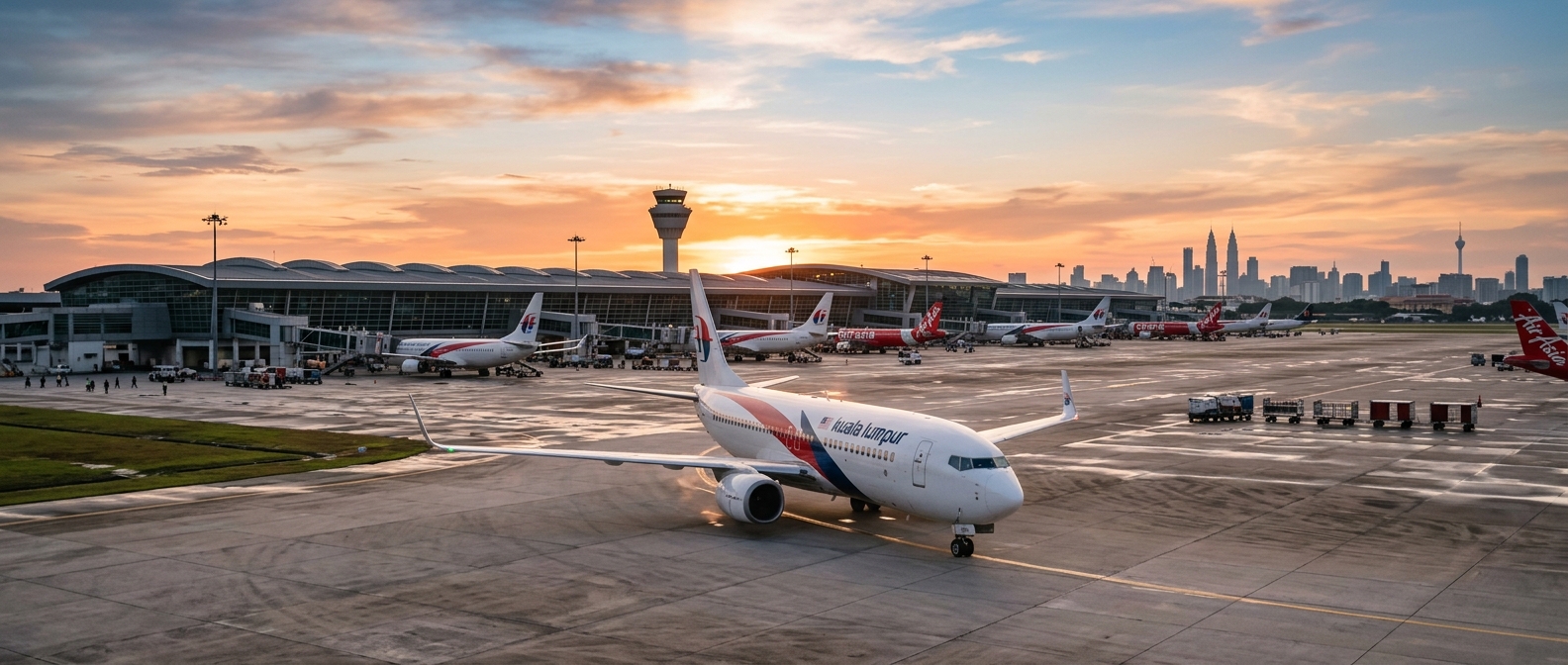
The Subang Jet Pivot: 5 New Routes Moving from KLIA to SZB This October
Travelers are scrambling to rebook as major carriers shift key domestic jet operations back to the city-center airport.
Showing up at KLIA (KUL) only to realize your flight departed from Subang (SZB) thirty minutes ago is a mistake you only make once. It’s expensive, it’s embarrassing, and starting this October, it’s going to become a lot more common.
Following the Malaysia Ministry of Transport’s announcement on August 22, 2026, the second phase of jet operations relocation to Sultan Abdul Aziz Shah Airport is officially in high gear. We aren't just talking about a few small turboprops anymore. The narrow-body jets—the Boeing 737s and Airbus A320s that form the backbone of Malaysian domestic travel—are reclaiming the city-center runway.
If you have a flight booked for late 2026, stop reading this for a second and check your itinerary. If you see "SZB" instead of "KUL," your travel day just changed. Subang is back, it’s loud, and it’s about to make your commute to the airport significantly shorter—if you play your cards right.
The Great Migration: Why SZB?
For years, Subang was the quiet sibling, relegated to propeller planes and private charters. That era is over. The Subang Airport Regeneration Plan (SARP) has transformed the terminal into a boutique jet hub. The logic is simple: KLIA is reaching its limit, and for travelers living in Petaling Jaya, Mont Kiara, or Shah Alam, the trek to Sepang is a 60-kilometer tax on their sanity.
But this shift isn't just about convenience. It’s about turn-around times. Airlines like AirAsia and Batik Air are betting that they can get jets in and out of Subang faster than the congested taxiways of KLIA. For you, that means less time sitting on the tarmac waiting for a takeoff slot.
1. The Business Pulse: Subang to Penang (PEN)
The KUL-PEN route has always been one of the busiest corridors in Southeast Asia. Now, the "shuttle" vibe is moving to Subang. Starting October, major carriers are shifting up to 40% of their daily jet frequencies to SZB.
If you’re heading to George Town for a meeting or a food crawl at Gurney Drive , the SZB-PEN jet flight is a game changer. You can leave your office in Mutiara Damansara at 8:00 AM and be sitting down for Char Kway Teow by 10:30 AM.
Pro Tip: Don't rely on the old "arrive 2 hours early" rule for Subang. While the terminal is smaller, the jet influx is testing the security checkpoints. Give yourself 90 minutes. It’s still faster than the KLIA trek, but the "15-minute check-in" of the turboprop days is a relic of the past. If you're coming from abroad to catch this connection, make sure you've secured a reliable eSIM before landing so you can coordinate your Grab driver through the Subang traffic.
2. The Southern Connection: Subang to Johor Bahru (JHB)
Johor Bahru is the sleeper hit of this relocation. Previously, flying to JHB from Subang meant a vibrating 60-minute ride on a Firefly ATR-72. Now, with A320s on the route, the flight time is a literal blink—about 35 minutes of actual air time.
For those heading to the tech hubs or shopping at Mid Valley Southkey , the Subang departure saves you the hour-long drive to Sepang. However, watch the pricing. Airlines are positioning SZB as a "premium" departure point. You might find that the flight from Subang costs RM50 more than the same route from KLIA. Ask yourself: is an extra two hours of your life worth RM50? Usually, the answer is yes.
3. The Island Hop: Subang to Langkawi (LGK)
Langkawi has always been the favorite for weekend escapes. The shift of jet operations to Subang means you can finish work on a Friday and be at a beach bar in Pantai Cenang before sunset.
Because these are now jet routes, the baggage allowance and overhead bin space issues that plagued the old turboprop flights have vanished. You can actually bring a full-sized carry-on without worrying about weight distribution. If you’re planning a rental car on the island, booking ahead is essential as the increased jet capacity is dumping more passengers into LGK at once than the old props ever could.
4. The East Coast Link: Subang to Kota Bharu (KBR)
Kota Bharu is a vital route for both trade and family visits. The reintroduction of jets to the SZB-KBR route is particularly significant because of the weather patterns on the East Coast. Jets handle the monsoon-season turbulence significantly better than smaller aircraft, leading to fewer diverted flights and "white-knuckle" landings.
If you’re visiting the famous Pasar Siti Khadijah , keep an eye on the schedule. The morning "jet surge" at Subang usually happens between 7:00 AM and 9:00 AM. If you can snag a 10:00 AM departure, you’ll miss the worst of the terminal congestion.
5. The Long Reach: Subang to Kuching (KCH)
This is the big one. For decades, you couldn't fly to East Malaysia from Subang because turboprops didn't have the range or efficiency to make the hop across the South China Sea profitably. With the October pivot, narrow-body jets are officially linking SZB to Kuching.
This is the ultimate test of the "City Airport" concept. Flying to Sarawak from the heart of the Klang Valley changes the weekend trip dynamic entirely. No more 4:00 AM wake-up calls to catch the ERL to KLIA.
The Counterintuitive Tip: Most people assume Subang is always faster. Here’s the catch: the road traffic. If your flight is at 5:30 PM on a Friday, the Federal Highway and Jalan Lapangan Terbang Subang will be a parking lot. In that specific window, taking the ERL train to KLIA might actually be faster than a Grab to Subang. Check the traffic data on your flight tracker app before you decide which airport to book.
Navigating the "New" Subang
The terminal at Subang (often called Skypark) wasn't originally built for this many jet passengers. While it’s being upgraded, expect some growing pains.
- Lounge Access: Don't expect the sprawling Golden Lounges of KLIA. Subang's lounge options are intimate. If you have a long delay, you're better off heading to the cafes in the main terminal area.
- The Skypark Link: The rail link to Subang has had a rocky history. Before you bank on the train, check if the service is currently operational. As of mid-2026, the frequency is still being optimized for the jet influx.
- Parking: It’s expensive. If you’re away for more than two days, a private car transfer or a ride-share is almost always cheaper than the daily parking rates at the multi-storey lot.
Rebooking and Schedule Volatility
Because this relocation is happening in phases, airlines are still tweaking their schedules. This is the "scramble" mentioned in the news. You might have booked a flight from KLIA six months ago, only to receive an SMS saying your flight now departs from Subang.
When this happens, the airline is technically changing your "departure point," even if it’s in the same city. If the new airport doesn't work for you—say, you live in Nilai or Seremban and Subang is a nightmare to reach—you are often entitled to a one-time flight change or a credit shell. Don't just accept the change if it ruins your logistics.
Also, ensure your travel insurance is up to date. With massive route relocations come inevitable technical delays and crew scheduling hiccups. If a jet is stuck in Penang and can't make it back to Subang for your leg, you want to be covered for the disruption.
The Verdict
The Subang Jet Pivot is the most significant change to Malaysian aviation since the opening of klia2. It’s a return to the "golden age" of travel where the airport was a 15-minute drive away, not a day trip in itself.
But with that convenience comes a new set of responsibilities for the traveler. You have to be more diligent about checking terminal codes. You have to be smarter about urban traffic. And you have to accept that the "cheap" flights might stay at KLIA while Subang becomes the playground of the time-poor professional.
The next time you open a flight search, look closely at those three-letter codes. SZB is no longer the "small" option. It’s the smart option. Just make sure you’re heading to the right side of town before you lock the front door.