
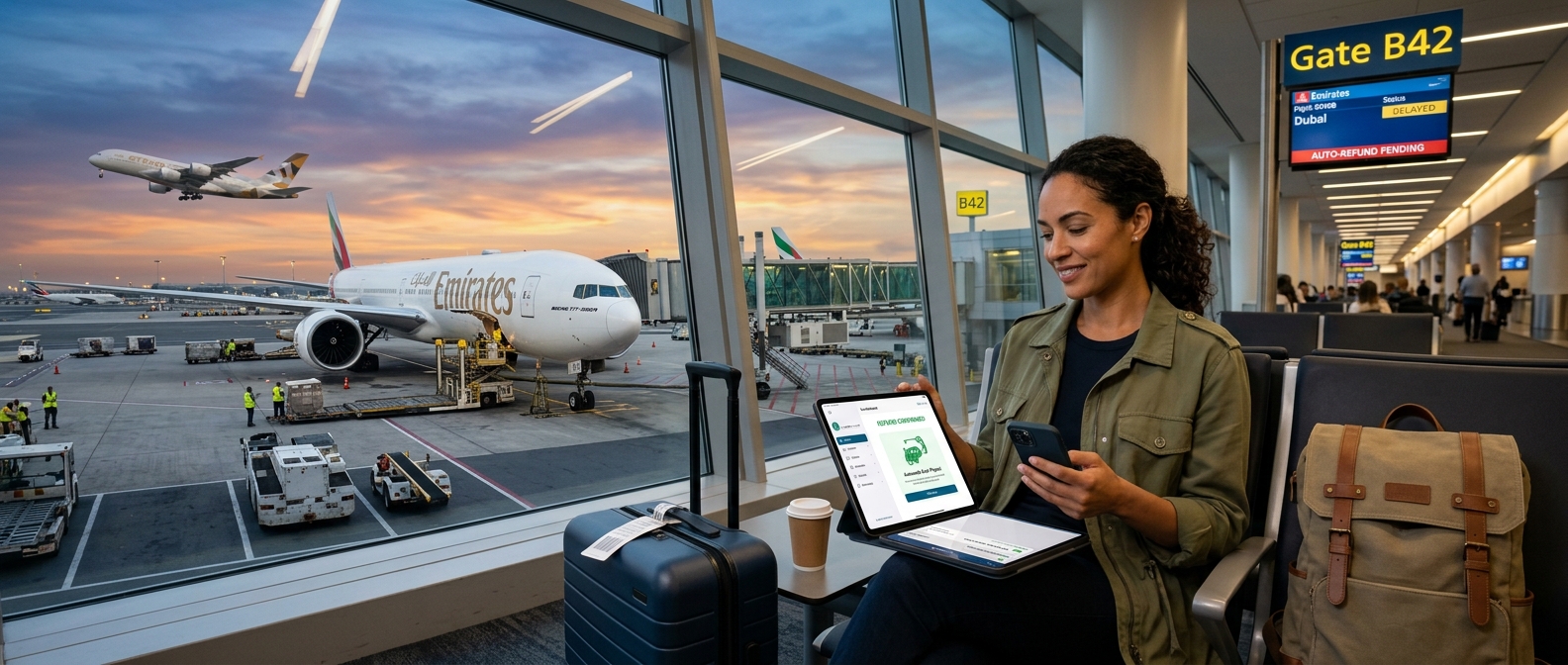
The DOT Automatic Refund Reality: How to Get Your Cash Back Without a Single Phone Call This October
A guide to navigating the fully implemented 2026 DOT rules that force airlines to pay out cash, not vouchers, for delays.
The era of the $200 airline voucher is dead. For years, when a flight went sideways at JFK or ORD, the airline’s first instinct was to hand you a digital coupon with more strings attached than a marionette. But as we head into the 2026 holiday booking window, the US Department of Transportation’s final rule on automatic refunds has hit full seasonal effect. The power dynamic has shifted: you are no longer a beggar asking for your own money back; you are a creditor, and the airline is legally required to pay up.
This isn't just another bureaucratic "suggestion." The DOT’s 2026 enforcement mandate means that if your flight is significantly changed or canceled, and you don’t want the alternative they offer, the airline has to cough up the cash. No phone calls. No "waiting for a representative." No filling out a 12-page PDF that gets lost in a server in Atlanta.
Here is how to navigate the new reality of automatic refunds without losing your mind—or your money.
The "Significant Change" Threshold
The biggest hurdle used to be the definition of a "delay." Airlines used to argue that a six-hour lag was just a "minor hiccup." Not anymore. The DOT has set hard, non-negotiable lines in the sand.
You are entitled to an automatic refund if:
- Domestic flights are delayed by more than 3 hours.
- International flights are delayed by more than 6 hours.
It goes beyond just the clock, though. A "significant change" now includes a change of arrival or departure airport (trying to send you to EWR instead of JFK), an increase in the number of connections, or a downgrade in the class of service. If you paid for a lie-flat seat to LHR and they try to put you in Premium Economy, they owe you the difference—automatically.
The Voucher Trap: Why Silence is Your Best Strategy
Airlines are still businesses, and they hate letting go of cash. When your flight hits that three-hour delay mark, you will likely receive a push notification or an email. It will look helpful. It will offer you a "Travel Credit" or a "Voucher" for the value of your flight plus an extra $50 "for the trouble."
Do not click that button.
The moment you accept a voucher, you waive your right to a cash refund. The airline is betting that you’ll take the immediate gratification of a voucher rather than waiting seven business days for the cash to hit your credit card. Under the 2026 rules, if you simply do nothing—if you don't board a rebooked flight and you don't accept the voucher—the airline is required to process your refund to your original form of payment.
The "automatic" part of this rule is triggered by your rejection of their alternatives. If they can’t get you to your destination and you don’t say "yes" to their credit, they must pay.
The Surprising "Hidden" Refund: Baggage and Wi-Fi
Most travelers focus on the ticket price, but the 2026 enforcement covers the "nickel and diming" fees too. If you paid $35 to check a bag and it doesn't arrive within 12 hours of your domestic flight landing (or 15–30 hours for international), that fee must be refunded.
The same applies to the $20 you spent on Wi-Fi that didn't work, or the seat selection fee for a seat that didn't have a working recline. If the service you paid for wasn't provided, the airline has to refund that fee automatically. You shouldn't have to hunt down a gate agent to complain about the router being down over the Atlantic.
The Counterintuitive Move: Rejecting the Rebook
Here is the tip most people miss: The only way to get your cash back is to refuse the rebooking.
If United cancels your flight from SFO to BKK and offers you a seat on a flight leaving tomorrow, and you take that seat, you are no longer entitled to a refund for the original ticket. You have accepted the "re-accommodation."
If you want the cash—perhaps because you found a cheaper or faster last-minute flight on another carrier—you must explicitly decline their offer. In the past, this meant a two-hour hold time on the phone. Now, you can simply ignore the rebooking prompt in the app. If you don't fly, they must pay.
However, keep in mind that the DOT rule only covers the ticket price. It doesn't cover the hotel room you had to book because you're stuck in Chicago overnight. For those "out-of-pocket" disasters, comprehensive travel insurance is still your only real safety net. The DOT gets you your ticket money back; insurance covers the rest of your life while you’re stranded.
How to Use Real-Time Data as Your Lever
Airlines will occasionally try to fudge the numbers. They might claim a delay was 2 hours and 50 minutes to avoid the 3-hour refund trigger. This is where your own data becomes your best weapon.
I’ve been in situations where the pilot announces we’re "just waiting on a tug," while the clock is ticking toward a mandatory compensation window. Don't rely on the airline's "official" arrival time, which is often when the wheels hit the tarmac. For refund purposes, the "arrival" is when the plane reaches the gate and the door opens.
Use a flight tracker to log the exact moment that door opens. Take a screenshot. If the airline tries to claim the flight was only delayed 2 hours and 55 minutes, but your tracker shows the gate arrival was 3 hours and 5 minutes, you have the evidence needed to file a quick DOT complaint that will almost certainly result in a check.
The 7-Day / 20-Day Clock
The law is very specific about when you get your money:
- 7 business days if you paid by credit card.
- 20 days if you paid by cash, check, or other means.
If you haven't seen the credit hit your statement by day ten, don't call the airline. File a complaint via the DOT’s Office of Aviation Consumer Protection website. These complaints are tracked, and airlines are fined for patterns of non-compliance. In 2026, the DOT is looking for "test cases" to make examples of carriers that are dragging their feet on the automatic mandate.
What Still Trips People Up
The biggest remaining "gotcha" is the difference between a "non-refundable" ticket and a "canceled" flight. If you cancel your non-refundable flight because you decided not to go, you still aren't getting cash back—you'll get a credit. The automatic refund rule only triggers when the airline is the one who breaks the contract by canceling or significantly changing the service.
Also, be wary of booking through third-party "ghost" agencies. If you book through a site that doesn't have a direct API link with the airline, the refund might get sent to the agency instead of you. Whenever possible, book direct. It makes the "automatic" part of the automatic refund actually work.
A New Way to Travel
We used to travel with a sense of dread, knowing that a cancellation meant a day of lost wages and a week of fighting for a voucher we’d never use. This October, that dread should be replaced by a calculated coldness. If the airline fails to meet the 3/6 hour standard, they are simply an ATM that hasn't dispensed your cash yet.
The next time you're stuck at the TWA Hotel at JFK watching the departures board turn red, don't rush to the customer service desk. Sit down, get a drink, and wait for the "canceled" notification. Then, just wait for the refund. The law is finally on your side, and it doesn't require a single phone call to enforce.