
The October 22nd Thanksgiving Pivot: Why Your Wait and See Strategy Just Failed
Historical data for 2026 shows the final price floor for domestic US flights disappears exactly 5 weeks before the holiday.
The October 22nd Thanksgiving Pivot: Why Your Wait and See Strategy Just Failed
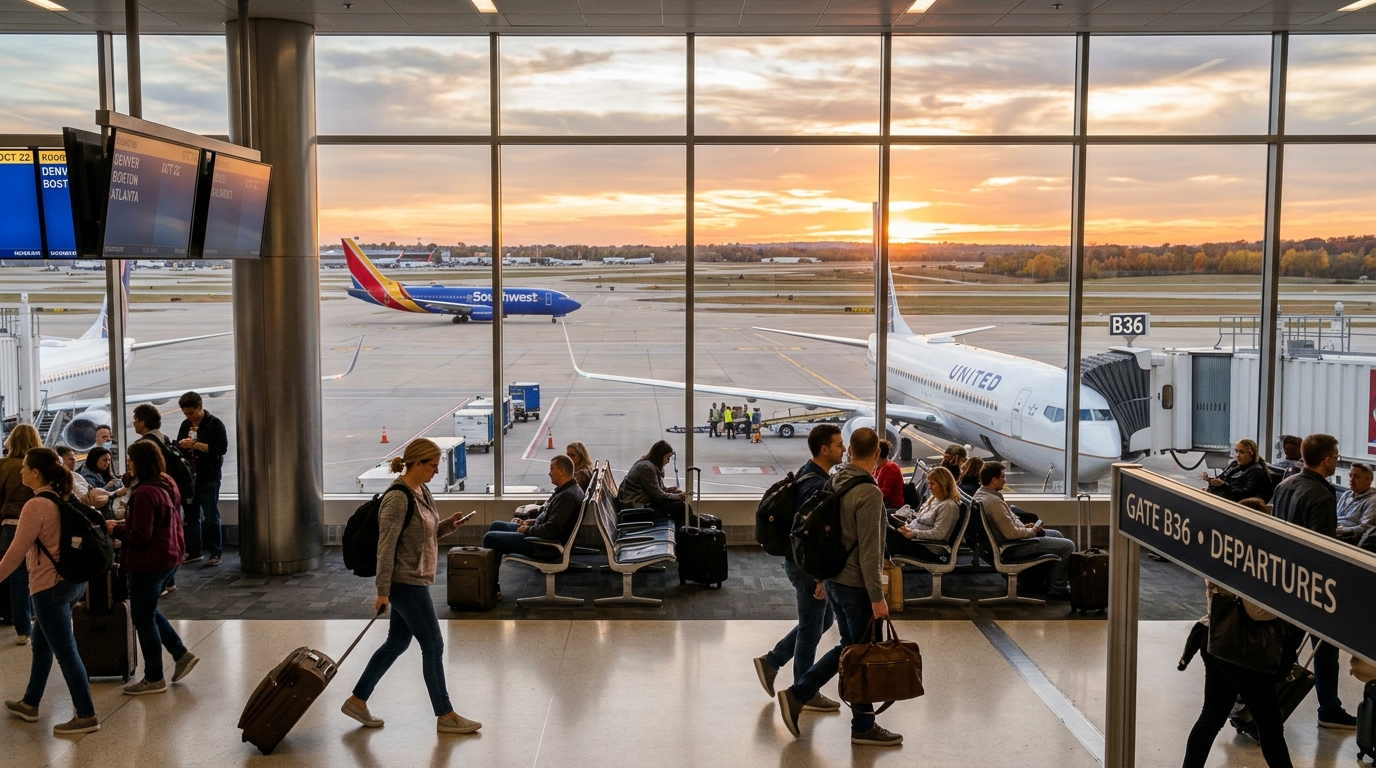
October 22nd. If you haven’t booked your Thanksgiving 2026 flights by this date, you’ve officially lost the game of "Airfare Chicken."
Every year, travelers play a dangerous game of waiting for a price drop that never comes, and historical data for 2026 shows that the final price floor for domestic US flights disappears exactly five weeks before the holiday. This isn't a gradual slope; it’s a cliff. If you’re reading this on October 23rd, the seat that cost $350 yesterday is likely sitting at $510 today, and it’s only going north from here.
The Myth of the "Last-Minute Deal"
We’ve all heard the stories. Someone’s cousin booked a flight from ORD to MIA for eighty bucks two days before the holiday. Those stories are the travel equivalent of winning a scratch-off ticket—they happen, but you can’t build a strategy around them.
For Thanksgiving 2026, the calendar is working against you. With the holiday falling on November 26th, the "pivot point" occurs during the last full week of October. Airlines use sophisticated revenue management software that shifts into "harvest mode" once the 35-day window closes. They know that if you’re looking for a flight to see your parents in Denver or attend the Macy’s Thanksgiving Day Parade near Herald Square this late in the game, your travel is non-negotiable. You’re no longer a "shopper"; you’re a "buyer." And buyers pay the premium.
The 35-Day Rule: Why the Floor Collapses
Why exactly five weeks? It’s the intersection of corporate travel patterns and leisure demand. By late October, most business travelers have finalized their November schedules. Airlines look at their remaining inventory, realize the "casual" traveler is getting desperate, and pull the cheaper fare buckets (like "Basic Economy" or "T-Class" fares) off the shelf.
What’s left are the mid-tier and full-fare economy seats. These are the tickets that come with a "standard" price tag that feels anything but standard. If you are still holding out for a "Tuesday afternoon" price drop, you are essentially betting against an algorithm designed by PhDs to maximize every cent of profit from your desire to eat turkey with your family.
The 2026 Calendar Quirk
Thanksgiving 2026 is relatively late in the month. This creates a psychological trap. Because there’s more "breathing room" between Halloween and Thanksgiving this year, travelers feel like they have more time. They don't. The October 22nd pivot remains the hard deadline because the airline's fiscal quarters don't care about your sense of timing.
If you’re flying a high-demand route—think JFK to LAX, or ATL to MCO—the "wait and see" strategy didn't just fail; it likely cost you the equivalent of a nice dinner out for the whole family. If you find yourself in this position, your only move now is to book your flights immediately before the November 1st "panic spike" hits.
The Counterintuitive Pivot: The "Thanksgiving Day" Gambit
If you missed the October 22nd window and the prices are making your eyes water, stop looking at the Wednesday before or the Sunday after. Everyone wants those days. That’s why a flight on the Wednesday before Thanksgiving is often 40% more expensive than the same route a week earlier.
Here is the tip most people are too afraid to take: Fly on Thanksgiving morning.
I’ve done this three times in the last five years. The airports are eerily quiet. The flight attendants are usually in a better mood because the "angry traveler" density is lower. Most importantly, the price difference is staggering. I once saved $400 on a cross-country flight by landing at 11:00 AM on Thursday instead of 8:00 PM on Wednesday. You still make it for dinner, and you didn't have to sell a kidney to get there.
The "Alternative Airport" Illusion
Common advice says to check "nearby" airports to save money. "Fly into San Jose instead of SFO!" they say.
In 2026, this is becoming less effective. Airlines have caught on. They price "metro areas" rather than just individual airports. However, there is still one specific way this works: The Hub Bypass.
Instead of flying into a major hub like Dallas-Fort Worth (DFW), look for the secondary airport that isn't a hub for the same airline. If American Airlines is charging a fortune to fly into DFW, check Southwest’s rates into Love Field (DAL). The price floor at secondary airports often holds for an extra 48 to 72 hours past the October 22nd pivot because their inventory isn't swallowed up by connecting passengers.
How to Handle the "Pivot" Panic
If you’re staring at a $700 ticket for a two-hour flight, don't just click "buy" in a blind rage. You need to mitigate the risk of the chaos that follows. Thanksgiving week is notorious for weather delays and overbooked flights.
If you are forced to book a flight with a tight connection because it’s the only affordable option left, make sure you have a backup plan. This is the one time of year where I don't just recommend travel insurance; I consider it a requirement. If a storm hits O'Hare (ORD) and you’re stuck in a terminal for two days, you’ll want the airline—or your insurance provider—to be picking up the hotel tab, not your savings account.
The "Split-Ticket" Maneuver
Another strategy to deploy once the price floor has vanished is the "Split-Ticket." Most people search for round-trip flights out of habit. But during the high-volatility window after October 22nd, one leg of your trip might be significantly cheaper on a different carrier.
Maybe JetBlue has a reasonable price for the outbound leg, but United is the only one with a sane return price. Don't be afraid to book two one-way tickets. It requires a bit more organization, but in the post-pivot world, it can save you $100+ per person. Just keep in mind that if one flight is delayed or canceled, the other airline doesn't owe you anything. It’s a pro-level move that requires a hawk-like eye on your flight status.
Why the "Incognito Mode" Trick is Dead
Let’s kill a travel myth while we’re at it: searching in incognito mode or using a VPN to "hide" your interest from airlines. While a Secure VPN is essential for protecting your data on sketchy airport Wi-Fi, it’s not going to magically drop the price of a Thanksgiving flight by $200.
Airlines don't raise prices because you specifically looked at a flight three times; they raise prices because ten thousand other people are looking at that same flight. The October 22nd pivot is about aggregate demand, not your individual cookies. Focus on the dates and the airports, not the browser settings.
The Final Check: Don't Forget the Logistics
Once you’ve swallowed the pill and booked your flight, the "Wait and See" failure often trickles down to other logistics.
- Rental Cars: If you think flight prices are bad, wait until you see the inventory for SUVs at a mid-sized airport on Thanksgiving Eve.
- Parking: If you’re driving to your departure airport, book your parking spot now. Many off-site lots near major hubs like LAX or ATL will be fully reserved by the first week of November.
The 2026 Thanksgiving travel season is going to be expensive, but it doesn't have to be a disaster. The "Wait and See" strategy works for a random weekend trip to Nashville in March. It is a suicide mission for the holidays.
If you missed the floor, accept the "L," book the best remaining option today, and start planning your 2027 strategy. Next year, the pivot will happen again, and the only way to win is to be the person who already has a confirmation number in their inbox while everyone else is frantically refreshing their screens on October 23rd.
The airfare floor is gone. Stop looking for it and start looking for a seat—any seat—that gets you to the table before the gravy gets cold.