
The ETIAS "Grace Period" is Ending: Why Your September Trip to Europe Just Got More Complicated
Travelers heading to the EU next month need to navigate the final rollout of the mandatory entry fee or risk being denied boarding.
The ETIAS "Grace Period" is Ending: Why Your September Trip to Europe Just Got More Complicated
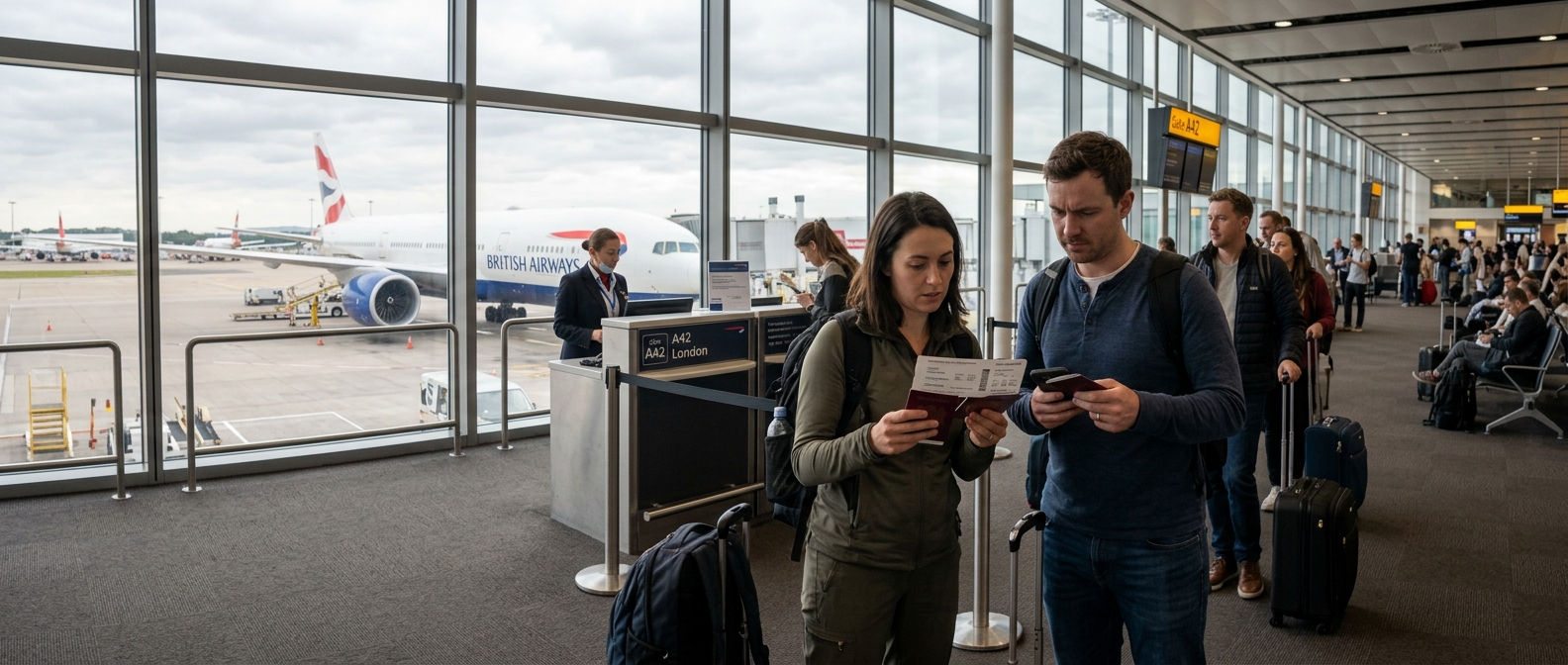
The gate agent at JFK looks at your passport, taps a few keys, and then looks back up with that specific expression of polite pity. You have a ticket to Paris. You have a valid passport. You even have a reserved seat in 12A. But you don’t have a digital authorization linked to your biometric data, and because it is September 2, 2026, you aren’t getting on that plane.
The European Union’s final transition period for the ETIAS (European Travel Information and Authorisation System) concludes on September 1, 2026, making the €7 fee and pre-approval mandatory for all visa-exempt travelers. For the last several months, the "grace period" allowed for a bit of leniency and "soft" enforcement. That ends now. If you are a citizen of the US, UK, Canada, Australia, or any of the other 60+ visa-free nations, the rules of engagement for entering the Schengen Area have fundamentally shifted.
The Digital Bouncer is Now Active
Think of ETIAS not as a visa, but as a digital bouncer. It’s a pre-screening process designed to flag security risks before they ever reach a border control booth at Heathrow or Schiphol. While the application is supposed to take "minutes," the reality of a mandatory rollout is rarely that smooth.
Starting this September, the "informal" transition is over. Airlines are now legally required to verify your ETIAS status before you board. If the system doesn't return a "Valid" status when they scan your passport at check-in, the airline is liable for heavy fines if they let you fly. Consequently, they won't take the risk. They will simply deny you boarding, and unlike a mechanical delay or an overbooked flight, you won't be getting any flight compensation for this mistake. This is on you.
The 72-Hour Myth and the Manual Review Trap
Most travel blogs will tell you that ETIAS approval is "instant." For 95% of people, it will be. You’ll pay your €7, wait for the email, and go back to packing your bags. But if you rely on that "instant" promise, you are gambling with your entire vacation.
Here is the surprising reality: If your application triggers a flag—perhaps you have a common name that matches someone on a watch list, or there’s a discrepancy in your previous travel history—your application moves to a manual review. Once it hits a human desk at the ETIAS Central Unit, the timeline stretches from minutes to 96 hours, or even up to 30 days if they request additional documentation.
If you apply on a Thursday for a Saturday flight to Rome, and the system flags you, you are grounded. There is no "expedited" fee. There is no phone number to call to jump the line. The smart move? Apply at least three weeks before you head to the airport. Once approved, your ETIAS is valid for three years (or until your passport expires), so there is zero benefit to waiting until the last minute.
The "Hidden" Requirements: It’s Not Just About the Fee
The €7 fee is the least of your worries. The real complication lies in the data matching. ETIAS is tied directly to your passport number. If you have two passports (dual citizenship), you must travel on the exact same passport you used for the ETIAS application.
Furthermore, your passport must have at least three months of validity remaining beyond your intended date of departure from the Schengen Area. I’ve seen travelers get turned away because their passport expired in two months, even though they were only staying for a weekend. The ETIAS system will likely catch this during the application, but if you renew your passport after getting ETIAS approval, your old authorization becomes void. You must re-apply with the new passport number.
Navigating the Ground Game
Once you land in Europe, the ETIAS is just the first hurdle. The EU is also rolling out the Entry/Exit System (EES), which replaces physical passport stamping with biometric scans (fingerprints and facial images). Expect longer lines at major hubs like Frankfurt (FRA) or Charles de Gaulle (CDG) as the kinks are worked out this autumn.
If you’re planning a multi-city hop—say, starting at the Rijksmuseum and then taking a train down to Brussels—remember that while ETIAS covers the whole Schengen Zone, your data is being tracked digitally. The "90 days in a 180-day period" rule is now enforced by an automated calculator, not a tired border guard squinting at ink stamps.
To keep your logistics straight and ensure you aren't missing any last-minute gate changes or terminal shifts during this chaotic rollout, use the PingWing AI Trip Planner to map out your movements. It’s one thing to have your papers in order; it’s another to navigate a terminal change at Madrid-Barajas while the EES system is lagging.
Connectivity is No Longer Optional
In the "grace period" era, you might have been able to pull up a PDF of a confirmation on the airport Wi-Fi. Now, with the mandatory rollout, you need to be able to access your records, emails, and potential secondary queries from border authorities in real-time.
Relying on "searching for a Starbucks" for Wi-Fi is a recipe for a panic attack at customs. Before you even leave the tarmac, ensure your phone is equipped with a regional Europe eSIM. Having data the second you touch down means you can verify your ETIAS status or pull up your travel insurance details without the "connection timed out" spinning wheel of death.
The Counterintuitive Tip: Check Your "S" Countries
Many travelers assume "Europe" is one big monolith. It isn't. ETIAS is required for the Schengen Area. This includes non-EU countries like Switzerland, Norway, and Iceland. However, it does not currently include Ireland.
If you are flying from New York to Dublin and then catching a separate Ryanair flight to Barcelona, you don’t need ETIAS to enter Ireland, but you will need it to board that second flight to Spain. I’ve met travelers who thought they were "in" once they hit European soil in Dublin, only to be stopped at the gate for their connection. Always check the specific requirements of your transit hubs, not just your final destination.
What Happens if You’re Rejected?
Rejections will happen. Usually, it’s due to a clerical error—typing an "O" instead of a "0" in a passport number is the most common culprit. If you are rejected, you will receive an email stating the reason. You have the right to appeal, but the appeal is handled by the specific member state that triggered the rejection. If France says no, you have to deal with the French authorities.
This is why the September 1st deadline is so significant. The era of "we'll let it slide this time" is officially dead. The system is automated, and the computers don't care that you have a non-refundable hotel reservation in the Marais .
The New Normal of the North Atlantic
Travel is becoming more transactional and more digital. The ETIAS rollout is just the European version of the US ESTA or the Canadian eTA. It’s a minor hurdle, but for the unprepared, it’s a trip-ending one.
Don't let the €7 fee fool you into thinking this is a low-stakes task. Treat your ETIAS application with the same importance as your plane ticket. Check your passport validity today. Apply for the authorization tonight. And for heaven's sake, double-check that you typed your middle name exactly as it appears between those blue covers.
The most seasoned travelers aren't the ones who know the best secret bars in Berlin; they're the ones who realize that the most boring administrative details are the ones that actually keep the wheels turning. Bookmark the official EU ETIAS site, keep a digital backup of your approval, and maybe, just maybe, you’ll be the one watching from the lounge as someone else argues with a gate agent about a "grace period" that no longer exists.