
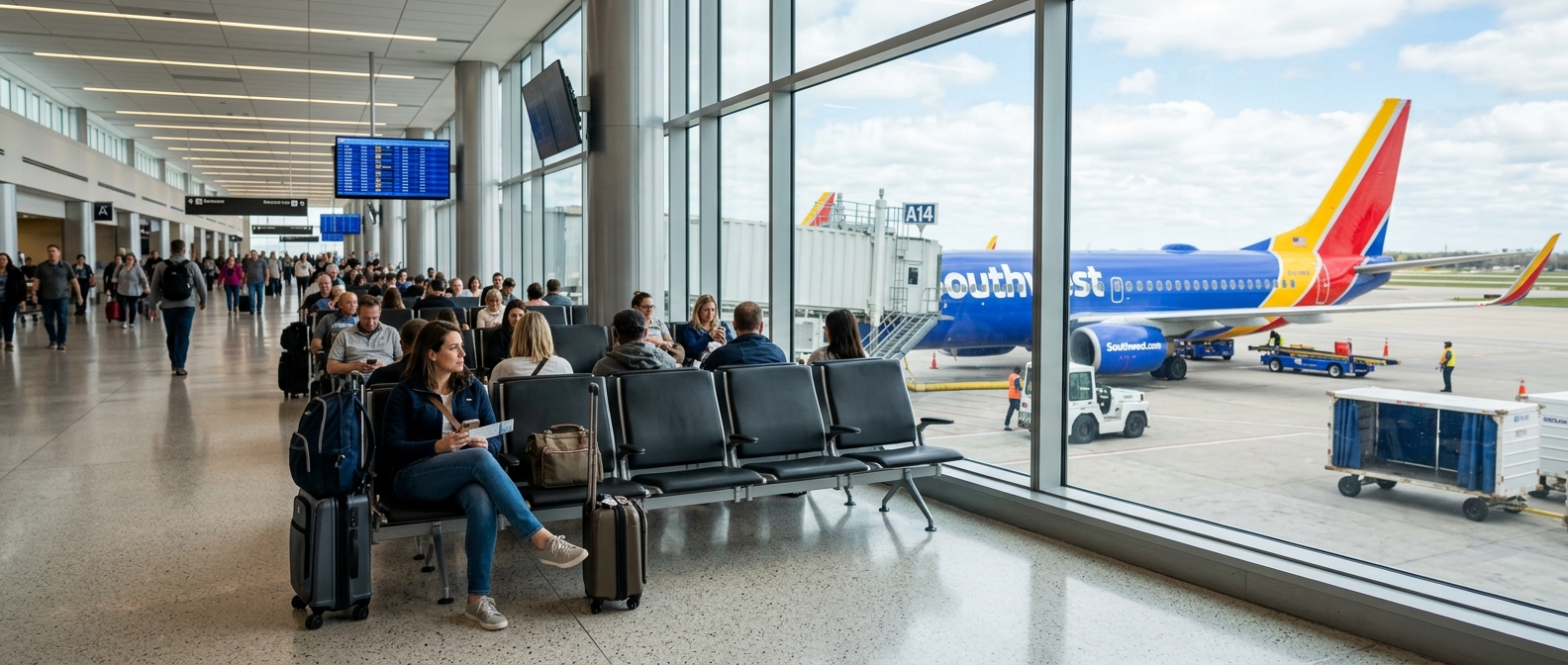
The End of the Southwest Scramble: How to Pick Your Seat Starting This Week
Southwest is officially opening the booking window for its first-ever assigned seating flights, and frequent flyers need to know the new rules.
The 24-hour countdown clock is officially dead. For five decades, Southwest Airlines flyers lived by a digital adrenaline rush: hovering over a smartphone screen, refreshing a browser with the ferocity of a day trader, all to avoid the social leprosy of a "C-Group" boarding pass. That era is over.
This week, Southwest Airlines officially opens the booking window for its first-ever assigned seating flights departing in late 2026, ending a 50-year experiment in open-seating egalitarianism. While the "cattle call" boarding process was a point of pride for some and a source of anxiety for others, the transition to assigned seating and the introduction of a premium cabin changes the math for every Southwest loyalist. If you’re booking a trip for the back half of 2026, the rules of the game have shifted. You aren't just checking in; you're strategizing.
The New Cabin Hierarchy: Where to Sit
Southwest isn't just slapping seat numbers on the overhead bins; they are physically reconfiguring the planes. About one-third of the seats across the fleet will now feature "extended legroom." This is Southwest’s version of "Main Cabin Extra" or "Economy Plus," but without the middle-seat-free luxury of a European business class.
When you open the seat map for a late 2026 flight, you'll see a clear divide. The front of the plane and the exit rows will be the "Premium" zones. If you’re tall, these are your targets. However, here is the counterintuitive reality: The front row (Bulkhead) is often the worst "premium" seat on a Southwest 737.
On the Boeing 737-800 and MAX 8 aircraft that dominate the fleet, the bulkhead wall often restricts your ability to fully stretch your legs compared to the space under the seat in front of you. Plus, you’ll have to stow all bags in the overhead bin for takeoff and landing. If you want the best "bang for your buck" in the new layout, aim for the second or third row of the premium section. You get the extra pitch without the bulkhead limitations.
The A-List Pivot
For years, the "A-List" and "A-List Preferred" status was about getting that coveted A1-A15 boarding position. Now, that status is moving toward the model used by Delta and United. Your status will likely translate into free access to those extra-legroom seats at the time of booking or a window for complimentary upgrades.
If you don’t have status, the "Wanna Get Away" fares will remain the baseline, likely assigning you a seat in the back half of the plane. If you are traveling as a family, the "Family Boarding" window (which usually happened after the A-group) is effectively being replaced by the ability to pick seats together months in advance. No more begging a stranger to swap their window seat for your middle seat in Row 29 so you can sit next to your toddler.
The "Ghost" of Open Seating: The Transition Period
The most chaotic part of this change isn't the assigned seats themselves—it’s the transition. Southwest operates a massive fleet of over 800 aircraft. They cannot retrofitted every plane overnight.
Starting in late 2026, you may find yourself in a "mixed" travel environment. You might book an assigned seat from Dallas (DAL) to Chicago (MDW), but if your return flight is on an older aircraft that hasn't hit the maintenance hangar for its cabin refresh, you could still be in an open-seating environment.
Pro Tip: Always check the aircraft type in your booking details. If the seat map looks like a standard 3-3 configuration with no "Premium" designation, keep your 24-hour check-in trigger finger ready. The airline will be running two different boarding softwares simultaneously for months. To stay ahead of these tail-number swaps and potential delays caused by the fleet-wide overhaul, use a real-time tool like the PingWing flight tracker to monitor your specific aircraft’s history and current status.
The Exit Row Strategy Is Changing
In the old system, the exit row was the "hidden" prize for anyone fast enough to run down the jetway. In the 2026 model, the exit row is a paid commodity.
On Southwest’s 737s, look for the "L-shaped" configuration in the exit row. On many Boeing 737-800s, seat 16A (or similar, depending on the specific configuration) has no seat in front of it, providing "infinite" legroom. In the new assigned seating world, Southwest is smart enough to price this seat at a premium. However, they often overlook the seat behind the exit row. If the exit row seats don't recline (to avoid blocking the exit path), the row behind them effectively has a "buffer zone" where no one will ever lean back into your space. If you value personal space over legroom, that’s your sweet spot.
Booking for 2026: The "Starting This Week" Checklist
If you are hopping onto the Southwest site this week to snag those first assigned seats for late 2026, follow this workflow:
- Check the "Premium" Pitch: Southwest hasn't finalized the exact inch-count for every sub-fleet, but expect the premium seats to offer roughly 34-36 inches of pitch. If you’re under 5'10", the standard 31-32 inches in the back is still among the best in the low-cost carrier world. Don't pay for space you don't need.
- The Credit Card Perk Shift: If you hold a Southwest Rapid Rewards Priority card, your "four upgraded boardings" per year are going to become "seat selection credits." Don't waste them on short hops like HOU to AUS. Save those credits for the long-haul treks to Hawaii or San Juan.
- The Connection Risk: Assigned seating means people will take longer to board. The "Southwest Scramble" was actually incredibly efficient at getting planes off the gate. With assigned seating comes the "aisle-blocker"—the person trying to shove a massive suitcase into a tiny bin while 100 people wait behind them. Expect slightly longer turn times. If you have a 35-minute connection in Denver (DEN) or Baltimore (BWI), you might want to pad that out to 60 minutes.
Staying Connected in the New Era
As Southwest moves toward a more "premium" feel to compete with the big three, they are also upgrading their onboard Wi-Fi. But relying on airplane Wi-Fi for your entire trip planning is a rookie mistake. Once you land and the "assigned seating" stress is over, you’ll need data that actually works. Whether you're flying into a major hub or heading across the border, grabbing a pre-paid eSIM ensures you aren't hunting for airport Wi-Fi the second you step off the plane.
The Survival of the "Southwest Vibe"
There is a segment of the traveler population that is mourning this change. They are the ones who knew exactly which gate at LAS was closest to the Centurion Lounge and how to time their walk so they hit the boarding line just as "A-16" was called.
But for the rest of us, the shift to assigned seating is an admission of reality: travel is stressful enough without a 24-hour check-in deadline hanging over your head. The "scramble" was a relic of a time when flying was a novelty. Today, it’s a utility.
As you look at those first seat maps this week, remember that the best seat isn't always the one at the front. It’s the one that lets you stay off your phone 24 hours before the flight, knowing that your spot is secured. The culture of Southwest is changing, but if it means no more "middle seat lottery" after a delayed connection, most of us will take that deal every time.
If you find yourself with a long layover at JFK during this 2026 transition, take a moment to visit the TWA Hotel to see how much aviation has changed. Southwest’s move to assigned seating is just the latest chapter in that history—the end of the Wild West in the skies, and the beginning of a slightly more predictable, if a bit more crowded, future.