
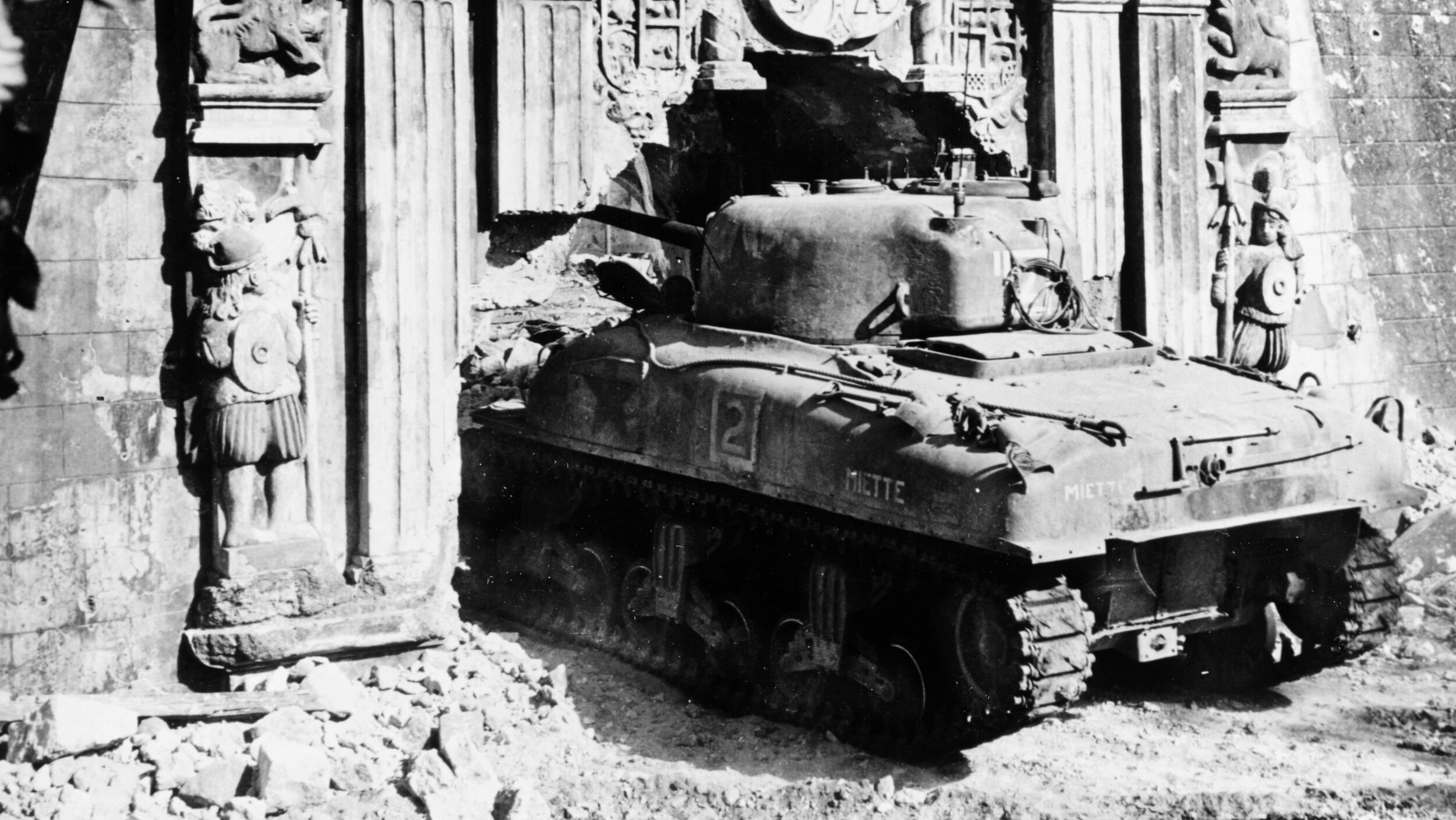
Manila WWII Historical Sites: A Complete Guide to the Battle, Occupation, and Liberation of the City
Trace Manila’s World War II story from the first air raids and the fall of Corregidor to the internment camps, shattered churches, hidden dungeons, and memorials that still mark the city today.
For many travelers, Manila is an arrival point: a dense, noisy, fast-moving capital where colonial walls, shopping malls, and traffic seem to compete for attention. But beneath the modern city lies one of the most devastating wartime stories in Asia.
In World War II, Manila was not just occupied. It was bombed, abandoned as an open city, transformed into a Japanese-held capital, used as a prison landscape, and then nearly annihilated during the Battle of Manila in 1945. By the time the fighting ended, tens of thousands of civilians were dead, Intramuros was in ruins, and the city had become one of the most destroyed urban centers in the Pacific.
For travelers willing to look beyond the usual attractions, Manila offers one of the most powerful WWII trails in Southeast Asia. Its wartime history is written across university grounds, underground tunnels, ruined fortifications, memorial sculptures, cemetery walls, and the surviving stones of churches that witnessed the city’s destruction.
Interactive Map of Manila’s WWII Historical Sites
Explore the full Manila WWII trail, from Intramuros and wartime memorials to Corregidor, internment sites, battle locations, and liberation landmarks.
Timeline of World War II Sites in Manila
This guide follows the chronological story of Manila in World War II, from the Japanese air raids of December 1941 to the liberation and remembrance sites that define the city today.
1. The First Air Raids Over Manila — Nichols Field and the Bay Approaches (December 8, 1941)
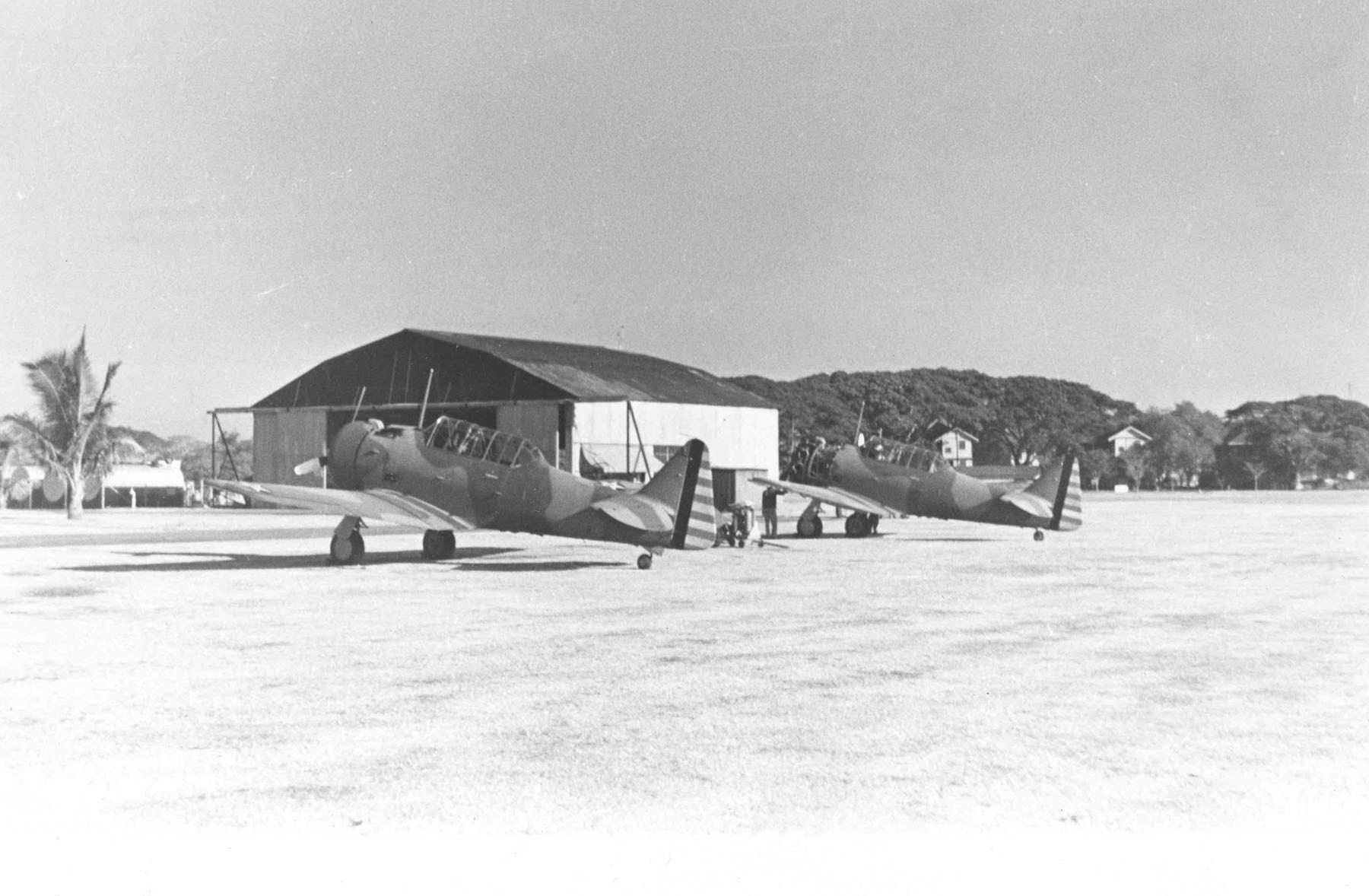
The Pacific War reached Manila almost immediately after the attack on Pearl Harbor. On 8 December 1941, Japanese aircraft struck military and aviation targets around the capital, including Nichols Field and other nearby installations.
Why it mattered
These raids announced that Manila was now part of the front line. The attacks disrupted the defense of the capital and showed how vulnerable the city and its surrounding military infrastructure had become. What had seemed like a distant war in East Asia suddenly arrived over Manila’s skies.
Just as important was the psychological blow. The capital of the Commonwealth was no longer a rear area. Even before occupation began, residents had entered the wartime rhythm of bombings, military withdrawals, rumors, shortages, and fear.
What to understand here
Unlike a single preserved landmark, this phase of the war is best understood as a citywide opening chapter. The areas around Manila Bay, the port, and the airfields were part of the defensive network whose collapse would soon force the withdrawal to Bataan and Corregidor.
2. Manila Declared an Open City — The Capital Without a Defense (December 26, 1941)
As Japanese forces moved south, General Douglas MacArthur declared Manila an open city on 26 December 1941 in an attempt to spare it from destruction.
Why it mattered
The declaration marked a dramatic turning point. Militarily, it was an admission that the defense of the capital itself could not be sustained. Strategically, it meant the main fight would shift toward Bataan and Corregidor. Politically and emotionally, it signaled that the government and military leadership were preparing to give up the city.
But becoming an “open city” did not protect Manila from the war that followed. The capital still entered occupation, and later, in 1945, suffered catastrophic destruction in the battle to retake it.
What it is now
You can best reflect on this moment in and around Intramuros, Ermita, and the old civic core. This is where the contradiction of wartime Manila is most visible: a city that was declared open in hopes of avoiding devastation, yet was later devastated anyway.
3. The Last Fortress in Manila Bay — Corregidor and Malinta Tunnel (December 1941 to May 1942)
If Singapore had Fort Canning and the Battle Box, Manila had Corregidor and Malinta Tunnel.
Where it happened
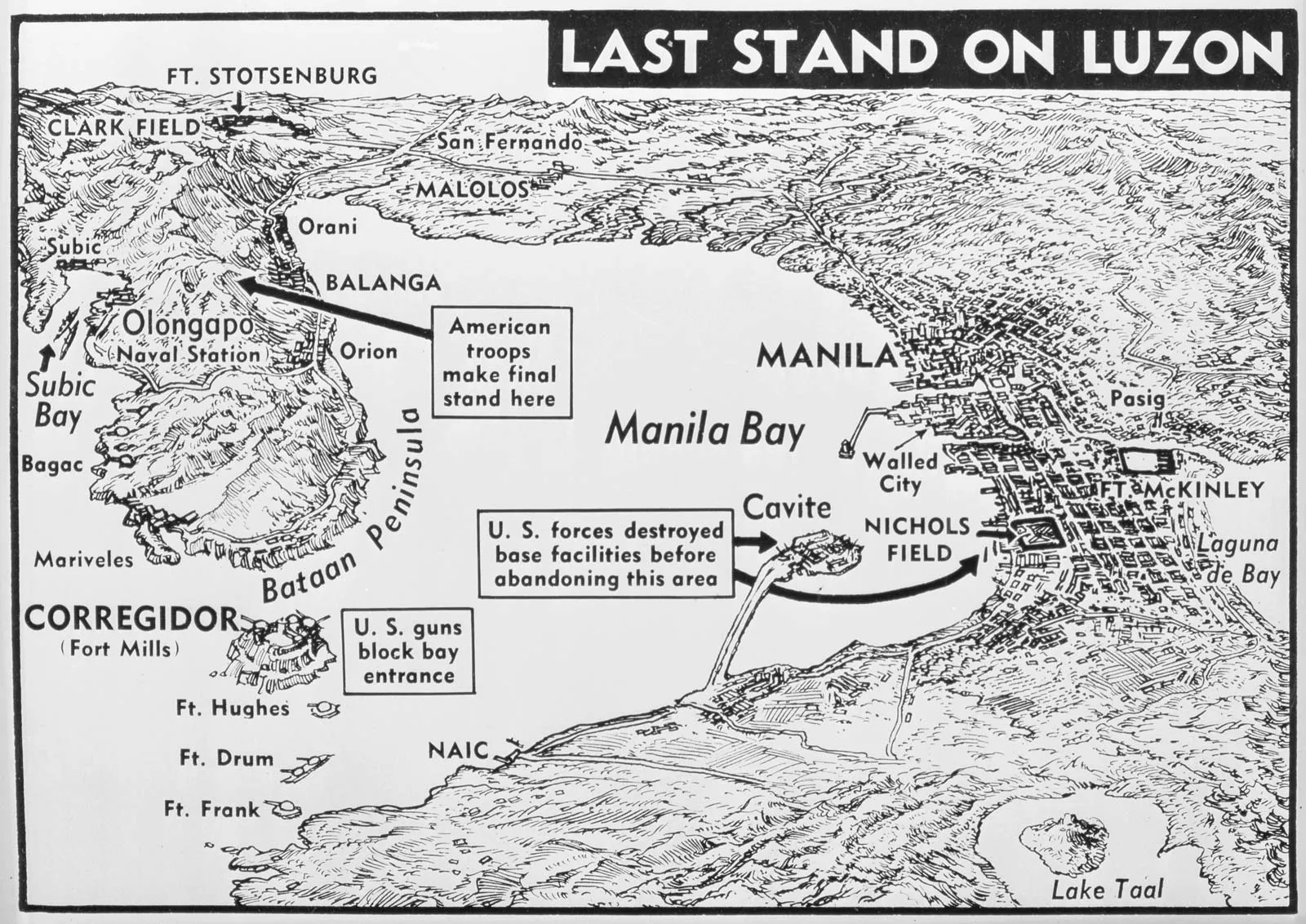
Corregidor Island, at the mouth of Manila Bay.
Why it mattered
Once Manila was abandoned, Corregidor became the last great stronghold defending the bay and the last redoubt of the Commonwealth and U.S. command in the area. It became the seat of the Commonwealth government during the crisis, and Malinta Tunnel served as a protected command and hospital complex during the siege.
This was where the story of Manila as a defended capital gave way to Manila as an occupied capital. Corregidor was not in the city center, but no WWII article on Manila feels complete without it. The island controlled the approach to the capital, and its fall sealed the fate of the defense of Manila Bay.
What to see today
Malinta Tunnel remains the emotional center of any Corregidor visit. The batteries, ravines, artillery positions, and memorials across the island help explain why Corregidor became such a symbol of resistance, siege, surrender, and return.
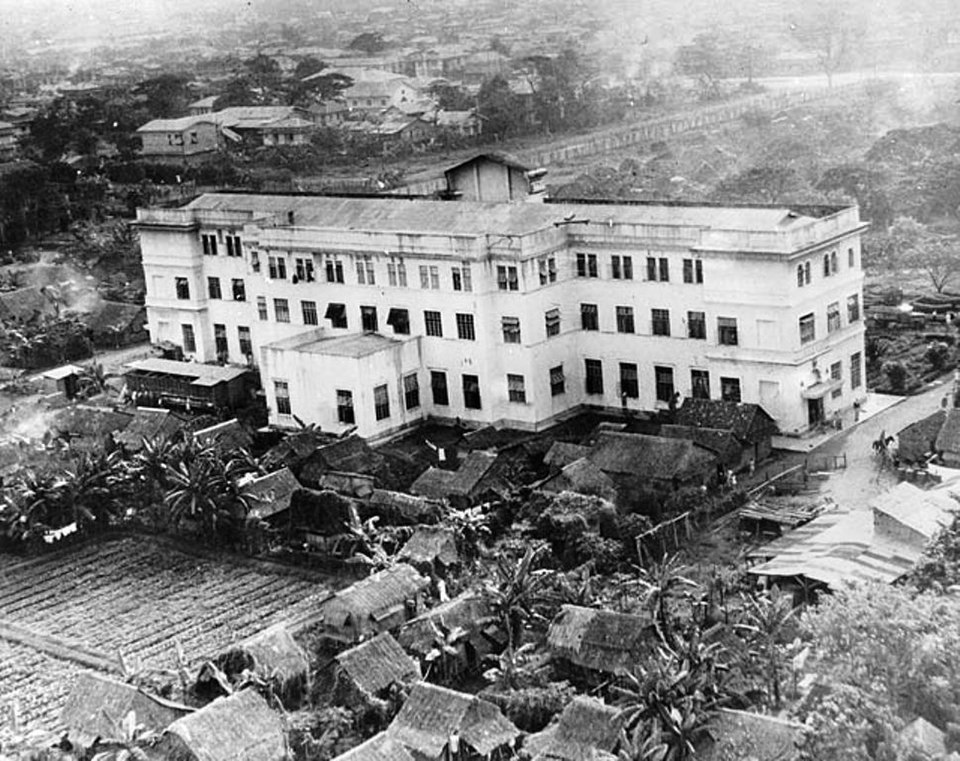
4. Civilian Internment Under Occupation — University of Santo Tomas (1942–1945)
After the Japanese occupation began, the University of Santo Tomas was turned into an internment camp for Allied civilians.
Where it happened
University of Santo Tomas, Sampaloc, Manila.
Why it mattered
The UST campus became one of the most important civilian internment sites in the Philippines. What had been a university was transformed into a controlled wartime enclosure where thousands of civilians lived under increasingly harsh conditions as the war dragged on.
This site matters because it expands the story of Manila beyond soldiers and commanders. WWII in Manila was also about civilians: families, foreign residents, missionaries, teachers, workers, women, and children whose lives were compressed into guarded compounds under occupation rule.
Conditions worsened over time as food and medicine ran short. By the closing months of the war, internment had become a story of deprivation as much as confinement. The campus also became historically significant again in February 1945, when the liberation of Santo Tomas became one of the first major liberation episodes in Manila.
What it is now
A functioning university campus. The Main Building, Plaza Mayor, and commemorative markers are the key places to orient visitors to the internment story.
5. Japanese Military Rule and Atrocity — Fort Santiago (1942–1945)
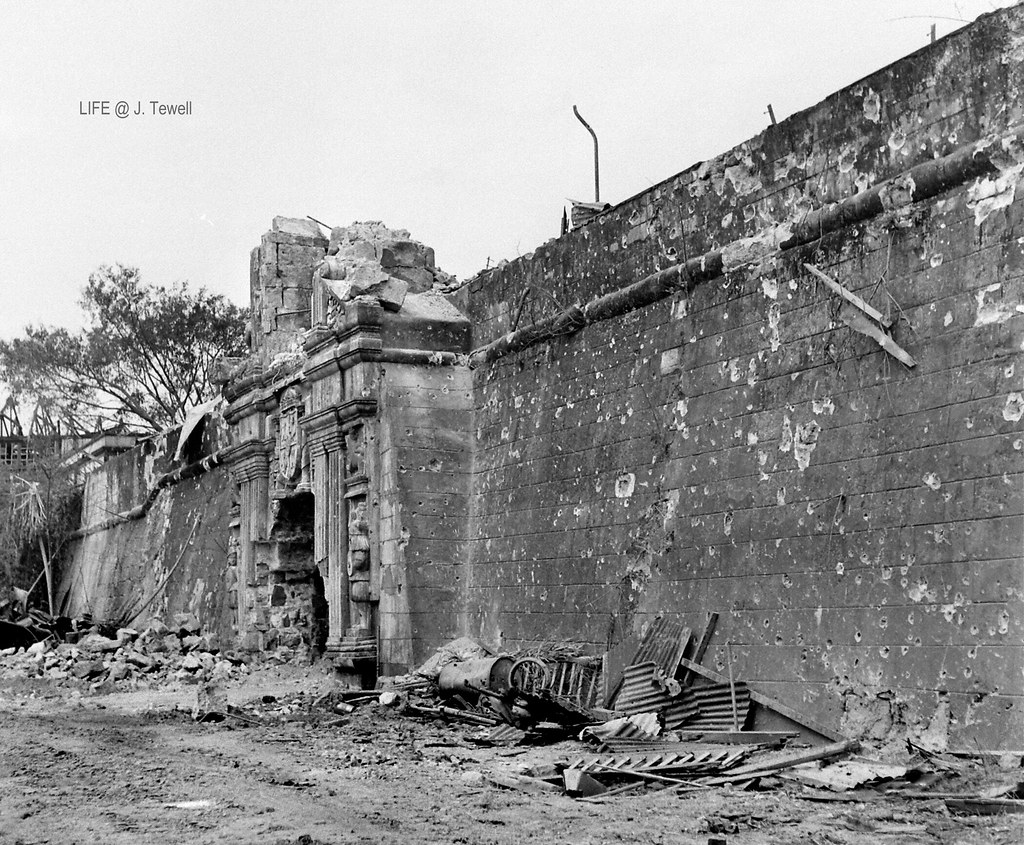
Fort Santiago is usually introduced as one of the oldest Spanish fortifications in Manila, but in WWII it became something darker: a place of imprisonment, military control, destruction, and death.
Where it happened
Fort Santiago, Intramuros.
Why it mattered
During the occupation, Fort Santiago was used by the Japanese military, and its dungeons and prison spaces became linked to detention and atrocity. In the final phase of the Battle of Manila, civilians and prisoners suffered terribly here, and mass death sites were later identified within the fort precinct.
The fort matters because it compresses multiple centuries of Philippine history into one place, but WWII gives it particular emotional weight. It was both a strategic military site and a site of human tragedy. Even the fort’s architecture carries the marks of war: the main gate and several barracks were destroyed in 1945 and later restored or reconstructed.
What to see today
Do not stop at the postcard views of the gate and walls. The most important WWII stop inside the complex is the memorial area dedicated to the victims whose remains were found in a nearby dungeon after the battle.
6. The Liberation Begins — Santo Tomas, February 3, 1945
The return to Manila became real on 3 February 1945, when American forces reached Santo Tomas and liberated the internment camp.
Why it mattered
This was one of the first dramatic liberation moments inside the capital, and it immediately revealed both the desperation of the internees and the wider significance of Manila’s recovery. The liberation of Santo Tomas was not the end of the battle. It was the beginning of a brutal month of urban warfare.
That is what makes the site so historically important. It sits at the hinge between occupation and liberation. Inside the university grounds, people were being freed. Across the wider city, the worst destruction was still to come.
What it is now
UST remains one of the best places in Manila to explain the transition from occupation to liberation. It is also one of the most underappreciated WWII stops for travelers.
7. The Battle for Intramuros — Manila Cathedral, San Agustin, Baluarte de San Diego, and the Walled City (February 1945)
If you want to understand why Manila’s wartime story feels so devastating, walk Intramuros.
Where it happened
Intramuros — especially Fort Santiago, Manila Cathedral, San Agustin Church, the old walls, and Baluarte de San Diego.
Why it mattered
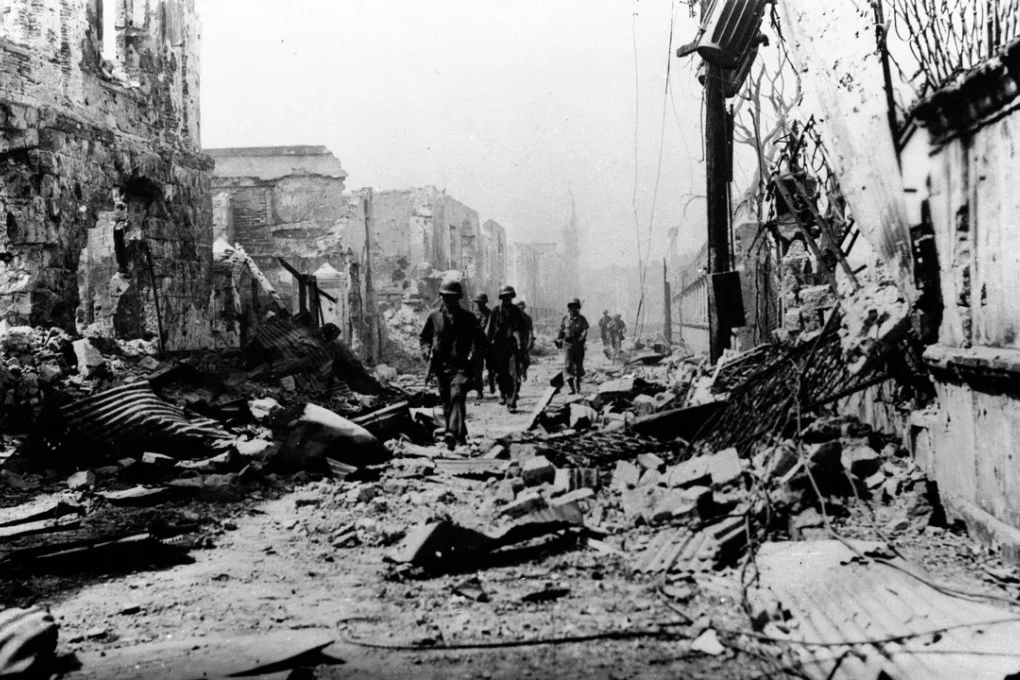
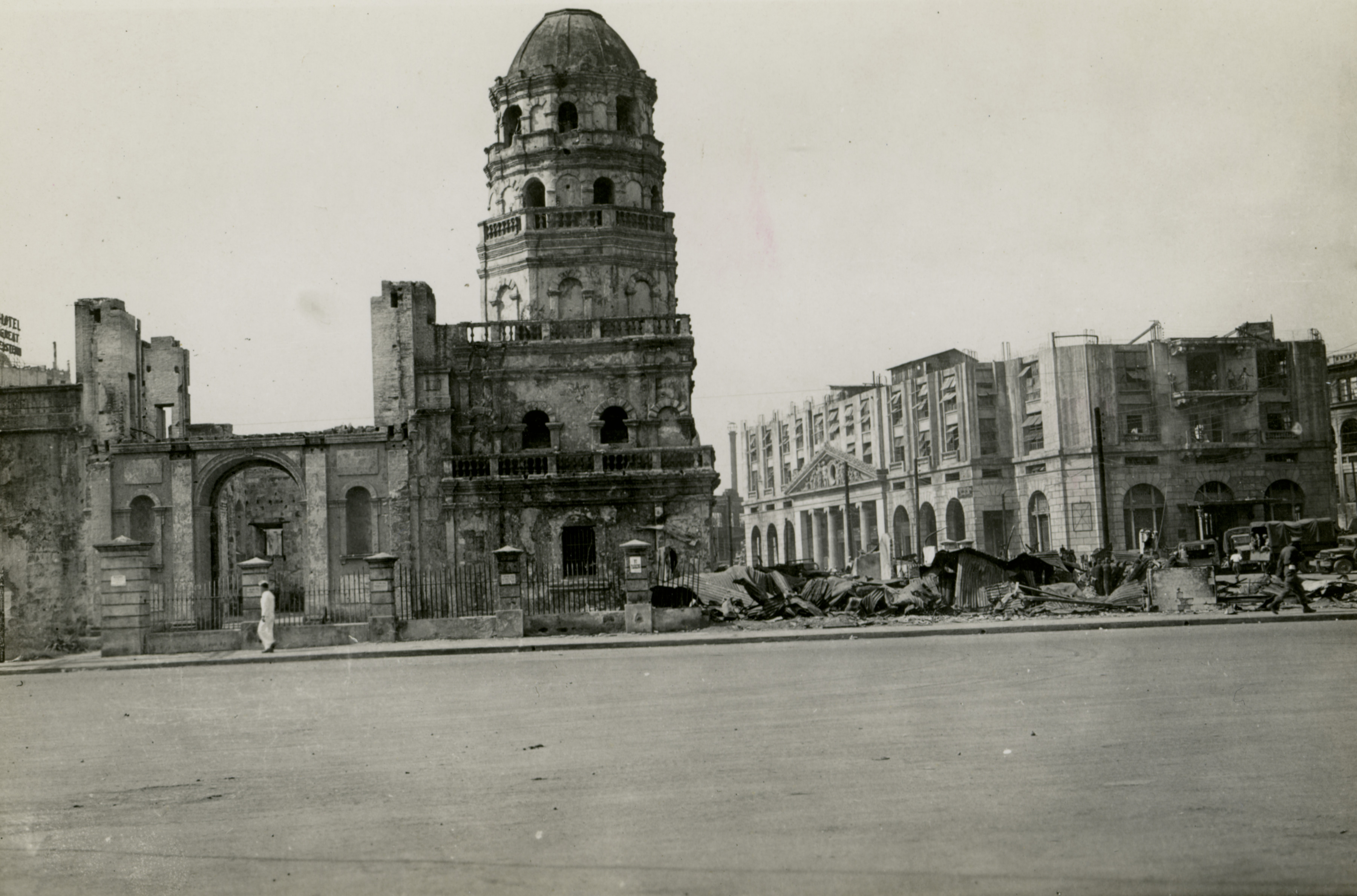
The Battle of Manila in February 1945 turned the old walled city into a killing ground. House-to-house fighting, artillery bombardment, fire, executions, and collapse destroyed much of the old capital. By the end of the battle, Intramuros had been shattered.
This is the core of Manila’s WWII memory. The old churches and walls are not just heritage attractions; they are survivors and witnesses. Some structures were obliterated and later reconstructed. Others, like San Agustin Church, survived the destruction and now stand as rare physical links to prewar Manila.
Key places inside Intramuros
Manila Cathedral
The cathedral was destroyed during the Battle of Manila and later rebuilt. It helps visitors visualize the scale of wartime destruction in what had once been the spiritual and ceremonial heart of Spanish-era Manila.
San Agustin Church
San Agustin is one of the most important survivors of the battle. Its survival is one reason the destruction of Intramuros feels so tangible: the church stands amid a district that had to be rebuilt around the wreckage of war.
Baluarte de San Diego
This fortification is especially useful for understanding Intramuros as a defensive landscape. It helps visitors think beyond churches and plazas and see the Walled City as a military environment drawn into modern urban warfare.
Centro de Turismo / San Ignacio Site
The reconstructed shell of San Ignacio recalls another part of the old city that was destroyed in 1945. It is a good stop for interpreting what was lost, what survived, and what was rebuilt.
8. Civilian Memory in Stone — Memorare Manila 1945
Where it happened
Plazuela de Santa Isabel, Intramuros.
Why it mattered
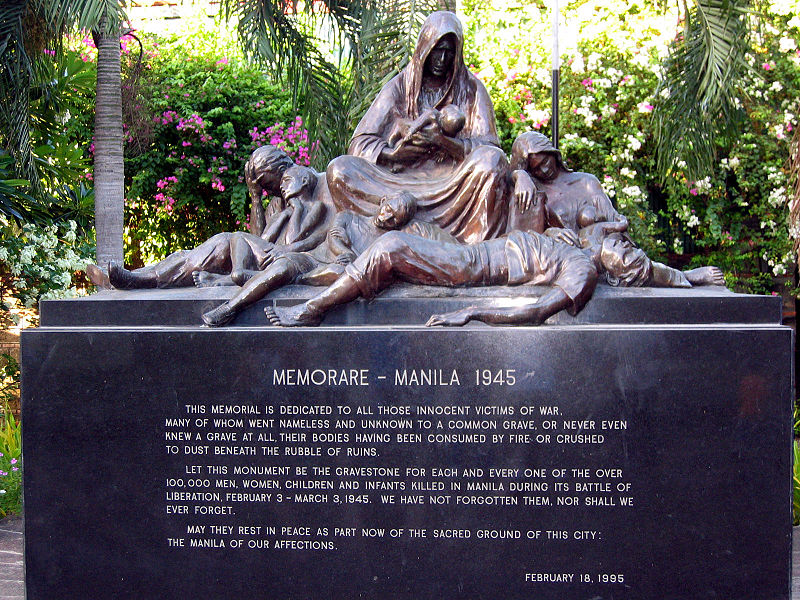
If there is one memorial that captures the human cost of the Battle of Manila, it is Memorare Manila 1945. This monument is dedicated to the more than 100,000 defenseless civilians killed during the battle for the liberation of Manila between 3 February and 3 March 1945.
The monument gives language to what is too easy to lose in campaign histories: that the battle was not only a military operation but a civilian catastrophe. Families were massacred, neighborhoods obliterated, and an old city erased.
This is the emotional center of a Manila WWII trail. Corregidor tells the story of siege and resistance. Fort Santiago tells the story of imprisonment and atrocity. Santo Tomas tells the story of captivity and liberation. Memorare tells the story of the civilians.
What it is now
A quiet, powerful memorial that many visitors pass too quickly. It deserves time.
9. The Victims Inside the Fort — In Memory of the Victims in Fort Santiago
Within Fort Santiago is one of the most haunting WWII memorials in Manila.
Why it matters
This marker commemorates roughly 600 Filipinos whose remains were found in a nearby dungeon after the battle. It is a reminder that Fort Santiago was not only a scenic fortification or a Rizal site, but also a place where wartime atrocities ended in anonymous mass death.
This stop is easy to miss if you visit the fort casually. But for a WWII trail, it is essential. It anchors the story of Japanese occupation and the last days of violence in one specific, human place.
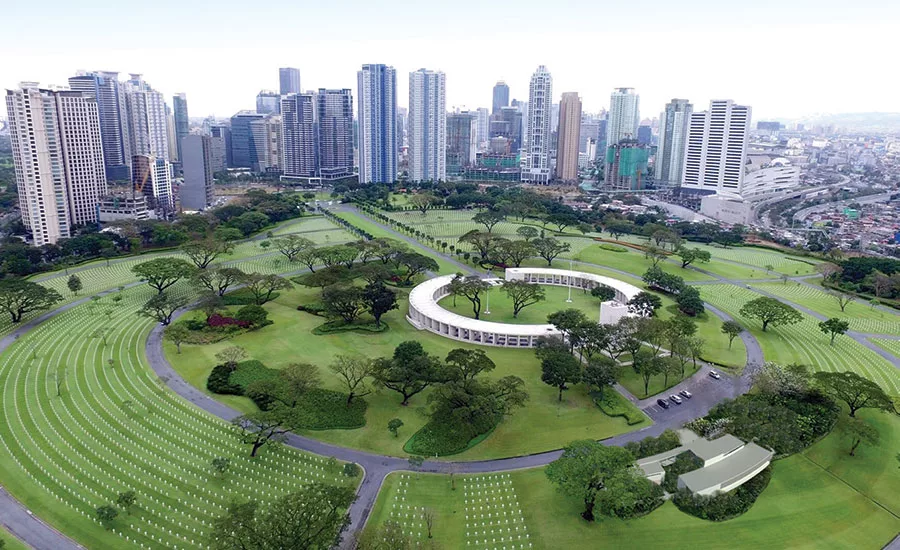
10. The Long Aftermath — Manila American Cemetery
Where it happened
Fort Bonifacio, Taguig.
Why it mattered
Not all WWII history in Manila ends with the liberation. Some of it continues in how the dead are remembered. Manila American Cemetery is the largest American overseas military cemetery, and it commemorates those killed across the Pacific war, including many who died in the Philippines and New Guinea.
The cemetery is important not just for scale, but for perspective. After the claustrophobic violence of Intramuros and Fort Santiago, this site widens the frame to the whole Pacific theater. It also reflects the intertwined wartime history of the United States and the Philippines.
What it is now
A beautifully maintained commemorative landscape with graves, memorial walls, and an interpretive visitor center. It is one of the best places to end a Manila WWII itinerary because it shifts the story from battle to remembrance.
Hidden WWII Sites in Manila Most Travelers Miss
Centro de Turismo Intramuros / San Ignacio Site
This is one of the best places to understand how much of old Intramuros vanished in 1945. The site is not just a museum stop; it is part of the architectural afterlife of the battle.
In Memory of the Victims in Fort Santiago
Often overshadowed by Rizal-related visits, this memorial is one of the most important WWII sites in the city.
Baluartillo de San Francisco Javier
This lesser-known section of the walls helps visitors see Intramuros as a fortress under siege rather than a purely picturesque heritage district.
Colayco Park, UST
A meaningful stop if you want to connect the liberation of Santo Tomas with the Filipino figures who helped guide the liberating forces into the campus.
Corregidor’s Pacific War Memorial and Battery Ruins
Many visitors know Malinta Tunnel, but the wider island landscape of batteries, ruins, parade grounds, and memorials is what makes Corregidor feel like a true battlefield archive.
A Self-Guided WWII Route Through Manila
Central Intramuros Route
- Fort Santiago
- In Memory of the Victims in Fort Santiago
- Memorare Manila 1945
- Manila Cathedral
- San Agustin Church
- Baluarte de San Diego
This is the best half-day route if you want the most concentrated and walkable WWII history in Manila.
Occupation and Liberation Route
- University of Santo Tomas
- Fort Santiago
- Memorare Manila 1945
This route tells the story of internment, occupation rule, atrocity, and liberation in a clear narrative arc.
Full WWII Manila + Corregidor Route
Day 1: Intramuros + UST
Day 2: Corregidor Island
Day 3: Manila American Cemetery
This is the most complete version of the story and the closest equivalent to a full WWII history trail through the capital region.
Practical Tips for Visiting Manila’s WWII Sites
- Start early in Intramuros. The heat builds quickly, and the Walled City is best explored in the morning.
- Use ride-hailing between clusters. Intramuros, UST, Taguig, and Corregidor departure points are not part of one walkable route.
- Bring ID for Manila American Cemetery. Visitors are required to present valid photo identification.
- Check Corregidor access before you go. Ferry schedules and site operations can change.
- Do not rush Memorare or the Fort Santiago memorials. These are the emotional heart of the trail.
Why Manila’s WWII History Still Matters
Manila is often introduced through food, colonial history, or urban chaos. But to understand the city fully, you have to understand what war did to it.
World War II in Manila was not a single event. It was a sequence: air raids, abandonment, occupation, internment, resistance, siege, massacre, liberation, and remembrance. That sequence still shapes how the city looks and feels today.
The walls of Intramuros, the grounds of UST, the dungeons of Fort Santiago, the names at Manila American Cemetery, and the silence of Memorare all tell one connected story: Manila was not merely occupied in World War II. It was broken, and then rebuilt.
That is what makes a WWII history trail through Manila so powerful. It is not just a tour of war relics. It is a journey through the destruction and survival of a capital.