
Imphal and Moirang WWII Historical Sites: A Complete Guide to the Battles, Memorials, and INA Trail in Manipur
Trace one of World War II’s most decisive campaigns in Asia through the cemeteries, hill battles, peace museums, and INA memorials of Imphal and Moirang
For many travelers, Manipur is still an overlooked corner of India: green valley roads, Loktak Lake, hill towns, and markets far from the standard tourist circuit. But in 1944, Imphal and Moirang sat at the center of one of the most consequential campaigns of the Second World War.
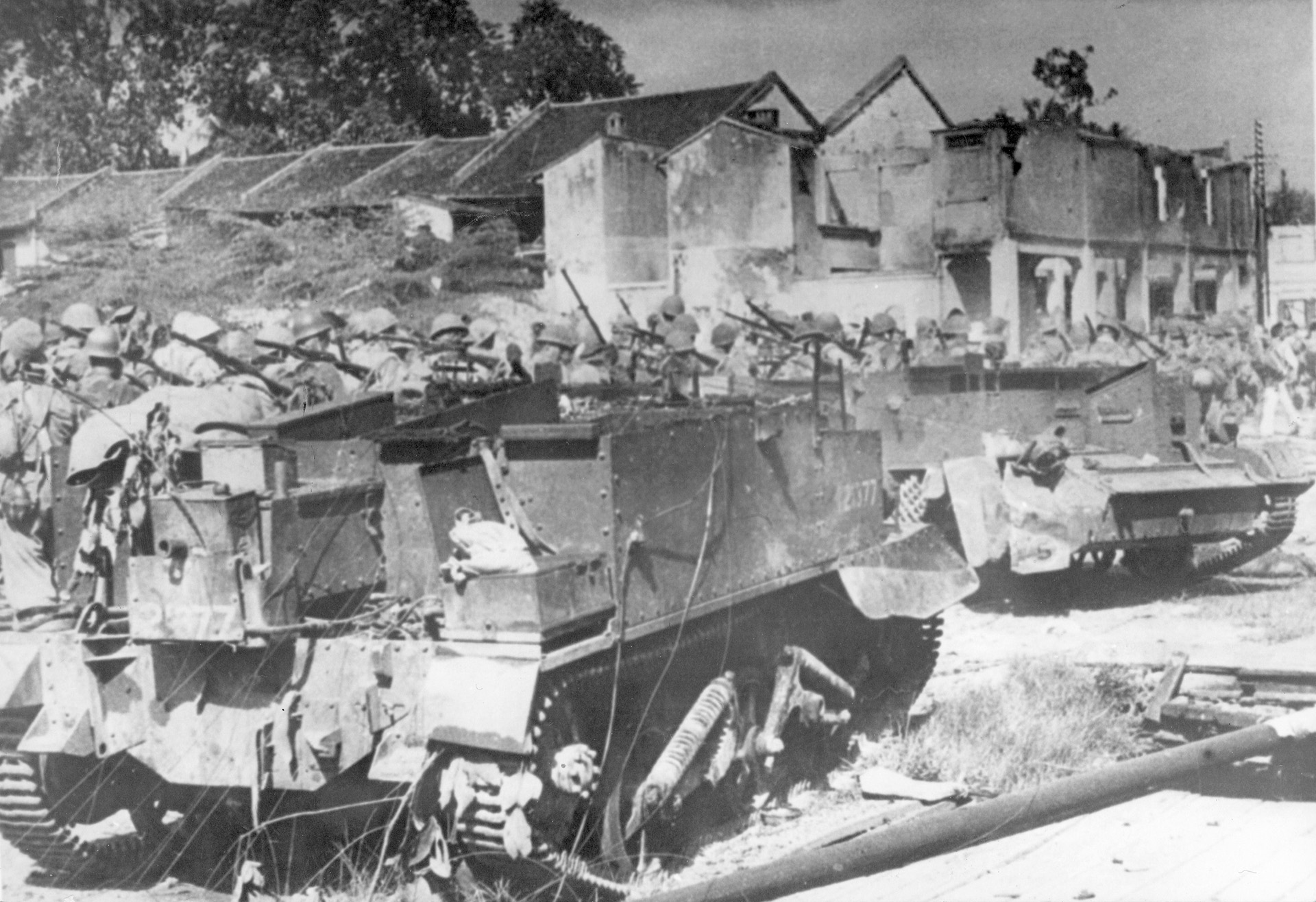
Here, the Japanese advance into India collided with British, Indian, African, and Allied forces in the battles of Imphal and Kohima. Here too, the Indian National Army entered Indian territory and raised the tricolour at Moirang. The result is a WWII landscape unlike anywhere else in India — part battlefield, part pilgrimage route, part cemetery trail, and part freedom-struggle memory map.
If Singapore tells the story of siege and surrender, and Manila tells the story of occupation and devastation, Imphal and Moirang tell the story of invasion, resistance, memory, and political meaning. This is where global war and Indian independence history visibly overlap.
Timeline of World War II Sites in Imphal + Moirang
This guide follows the wartime story of Manipur from the air raids and siege of Imphal to the Battle of Red Hill, the INA’s entry into Moirang, and the memorial landscape that remains today.
1. War Reaches Imphal — The Valley Becomes a Frontline (1942–1944)
Before the decisive battles of 1944, Imphal had already become strategically vital. After the Japanese advance into Burma, the easiest route into India ran through Manipur. Imphal’s roads, supply lines, and airfields suddenly mattered not just for local defense, but for the wider Allied war effort in the Burma theatre.
Why it mattered
Imphal was no longer a remote frontier town. It became a military hub and a defensive anchor. Troops, supplies, hospitals, and transport routes converged in the valley, and the city lived under the constant pressure of what everyone knew was coming: a direct Japanese attempt to break through into India.
This is the key to understanding every WWII site in Imphal today. The cemeteries and memorials are not isolated stops. They all connect back to the fact that the valley itself became a battlefield infrastructure zone — a place of roads, depots, air support, and high-stakes logistics.
Suggested context stop
Kangla Fort can work as a background stop if you want to understand wartime Imphal in the middle of a much older capital. It is not the core WWII site, but it helps visitors imagine what it meant for a historic city to be drawn into global war.
2. The Siege of Imphal — Imphal War Cemetery
Where it happened
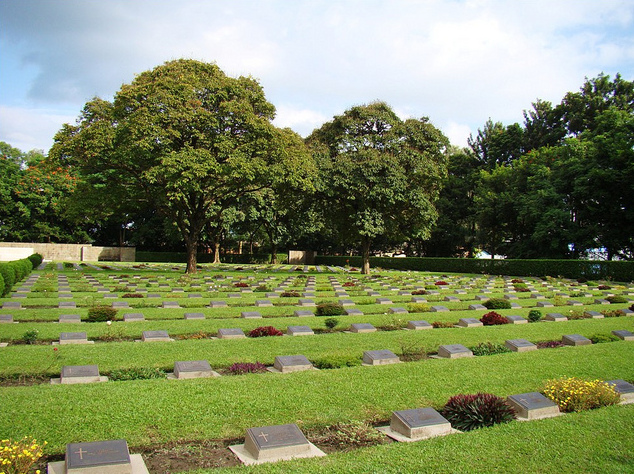
Imphal War Cemetery.
Why it mattered
The Imphal War Cemetery is the best place to understand the scale of the battle around the valley. Maintained by the Commonwealth War Graves Commission, it commemorates men who died in the Battle of Imphal and related fighting around Manipur.
This is not just a cemetery; it is a battlefield archive in stone. The names on the bronze plaques reflect how international the defense of Imphal was: Indian troops, British units, Africans, airmen, and other Commonwealth servicemen all passed through this theater. When you stand here, you are standing inside the memory of a campaign that helped halt the Japanese push into India.
The atmosphere is solemn, but the site is also surprisingly useful for orientation. It makes the Battle of Imphal feel less abstract. The war here was not one dramatic set-piece on a single ridge. It was a sustained struggle of roads, supply lines, villages, artillery, air support, and infantry positions stretching across the valley and surrounding hills.
What to look for
Take time with the unit names and home regions on the plaques. They reveal how wide the war’s geography really was, and how many different communities were drawn into the fighting around Imphal.
3. Indian Soldiers and the Cost of War — Imphal Indian Army War Cemetery
Where it happened
Imphal Indian Army War Cemetery.
Why it mattered
If the Imphal War Cemetery tells a broad Commonwealth story, the Imphal Indian Army War Cemetery tells a more specific one: the role and sacrifice of soldiers of the army of undivided India.
The cemetery contains mostly Muslim graves, while Hindu and Sikh soldiers who were cremated according to their faith are commemorated separately at the nearby memorial. This makes the site especially important for understanding how remembrance in wartime India had to work across different religious practices and burial traditions.
It is also one of the most moving places in the region because it recenters Indian soldiers. Too often, battle histories of the Burma front are told only through British or Japanese narratives. Here, the Indian dimension is impossible to miss.
What it is now
A beautifully maintained CWGC site in the city, and one of the most essential stops on any WWII route in northeast India.
4. The Cremated Dead — Imphal Cremation Memorial
Where it happened
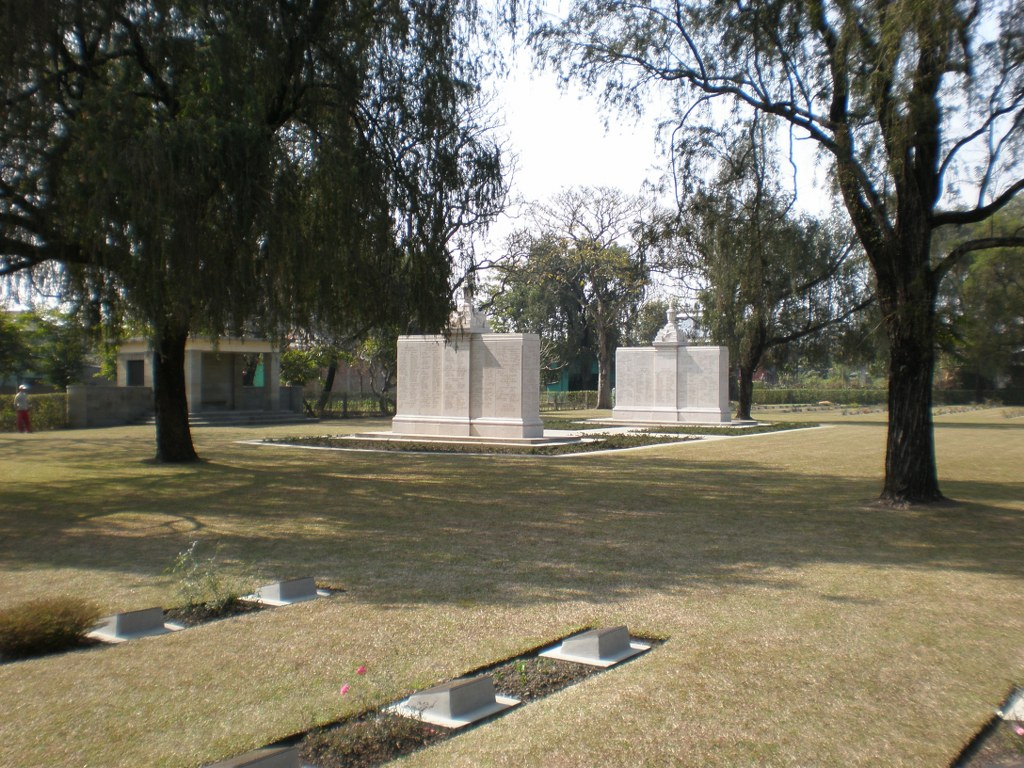
Within the Imphal Indian Army War Cemetery.
Why it mattered
The Imphal Cremation Memorial commemorates Hindu and Sikh soldiers and airmen whose remains were cremated in accordance with their faith. It is one of the most important WWII memorials in India because it reminds visitors that military remembrance was not one-size-fits-all.
This memorial expands the human story of the campaign. The battle was not only fought by named regiments and marching columns; it was endured by men from different regions, religions, and communities of undivided India. Their deaths had to be honored in ways that respected those differences.
That is why this stop matters so much in a historical trail. It adds cultural depth to the battlefield narrative and makes the war’s social diversity visible.
5. The Closest the Japanese Came from the South — Red Hill (Maibam Lokpa Ching)
Where it happened
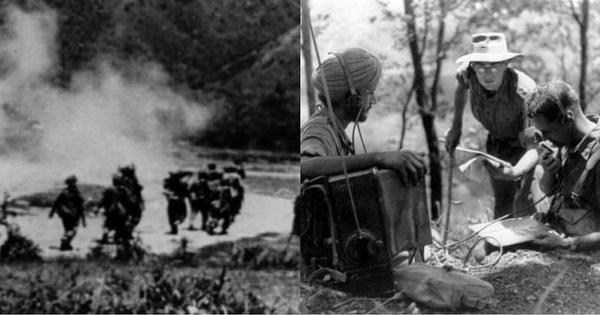
Red Hill / Maibam Lokpa Ching, south of Imphal on the Tiddim Road.
Why it mattered
Red Hill is one of the most dramatic battlefield sites in Manipur. This was where some of the fiercest fighting took place in May 1944, when Japanese forces pushed toward Imphal from the south. Histories of the campaign often describe Red Hill as the closest the Japanese came to reaching Imphal from this direction.
The site matters because it makes the battle feel physical. You are no longer thinking only in terms of strategy and maps; you are standing on the terrain that shaped the fighting. A hill, a road, a narrow axis of approach, and immense human cost — that is the story here.
It also helps explain why the battles of Imphal were so intense. Control of ridges, roads, and approaches could determine whether the valley held or fell. At Red Hill, the Japanese advance ran into one of its bloodiest local confrontations.
What it is now
A memorial landscape centered on the India Peace Memorial and the nearby museum zone. It is one of the most important wartime locations in Manipur and should be considered a core stop, not an optional detour.
6. From Battlefield to Reconciliation — India Peace Memorial and Imphal Peace Museum
Where it happened
At the foot of Red Hill / Maibam Lokpa Ching.
Why it mattered
The memorial and museum cluster at Red Hill shows how memory has evolved since the war. The India Peace Memorial, built by Japanese war veterans, transformed a battlefield of loss into a place of mourning and reconciliation. The later Imphal Peace Museum deepened that effort by interpreting the war not only as military history, but as a human tragedy whose consequences reached local civilians as well.
This is one of the most distinctive WWII sites in India because it is not just about victory or defeat. It is about what remains after the guns fall silent: grief, archaeology, international remembrance, and the attempt to turn former battle zones into spaces of reflection.
Visitors who have already seen the cemeteries in Imphal should come here next. The emotional arc becomes clearer: first the war dead, then the battlefield itself, then the later work of peace and memory.
What to expect
The museum is relatively modern, but that is part of its significance. It shows that the Battle of Imphal is not frozen in 1944; it is still being interpreted and remembered in the present.
7. The INA Enters Indian Soil — Moirang Kangla (April 14, 1944)
Where it happened
Moirang Kangla, within the INA memorial landscape at Moirang.
Why it mattered
Moirang occupies a unique place in India’s wartime memory. On 14 April 1944, Colonel Shaukat Ali Malik of the Indian National Army hoisted the tricolour here, an event remembered as the first ceremonial raising of the INA flag on Indian soil.
This makes Moirang different from the cemeteries and battlefield memorials around Imphal. It is not only a site of war. It is a site of political symbolism — one that links the Burma campaign to the story of Indian independence.
To visit Moirang Kangla is to see how local sacred geography, wartime movement, and nationalist memory converged in a single place. The event here was brief in military terms, but enormous in symbolic afterlife.
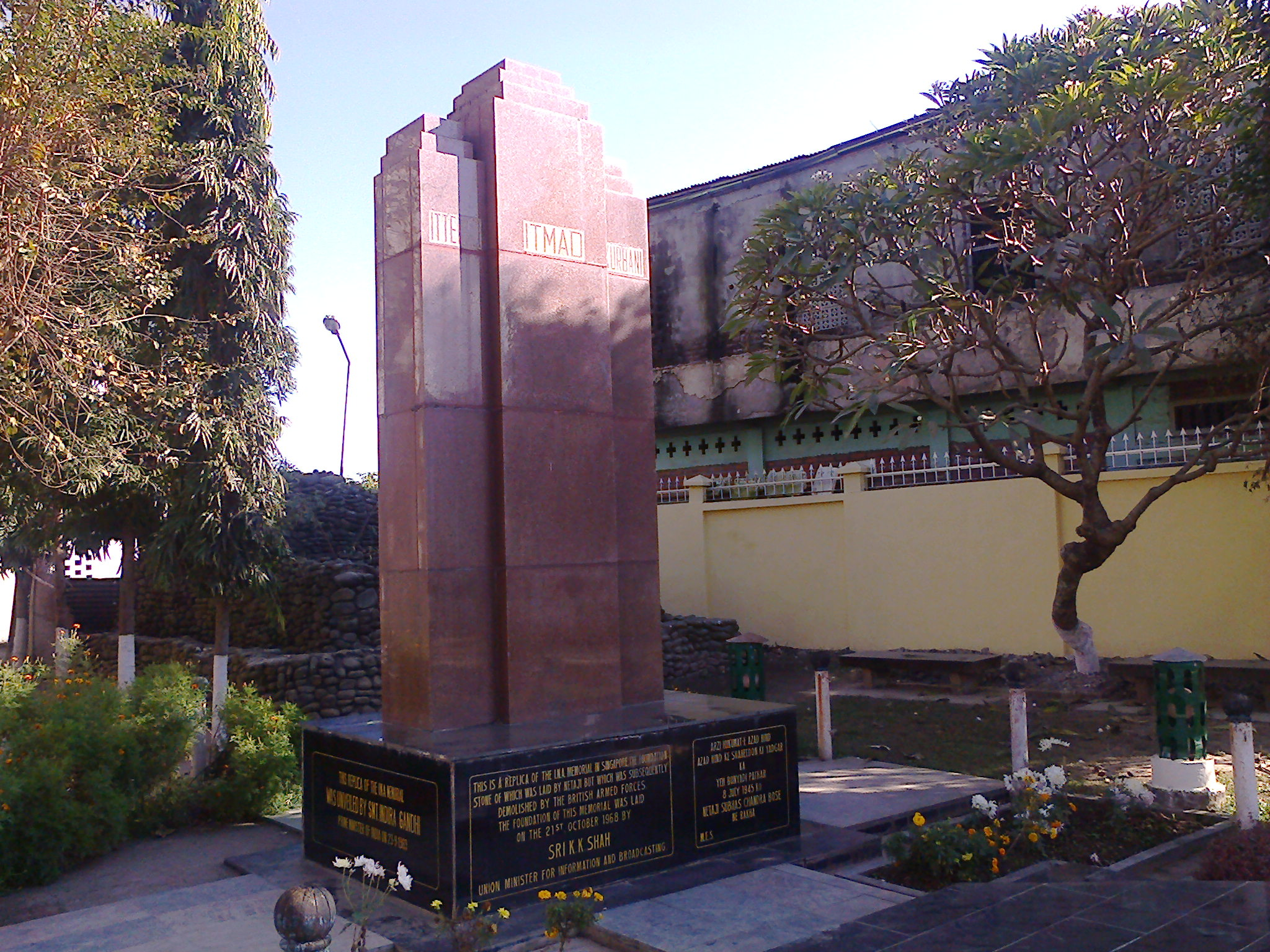
8. The INA Martyrs’ Memorial Complex — Moirang
Where it happened
INA Martyrs’ Memorial Complex, Moirang.
Why it mattered
The complex is the most important place in Manipur to understand the INA side of the campaign. It commemorates the soldiers of the Indian National Army, preserves the memory of the flag-hoisting at Moirang, and houses the museum, statue, and commemorative structures that have made the site a national pilgrimage center.
This is where the global war narrative intersects most directly with India’s freedom struggle. The campaign in Manipur was part of the Japanese push into India, but for the INA it was also part of a political project: to enter India under the banner of Azad Hind and turn military movement into symbolic liberation.
The complex therefore should not be treated merely as a standard military museum. It is also a memory-space of nationalism, sacrifice, and contested historical meaning.
What to see
- The memorial itself
- The museum with INA-era photographs, letters, insignia, and memorabilia
- The statue of Netaji Subhas Chandra Bose
- The flag-hoisting site / Moirang Kangla within the complex landscape
Hidden or Extra WWII Stops You Can Add
Kanglatongbi War Memorial
If you want to widen the route beyond Imphal and Moirang, Kanglatongbi is one of the most meaningful additions. It marks a battle on the Imphal–Kohima road during the Japanese advance from the north.
Shangshak War Memorial
A useful extension if you want to connect the Imphal story to the wider northeast front. Shangshak reflects the earlier fighting that shaped the campaign before the siege of Imphal fully unfolded.
Battlefield Road Corridors
Even where there is no single monument, roads such as the Tiddim Road and the Imphal–Kohima road remain essential to understanding how the campaign moved.
A Self-Guided WWII Route Through Imphal + Moirang
Central Imphal Route
- Imphal War Cemetery
- Imphal Indian Army War Cemetery
- Imphal Cremation Memorial
This is the best short route if you only have half a day. It focuses on sacrifice, burial, and remembrance.
Southern Battlefield Route
- Imphal War Cemetery
- Red Hill / India Peace Memorial
- Imphal Peace Museum
This route works best if you want the strongest battlefield narrative. It takes you from remembrance in the city to the actual southern battle zone.
Full Imphal + Moirang Route
- Imphal War Cemetery
- Imphal Indian Army War Cemetery
- Imphal Cremation Memorial
- Red Hill / India Peace Memorial
- Imphal Peace Museum
- INA Martyrs’ Memorial Complex, Moirang
- Moirang Kangla flag-hoisting site
This is the most complete version of the story. It moves from Allied defense and loss to battlefield memory to the INA’s political and symbolic presence in Moirang.
Practical Tips for Visiting
- Start in Imphal early. The cemetery sites are calmest in the morning.
- Use a car for Red Hill and Moirang. Once you leave the city, the trail becomes much easier with a hired vehicle.
- Treat the sites as memorials first. These are not ordinary sightseeing stops.
- Do not skip Red Hill. It is the key place where the geography of the battle becomes real.
- Pair the cemeteries with the museum. Together they give you both the human cost and the battlefield story.
Why Imphal + Moirang’s WWII History Still Matters
The battles of Imphal and Kohima are often described as turning points in the Burma campaign, but that military phrase does not fully capture what survives in Manipur today.
In Imphal, the war remains visible through graves, memorial plaques, and the memory of a valley held under siege. At Red Hill, the terrain itself still explains why the fighting was so desperate. In Moirang, the story shifts from Allied defense to the politics of liberation and the enduring memory of the INA.
That is what makes an Imphal + Moirang WWII trail so powerful. It is not only about who won a campaign. It is about how global war, local suffering, and India’s freedom struggle intersected in one corner of the northeast.
For travelers interested in more than scenery, this is one of the most important historical journeys in India.