
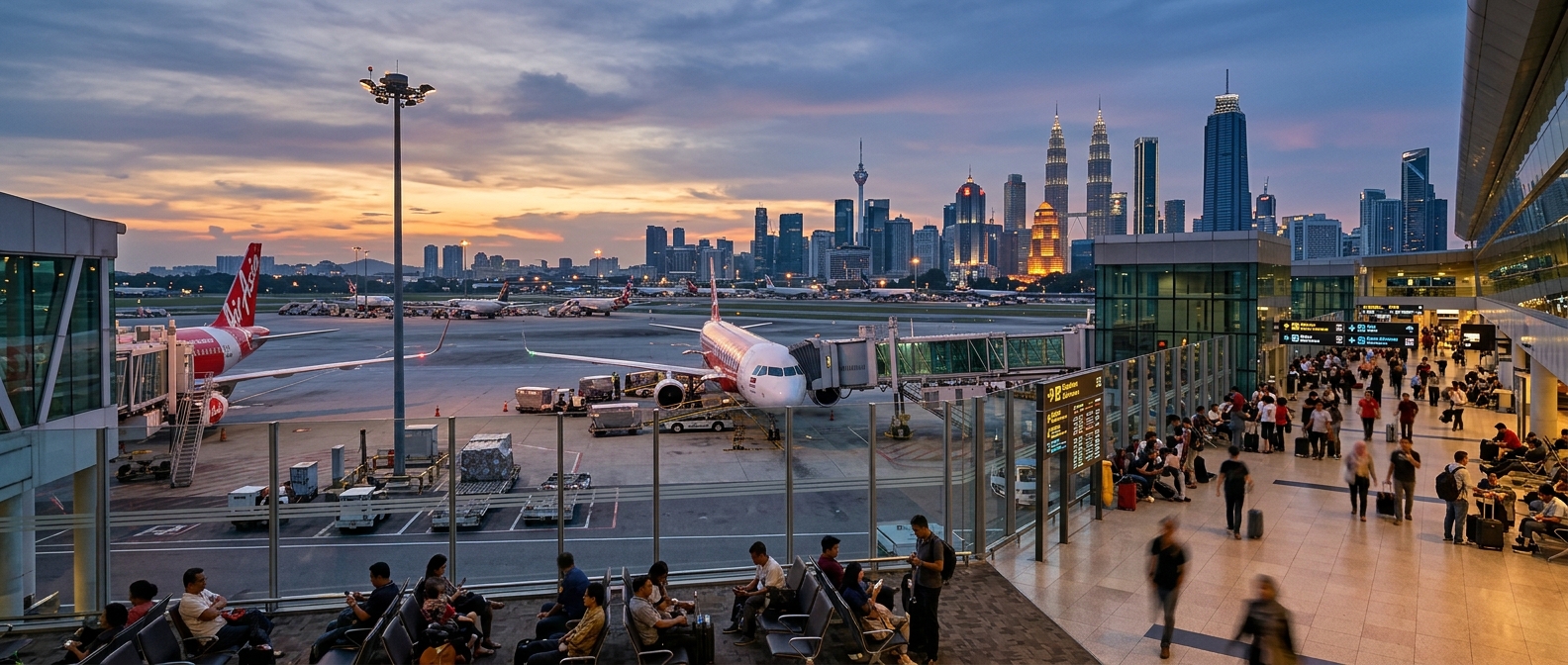
F1 Singapore 2026: The Backdoor Routes to Save 40 Percent on Flights
With Singapore Grand Prix prices peaking, savvy travelers are booking into nearby hubs to bypass the Changi price hike.
F1 Singapore 2026: The Backdoor Routes to Save 40 Percent on Flights
The 2026 Singapore Grand Prix is officially scheduled for September 18–20, 2026, and the "F1 Tax" has already arrived. This week alone, searches for direct flights to Changi (SIN) spiked by 300 percent, sending algorithmic pricing into a vertical climb that would make a fighter pilot dizzy.
If you are currently looking at a $1,800 economy ticket from London or a $1,200 seat from Sydney, stop. You are being punished for following the crowd. Singapore is an island, but it isn’t an isolated one. By utilizing "backdoor" routes through neighboring hubs, you can bypass the Changi price hike and easily shave 40 percent off your total travel cost.
Here is how to find the cheapest flights to Singapore for F1 September 2026 without selling a kidney for a grandstand seat.
The "Senai Secret": Flying into Johor Bahru (JHB)
The single most effective way to dodge the Singapore price surge is to pretend Singapore doesn't have an airport. Instead, look for flights to Senai International Airport (JHB) in Johor Bahru, Malaysia.
Johor Bahru sits just across the bridge from Singapore. While airlines jack up prices for any flight landing at Changi during race week, Senai often remains at standard regional rates. If you are flying from within Asia—places like Bangkok, Ho Chi Minh City, or Jakarta—the price difference is often staggering. Even for international travelers, booking a long-haul flight to Kuala Lumpur (KUL) and then a $30 domestic connection to JHB can save hundreds.
Once you land at Senai, you aren't stranded. You can take a taxi or a bus to the Johor–Singapore Causeway . After clearing immigration, you are in the heart of Singapore’s northern suburbs, a short MRT ride from the Marina Bay Street Circuit.
The Pro Move: If you're coming from a country where roaming charges are predatory, grab a Malaysia eSIM before you land in JHB. It will cover your navigation through the border crossing, and you can switch to a Singapore profile the moment you hit the mid-point of the bridge.
The Kuala Lumpur Land Bridge
Kuala Lumpur (KUL) is one of the most competitive flight hubs in the world. For the 2026 race, the price disparity between a flight to KUL and a flight to SIN will likely be the difference between staying in a hostel and booking a 4-star hotel.
Instead of the 1-hour flight from KUL to SIN—which will also be inflated due to demand—consider the luxury bus. This isn't a "Greyhound" experience. Companies like Aeroline or Transtar offer "First Class" coaches with massive reclining seats, onboard meals, and WiFi. They depart from places like Corus Hotel and drop you off directly in central Singapore.
The journey takes about 5 to 6 hours, depending on traffic at the border. If you do the math, by the time you factor in airport security, check-in buffers, and the flight itself, the bus is only about two hours slower but can be $400 cheaper during F1 peak dates.
The Batam "Sea Entry" Strategy
This is the route most tourists completely overlook. Batam is an Indonesian island just a short ferry ride away from Singapore. Because it’s an international border crossing involving a different country, the airline algorithms often fail to link Batam’s Hang Nadim Airport (BTH) with the Singapore Grand Prix demand.
Check for flights into Jakarta (CGK) and then a domestic hop to Batam. From Batam, you can take a high-speed ferry from the Batam Centre Ferry Terminal to Singapore’s HarbourFront Centre. The boat ride takes about an hour.
It sounds like a lot of moving parts, but for a group of four people, the cumulative savings can easily exceed $1,500. Just ensure you have your travel insurance sorted; when you are mixing flights, ferries, and multiple immigration points, you want coverage for the "what-ifs."
The "Self-Transfer" Gamble: Why Two Tickets are Better Than One
Airlines love "protected" transfers. They charge you a premium for the peace of mind that if your first flight is delayed, they will put you on the next one. During F1 2026, you are paying a massive premium for that protection.
The savvy way to book is the Self-Transfer.
- Book a long-haul flight to a massive hub like Bangkok (BKK) or Hong Kong (HKG) on a major carrier (British Airways, Emirates, Cathay Pacific).
- Book a separate ticket on a budget carrier like AirAsia, Scoot, or Jetstar for the final leg into Singapore.
The trick is the buffer. Do not give yourself a two-hour window. Give yourself an overnight stay in Bangkok or Hong Kong. Eat some world-class street food at the Yaowarat Night Market , sleep in a real bed, and take the morning flight to Singapore. Even with the cost of a nice hotel and dinner, you will likely still be 30% under the cost of a single-ticket direct flight to Changi.
The Surprising "Reverse Direction" Hack
Here is the tip most people won't tell you: sometimes the cheapest way to get to Singapore is to fly past it.
If you are flying from Europe or the US, check flights to Perth (PER) or Darwin (DRW) in Australia. Because September is the shoulder season for parts of Australia, you can sometimes find deals that, when paired with a budget flight back up to Singapore, undercut the direct "Northern" routes. It sounds insane to fly 14 hours to Australia only to fly 5 hours back, but if the goal is the lowest price point, the data doesn't lie.
Logistics: Don't Let the Savings Evaporate
Saving 40% on airfare is pointless if you spend it all on last-minute logistics.
- Connectivity: Do not wait until you hit Changi to find a SIM card kiosk. They will be swamped. Download a Singapore eSIM before you leave home. You’ll have data the second the wheels touch the tarmac (or the ferry hits the dock), allowing you to call a Grab (the local Uber) before the taxi queue reaches 200 people.
- Ground Transport: If you use the Johor Bahru route, don't just wing it. Use a service like KiwiTaxi to pre-book a private transfer. It’s more expensive than the bus, but it’s a lifesaver when you have luggage and the humidity is hitting 90%.
- The "Hidden" Airport: If you must fly into Singapore but want to avoid the main terminal chaos, look for flights into Seletar Airport (XSP). It’s primarily used by Firefly for flights from Malaysia, but it is the fastest immigration experience in the country.
Tracking the 2026 Price Dips
Flight prices for F1 2026 won't just go up; they will fluctuate wildly as airlines add "extra" capacity (Ad-hoc flights) to meet the 300% search demand.
Use a tracker like PingWing to monitor specific routes. Don't just track "London to Singapore." Track "London to Kuala Lumpur" and "Bangkok to Singapore" simultaneously. The moment the "backdoor" route drops below your target price, strike.
The 2026 Singapore Grand Prix is going to be an expensive weekend—the hotels alone will see to that. But there is no reason to hand over an extra $800 to an airline just because you chose the most obvious destination on the map. Book the hub, take the bus or the ferry, and spend that saved cash on a better view of the Turn 13 hair-pin.
I still get tripped up by the border traffic at the Woodands Checkpoint myself; no matter how much you plan, sometimes the "1-hour" crossing takes three. Build in the buffer, keep your cool, and remember: the race doesn't start until Sunday, but the savings start the moment you stop booking like a tourist.