
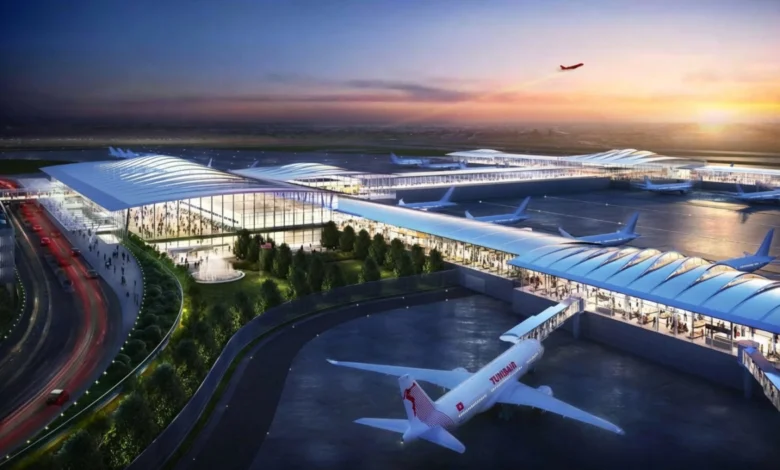
Tunisia’s $1 Billion Airport Bet: Is Tunis the New Mediterranean Hub?
With a massive expansion of Tunis-Carthage International officially underway, North Africa is positioning itself as a major alternative to European layovers.
Tunisia’s $1 Billion Airport Bet: Is Tunis the New Mediterranean Hub?
Tunisia just put a billion dollars on the table to transform Tunis-Carthage International Airport into a premier Mediterranean transit point. On March 11, 2026, the government officially greenlit a massive $1 billion expansion aimed at doubling passenger capacity and modernizing a terminal that has, frankly, been showing its age for a decade.
If you’ve flown through North Africa recently, you know the routine. You likely connected in Paris-Charles de Gaulle (CDG) or Istanbul (IST). Tunisia is betting that by 2030, you’ll be choosing a layover in Tunis instead. But while the construction crews move in, the practical reality for travelers is changing right now.
The Strategy: Avoiding the "European Tax"
For years, flying between Sub-Saharan Africa and Europe or North America has involved what I call the "European Tax"—inflated fares and mandatory Schengen-adjacent layovers that add hours to your trip. Tunisia’s expansion of Tunis-Carthage (TUN) isn't just about bigger lounges; it’s a geographical power play.
By positioning itself as a bridge, Tunis aims to undercut the pricing of major European hubs. We are already seeing Tunisair and Nouvelair aggressively pricing routes from London, Frankfurt, and Montreal into the African interior. If the expansion succeeds in streamlining transit, the "Tunis connection" could become the smartest budget hack for long-haul travelers in the hemisphere.
The 4-Hour "Carthage Escape" (A Counterintuitive Tip)
Most travel blogs will tell you never to leave the airport unless you have a six-hour layover. In Tunis, that’s bad advice.
Tunis-Carthage is uniquely situated. Unlike the sprawling desert airports of the Gulf or the distant hubs of London and Paris, TUN is practically inside the city. It is a mere 15-minute drive from the airport gates to the blue-and-white cliffs of Sidi Bou Said .
If you have a four-hour layover, don't sit in a plastic chair staring at a broken flight monitor. Clear customs, grab a taxi, and head straight to Café des Delices . You can have a mint tea overlooking the Mediterranean and be back through security before your boarding group is even called. It is the only major "hub" airport where you can genuinely experience a country’s highlight reel during a standard connection. Just make sure you have your Tunisia eSIM active the moment you land so you can track your return flight and call a bolt if the taxi line looks long.
Navigating the Current Chaos
Let’s be honest: until that $1 billion investment bears fruit, Tunis-Carthage is a work in progress. It’s crowded. The signage is a suggestion rather than a rule. Here is how you handle it today:
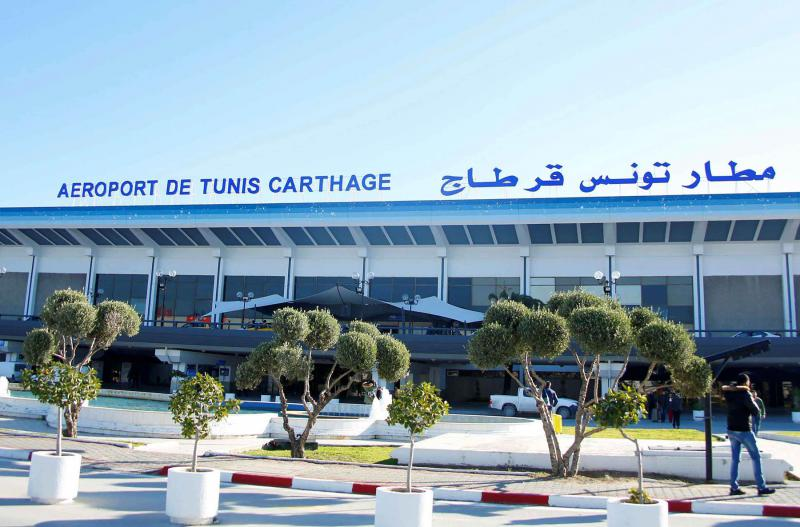
- The "Lounge" Reality: The Espace Privilege lounge is decent, but don't expect the opulence of Emirates or Qatar. It’s a place for quiet and a clean bathroom. If you aren't flying business, the walk-in rate is usually worth it just to escape the main terminal's humidity.
- The Taxi Gauntlet: When you exit the arrivals hall, you will be swarmed. Ignore the "official" looking men shouting "Taxi?" and walk directly to the yellow taxi queue. Insist on the meter (compteur). If they refuse, get out. A ride to the city center or the ruins of Carthage should rarely exceed 15-20 TND ($5-7 USD).
- Currency Control: Tunisia has a closed currency. You cannot take Tunisian Dinars out of the country. If you withdraw too much at the airport ATM, you’ll have to change it back before you leave, which requires your original exchange receipt. Keep that slip of paper like it’s your passport.
For those planning to explore further than the airport perimeter, booking a reliable airport transfer in advance is the best way to bypass the arrivals hall madness, especially if you’re carrying gear or traveling with a group.
Why the Expansion Matters for Your Wallet
A billion dollars buys a lot of concrete, but it also buys competition. Currently, Royal Air Maroc (Morocco) and Ethiopian Airlines dominate the African transit market. Tunisia entering the ring with a modernized TUN means fare wars.
Watch for new routes popping up on flight trackers throughout 2026. As the terminal grows, expect "stopover programs" similar to what Icelandair or Qatar Airways offer—where the airline subsidizes a night in a hotel in Gammarth or the Medina to encourage you to stay a day.
Connectivity and Safety
Tunisia is generally safe, but its digital infrastructure can be spotty during peak transit times. The airport Wi-Fi is notoriously finicky. If you’re planning to work during your layover, don't rely on the terminal's routers.
Moreover, because you’ll likely be hopping between public Wi-Fi networks in cafes or the airport, a secure VPN isn't just a "nice to have"—it’s essential for accessing your banking or booking apps without getting flagged or compromised.
The "Other" Airport: Enfidha vs. Carthage
When booking, be careful. You might see cheap flights to "Tunis" that actually land at Enfidha-Hammamet (NBE). While NBE is newer and shinier, it is nearly 100km away from the capital. It’s great for the beach resorts of Sousse or Hammamet, but if your goal is a quick city layover or a business meeting in the capital, an NBE flight will cost you two hours and a $50 taxi ride. Always double-check the airport code. If it doesn't say TUN, you aren't in the city.
Is It Worth the Risk?
Tunisia’s bet is a gamble on stability and efficiency. For the traveler, the expansion means that within three years, the "Tunis Connection" will likely be a much smoother, more frequent option for crossing the Mediterranean.
But you don't have to wait for the construction to finish to make this work for you. The beauty of Tunis-Carthage is that its "flaws"—its small size and proximity to the city—are actually its greatest assets for the adventurous traveler. You can experience a UNESCO World Heritage site and a Mediterranean sunset in the time it takes most people to find the food court at Heathrow.
Just remember that while the government is spending a billion on the airport, they haven't fixed the flight delay issues that plague North African carriers yet. Always ensure your travel insurance covers missed connections. If you’re self-connecting (booking two separate tickets to save money), give yourself at least four hours in Tunis. If everything goes right, you get a beautiful lunch in Sidi Bou Said. If things go wrong, you have a buffer.
The Mediterranean is getting a new hub. It might be loud, it might be under construction, but it’s arguably the most interesting layover you’ll have this year. Keep an eye on the boards; the Tunis route is about to get very busy.