
The World Cup 2026 Flight Gridlock: Why You Need to Book Your Multi-City Route Now
With 104 matches across 16 cities, the logistics for this summer’s World Cup are a nightmare—we break down the smartest "open-jaw" routes to save your trip.
104 matches. 16 host cities. Three nations. If you think the 2026 FIFA World Cup is just another tournament, your wallet is in for a violent awakening.
The scale of this event is unprecedented, and the airline industry knows it. With the opening whistle set for June 11, carriers like United have already begun aggressive expansion, adding specialized routes to connect Vancouver, Mexico City, and the U.S. megalopolises. But these "special routes" come with "special pricing"—the kind that can devour a travel budget before you’ve even bought a single overpriced stadium beer.
If you plan on following your team through the group stages and into the knockout rounds, the traditional round-trip ticket is your enemy. You need a multi-city strategy that treats North America like a chess board. Here is how to navigate the 2026 flight gridlock without losing your mind.
The Geography Trap: Why 2026 is Different
In Qatar, you could practically see the next stadium from the roof of your hotel. In Germany or South Africa, a few hours on a train or a short hop got you across the bracket. 2026 is a different beast entirely. We are talking about 3,000-mile gaps between venues.
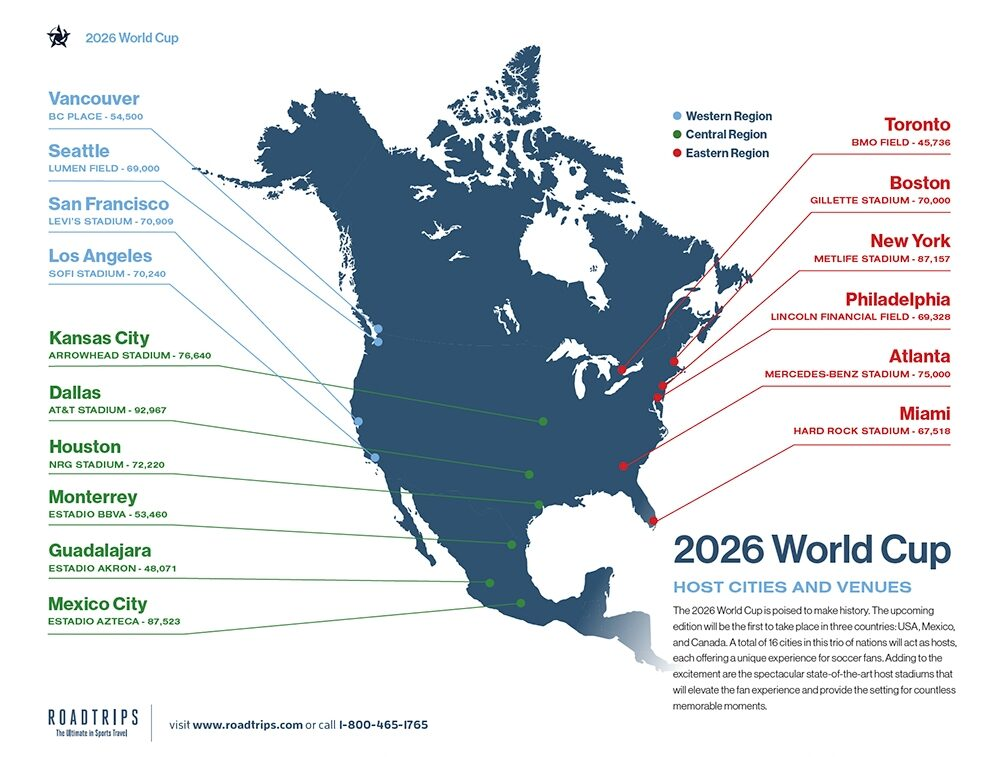
Flying from a morning match at BMO Field to a late-night fixture in Los Angeles isn't a commute; it’s a transcontinental expedition. The demand for these specific corridors will be so high that seat availability will vanish months before the tournament begins.
This is where "open-jaw" routing becomes your most powerful tool. Instead of flying into and out of the same city—say, New York (JFK)—you fly into one region and out of another. For example, land in Seattle (SEA) for the West Coast openers and depart from Mexico City (MEX) after the final rounds. This prevents "backtracking," the single biggest waste of time and money in tournament travel. When the schedule is this tight, every hour spent flying back to your "hub" is an hour you aren't at a fan fest or sleeping off a victory.
The Regional Cluster Strategy
FIFA has attempted to group matches regionally to minimize travel, but "regional" in North America still covers massive distances. Smart fans are already mapping out clusters.
The Pacific Corridor: Vancouver (YVR), Seattle (SEA), San Francisco (SFO), and Los Angeles (LAX). If your team is drawn here, don't just look at the major hubs. Consider flying into smaller regional airports like Everett (PAE) near Seattle or Ontario (ONT) in Southern California. You’ll save on the initial fare and avoid the soul-crushing traffic of LAX. To keep your logistics fluid, booking flights across different carriers using a multi-city search tool is the only way to catch the best windows.
The Central/Mexico Pivot: This is where the logistics get tricky. Moving between Dallas (DFW), Houston (IAH), and Monterrey (MTY) involves crossing borders and dealing with varying airline ecosystems. If you are bouncing between the U.S. and Mexico, the "Cross Border Xpress" (CBX) at Tijuana is a legendary travel hack. You can fly domestically within Mexico to Tijuana, walk across a literal bridge into San Diego, and save hundreds compared to a direct international flight into LAX or Houston.
The Surprising Tip: The "Reverse Hub" Maneuver
Most fans will try to stay in the host cities. This is a mistake. Prices for flights and hotels in Philadelphia or Kansas City will be astronomical.
Instead, look for "Shadow Cities"—hubs that are a short, cheap flight away from the action but aren't hosting games themselves. Think Chicago (ORD) or Denver (DEN). Because these cities aren't hosting matches, their hotel and flight prices may remain relatively stable. You can use a Shadow City as your "base camp," flying into the host city on a 6:00 AM "milk run" flight for the match and returning the next morning. It sounds exhausting, but when a hotel in Dallas is $800 a night, a $120 round-trip from a nearby non-host city starts to look like a stroke of genius.
Connectivity: Don't Let Your Data Die at the Border
You will be crossing borders. Frequently. The transition between Canada, the U.S., and Mexico is notorious for triggering "roaming" charges that look like phone numbers.
Physical SIM cards are a relic. You don't want to be hunting for a kiosk at Estadio Azteca while trying to find your Uber. Get your data sorted before you leave the tarmac. A regional eSIM for North America allows you to maintain a single data plan that switches seamlessly between carriers as you cross from Vancouver to Seattle or San Diego to Tijuana. In a tournament where digital tickets and real-time transit updates are mandatory, losing connectivity is the same as losing your passport.
The Ground Game Gridlock
Airlines aren't the only ones hiking prices. The rental car market during the World Cup will be a bloodbath. If you're planning a road trip between East Coast hubs—say, from the fan zones at the Liberty Bell to a match in New Jersey—you need to reserve your wheels now.
However, avoid rentals for city-to-city travel if you can. The parking fees alone at major stadiums will cost more than your flight. For the Northeast corridor, use the Amtrak Acela. For everything else, renting a car is only viable if you’re staying in the suburbs and driving to a transit hub. Pro tip: Check the "off-airport" rental locations. Taking a $20 Uber to a rental office in the suburbs can save you $300 in "airport facility fees" that the big agencies tack on during high-demand events.
Booking Windows: The March/April Threshold
History shows that for mega-events, there is a "sweet spot" for booking. Too early, and airlines haven't released their full schedules or extra capacity. Too late, and you're competing with corporate sponsors and last-minute bandwagon fans.
We are currently in that window. Now that airlines like United and Delta have begun announcing their tournament-specific routes, the "baseline" price is set. It is unlikely to drop. Use a flight tracker to monitor the specific legs of your multi-city route. If you see a price drop on a SEA-DFW leg, jump on it. Don't wait for the whole "package" to get cheaper. It won't.
Final Thoughts for the 2026 Nomad
The 2026 World Cup will be a test of endurance. Not for the players—for you.
The fans who have the best experience won't be the ones who spent the most money. They’ll be the ones who realized that North America is too big to "wing it." They’ll be the ones who booked open-jaw tickets, secured their eSIMs early, and understood that sometimes the best way to get to a game in New York is to fly into Philadelphia and take the train.
One thing is certain: by June 2026, the "cheap seats" will be a myth. The only way to win is to play the logistics game better than the person sitting next to you. Start mapping your route, set your price alerts, and for the love of the game, stop looking at round-trip tickets. They’re a trap.
I’m still haunted by a missed connection in 2014 that cost me a Round of 16 match in Recife. Don't let a 3,000-mile gap in North America be the reason you're watching the game in an airport lounge instead of the stands.