
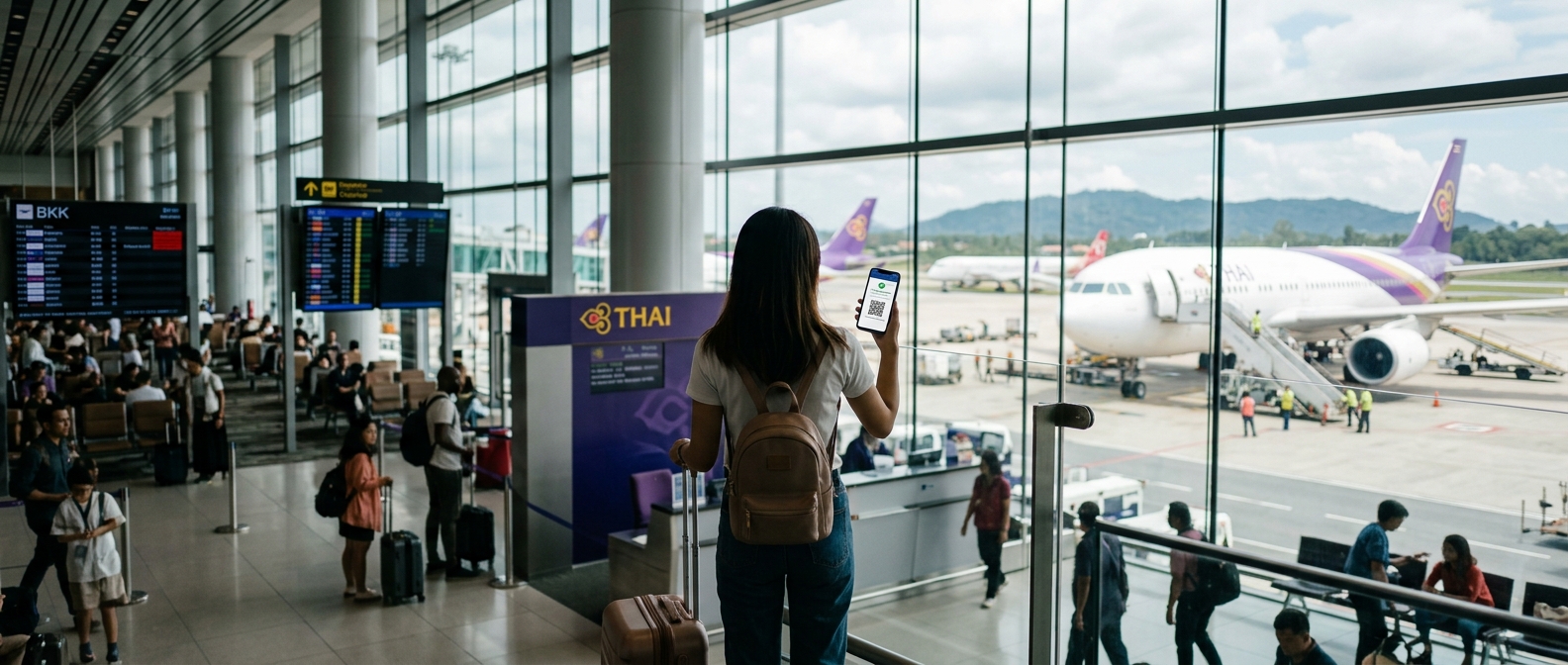
The Thailand ETA is Here: Why Your "Visa-Free" Entry Now Requires a Digital Pass
Starting this quarter, even visa-exempt travelers must pre-register online or risk being denied boarding at Changi or KLIA.
The Thailand ETA is Here: Why Your "Visa-Free" Entry Now Requires a Digital Pass
The check-in agent at Singapore Changi’s Terminal 4 looks at your passport, taps a few keys, and then asks the question that ruins your morning: "Do you have your Thailand ETA approval?" If you’re like most travelers who have enjoyed decades of "visa-free" entry into the Land of Smiles, your answer is likely a blank stare. But as of the most recent rollout confirmed by the Thai Ministry of Foreign Affairs, the days of simply rocking up to the border with a passport and a smile are officially over.
Starting late 2025 and moving into full effect for 2026, the Electronic Travel Authorization (ETA) is now a mandatory requirement for all visa-exempt nationalities entering Thailand by air, land, or sea. It’s a seismic shift in how Southeast Asian travel works. If you don't have that digital QR code on your phone before you reach the gate at KUL or SIN, you aren't just looking at a delay—you’re looking at a denied boarding.
The End of the "Just Show Up" Era
For years, Thailand has been the gold standard for easy access. Whether you were hitting the coworking spaces of Nimman Haemin or the beach clubs of Phuket, the process was invisible. You landed, got a stamp, and went about your day.
The new ETA changes the sequence of your trip. It is not a visa—you aren't asking for permission in the traditional sense—but it is a mandatory registration. Think of it like the American ESTA or the European ETIAS. The Thai government wants to know who is coming before they hit the tarmac at Suvarnabhumi (BKK).
The goal is twofold: security and speed. By pre-screening travelers, the Ministry of Foreign Affairs aims to flag individuals who shouldn't be flying before they ever leave their home soil. For the rest of us, it means the agonizingly long immigration queues at BKK might finally become a thing of the past.
The Boarding Gate Blockade: Changi and KLIA
The most important thing to understand is that the ETA check happens before you fly. Airlines are now legally required to verify your ETA status during check-in.
If you are flying a budget carrier like AirAsia or Jetstar out of Kuala Lumpur (KUL) or Singapore (SIN), don't expect much leniency. These hubs are the primary feeders for Thai tourism, and the ground staff have been briefed to be strict. In the past, you could "fix" paperwork at the arrival gate. With the ETA, if the system doesn't show an active authorization linked to your passport number, the airline faces heavy fines for flying you. They simply won't take the risk.
I’ve seen it happen at the automated check-in kiosks: the machine prints a "See Agent" slip, and five minutes later, a traveler is frantically trying to tether to airport Wi-Fi to fill out a form that should have been done 72 hours ago. Don't be that person.
How to Get Your Digital Pass
The application is handled through the official Thai E-Visa portal. While the interface is relatively straightforward, it does require specific details that you might not have at the tip of your fingers while standing in a security line.
You’ll need:
- A passport with at least six months of validity.
- Your flight numbers (arrival and departure).
- A confirmed address in Thailand (your hotel or Airbnb).
- A digital passport photo.
The processing time is officially listed as "up to 24 hours," but in practice, many travelers see an approval in their inbox within a few hours. However, relying on a quick turnaround while you're sitting in a Grab on the way to the airport is a recipe for a heart attack. Apply at least three days before your flight.
Once approved, you receive a QR code. You don't need to print it—a screenshot on your phone is fine—but keep it accessible. You’ll need to show it to the airline staff and potentially at the immigration gate.
The Surprising Perk: The E-Gate Fast Track
Here is the bit of news that makes the ETA actually worth the five minutes of paperwork: the ETA is your ticket to the automated gates.
Historically, visa-exempt travelers had to wait in the manual lines to be processed by an officer. With the rollout of the ETA, the Thai government is syncing the authorization data with the automated e-gates at BKK, DMK, and HKT. If you have an ETA, you can bypass the officer, scan your passport at the kiosk, and be out at the baggage carousel in under ten minutes.
This is a genuine game-changer for frequent flyers. If you’ve ever landed at Suvarnabhumi at 11:00 PM along with five other wide-body jets, you know that the "manual" line can easily take 90 minutes. The ETA is essentially a free "Fast Track" pass that everyone is now required to use.
Why Your "Visa Run" Just Got Harder
For the digital nomad crowd and the long-term "slow travelers," the ETA introduces a new layer of scrutiny. In the old days, you could do a quick "visa run" to Vientiane or Penang and come back the next day.
While the ETA doesn't technically change the rules of how many times you can enter Thailand, it does create a digital trail that is much easier for immigration officials to monitor. If the system sees you have applied for five ETAs in six months, it may flag your application for manual review. If you're planning a long-term stay, the "grey area" of back-to-back visa-exempt entries is shrinking. It’s now more important than ever to have your ducks in a row. For added peace of mind during these transitions, I always recommend picking up comprehensive travel insurance that covers administrative delays or entry issues, which are becoming more common as these digital systems find their footing.
Practical Tips for the Transition
- Check the Official Site Only: As with any new digital travel requirement, "proxy" sites will pop up, charging $50 or $100 to "process" your free or low-cost ETA. Only use the official Thai government portal (.go.th).
- Screenshot the QR Code: Don't rely on the airport Wi-Fi at Don Mueang (DMK) to pull up your email. Save the approval to your Apple or Google Wallet, or just take a high-res screenshot.
- Update Your Tech: Since the ETA is digital-first, make sure your phone is actually ready for the trip. You’ll need data the second you land to coordinate your pickup or check your hotel address. I usually skip the physical SIM card stalls at the airport—the lines are long and the prices are marked up. Instead, I set up a Thailand eSIM before I even leave home so I’m online the moment the wheels touch the tarmac.
- Confirm Your First Night: The ETA application asks for your "Address in Thailand." Don't just put "Bangkok." Put the full name of your hotel, such as the Ad Lib Bangkok . The system is looking for specific data points, and being vague can trigger a manual review.
The Connectivity Factor
One detail many travelers overlook is that the ETA system is part of a broader push toward a "Digital Thailand." This means more things are moving to apps and QR codes. From the "Thai Chana" style check-ins to booking inter-city trains on the D-Ticket app, your smartphone is now your primary travel document.
If you’re heading down to the islands, like Koh Samui, the digital transition is even more apparent. You’ll use QR codes for ferry boarding and even for some motorbike rentals. If you’re planning on exploring the hills of the north or the islands of the south on two wheels, you can actually pre-book a motorbike to ensure you get a well-maintained bike rather than whatever is left at the pier.
Final Thoughts
The Thailand ETA isn't a barrier; it’s a modernization. While it’s annoying to have one more "to-do" item on your pre-flight checklist, the payoff is a significantly more streamlined arrival experience. We are moving toward a world where the physical passport is just a backup for the digital profile already stored in the destination country’s cloud.
Don't let the new rules catch you off guard at the check-in desk. Spend the five minutes to register, get your QR code, and enjoy the fact that you’ll be the one zipping through the e-gates while everyone else is still clutching their paper arrival cards in a humid queue. The border is changing, and as long as you're digital-ready, it’s changing for the better.