
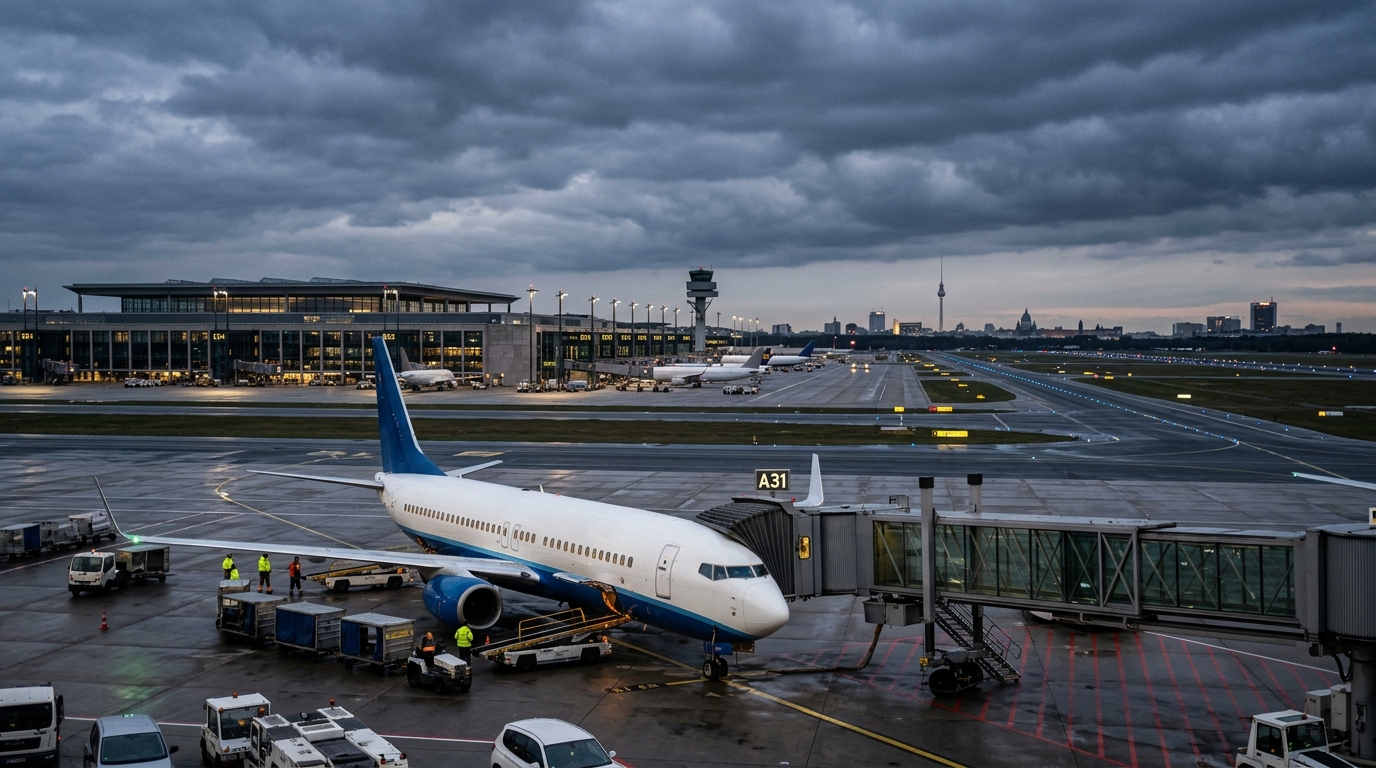
The Ryanair Germany Exit: Why Your 20 Euro Berlin Flight Just Vanished
One of Europe's biggest carriers is slashing 12 percent of its German capacity this month, leaving travelers with fewer options and higher fares.
The era of the "sandwich-priced" flight across Europe is twitching in its grave. If you’ve been relying on those €19.99 fares to whisk you from Berlin to the beaches of Mallorca or the cafes of Rome, I have some bad news.
Ryanair recently announced a massive 12 percent reduction in its German flight capacity starting in October 2026, specifically targeting Berlin, Hamburg, and Cologne. The airline is pulling planes out of the country faster than a tourist fleeing a sudden Baltic rainstorm, citing skyrocketing aviation taxes and security fees that make their ultra-low-cost model impossible to sustain.
This isn't just a corporate spat between Michael O’Leary and the German government; it’s a direct hit to your travel budget. When 22 routes disappear from Berlin Brandenburg (BER) alone, the remaining seats don't just get more crowded—they get expensive.
Here is how you navigate the new, pricier reality of German aviation without going broke.
The Geography of the Cut
Berlin is the biggest loser here. The airline is slashing its BER-based fleet from nine aircraft down to seven. This translates to a 20% drop in Berlin traffic. Hamburg (HAM) and Cologne (CGN) are also seeing significant reductions.
If you live in these cities, your weekend getaway just became a logistical puzzle. But here is the thing: the flights haven't just "vanished"—they've moved. Ryanair is shifting that capacity to "cheaper" countries like Italy, Poland, and Spain. To keep your travel costs down, you have to stop thinking about your local airport as the only starting line.
The "100km Rule" and the Polish Pivot
If you are based in Berlin, the smartest move you can make right now is to look east. Solidarity Szczecin-Goleniów Airport (SZZ) is roughly a two-hour drive or train ride from the German capital. While BER is losing routes because of German taxes, airports just across the border in Poland are thriving.
I’ve often found that the price difference between a flight from Berlin and one from Szczecin or Poznań covers the cost of a train ticket three times over. It’s a classic "border hack." You dodge the German aviation tax entirely. Just make sure you’ve sorted your data before crossing the border; even within the EU, having a dedicated Germany eSIM makes the transition between German and Polish networks seamless while you’re navigating the trains.
The Counterintuitive Silver Lining: Reliability
Here is a take you won’t hear in the news: This capacity cut might actually make your travel less stressful.
Berlin Brandenburg (BER) has been a comedy of errors since the day it opened. By reducing the number of flights, Ryanair is essentially lowering the pressure on the airport’s overstretched ground handling and security staff. Fewer flights mean fewer opportunities for the "domino effect" of delays that usually ruins a Friday evening at the gate.
If you do decide to stick with the remaining flights out of BER, you’re likely to see slightly better on-time performance. However, "slightly better" doesn't mean "perfect." If your flight is canceled or delayed by more than three hours due to these schedule reshuffles, don't just eat the cost. You can often claim hundreds of Euros back via Flight Compensation services that handle the legal heavy lifting for you.
Where the Budget Travelers are Migrating
With Ryanair pulling back, the vacuum will be filled, but not by "cheap" seats. Eurowings and Lufthansa are the primary beneficiaries, and they aren't exactly known for €20 tickets.
To find the remaining deals, you need to look at the "secondary" German hubs that Ryanair is still prioritizing because they have lower fees:
- Memmingen (FMM): Often marketed as "Munich West," though it’s nowhere near Munich.
- Karlsruhe/Baden-Baden (FKB): A gem for those in the southwest.
- Weeze (NRN): The alternative to Düsseldorf.
If you are traveling to Berlin for a holiday and find that return flights are triple what they used to be, consider flying into one of these secondary hubs and taking the Deutsche Bahn. If you end up staying near the center, perhaps around , the money you saved on airfare will easily cover a nice dinner in Mitte.
Stop Searching "Berlin to Everywhere"
The old hack was to go to a search engine, type "Berlin," and hit "Everywhere" to see what was cheap. In the post-October 2026 world, that strategy will mostly show you expensive legacy carrier results.
Instead, use a tool like Aviasales to track the specific routes that stayed. Ryanair isn't cutting everything; they are cutting the low-margin routes. The high-demand corridors to the Mediterranean will survive, but the competition will be fierce.
Pro Tip: Look for "W-patterns." This is where an aircraft flies from London to Berlin, then Berlin to a third city (like Catania), then back to Berlin, and finally back to London. The "middle" legs of these patterns are often the ones airlines try to keep because they maximize the plane's time in the air. If you can identify these routes, you’ll find the last remnants of budget pricing.
The Hidden Cost of the "Alternative"
When you start flying out of smaller airports like Memmingen or Weeze to save €80 on a ticket, you have to do the math on the "ground tax."
A train from Berlin to a smaller hub can cost €30–€60 if not booked in advance. Then there’s the time—four hours on a train vs. 30 minutes in a taxi to BER. My rule of thumb? If the alternative airport saves you less than €50 and adds more than two hours of travel time, it’s a bad deal. Your time has a per-hour value. Don't spend five hours to save ten bucks.
The Connectivity Hack
As these flights vanish, more travelers are being pushed onto multi-modal trips—combining a flight to one city with a bus or train to another. If you find yourself landing in a city you didn't intend to visit just because the flight was cheaper, don't just sit in the airport.
Grab a locker for your bags and head into the city center. Most German airports have excellent S-Bahn connections. If you’re stuck with a 6-hour "self-transfer" gap, it’s the perfect time to explore. Just ensure you’re using a Secure VPN when connecting to those sketchy airport or train station Wi-Fi networks to check your gate info.
Will the Prices Ever Come Back Down?
Probably not. The German government is committed to its environmental taxes, and Ryanair is committed to its profit margins. This isn't a temporary dip; it's a structural shift in how we travel through Central Europe.
The days of treating a flight like a bus ride—deciding on Thursday to fly on Friday for the price of a pizza—are ending in Germany. We are moving toward a "planned travel" model. This means booking 3–4 months out is no longer a "suggestion" for the frugal; it's a requirement for everyone.
The Last Word
Don't let the headlines scare you into staying home. The flights are fewer, and the gates are changing, but the continent is still reachable. You just have to be more clever than the average traveler.
The most successful travelers I know aren't the ones with the most money; they’re the ones who know how to pivot when the landscape changes. If Ryanair exits Berlin, you enter via Prague. If Hamburg gets too expensive, you look at Copenhagen.
The routes are vanishing, but the map is still there. You just need to find a new way to draw the lines. Keep a flight tracker bookmarked, stay flexible with your dates, and remember: a €100 flight that actually takes off is always better than a €20 flight that no longer exists.