
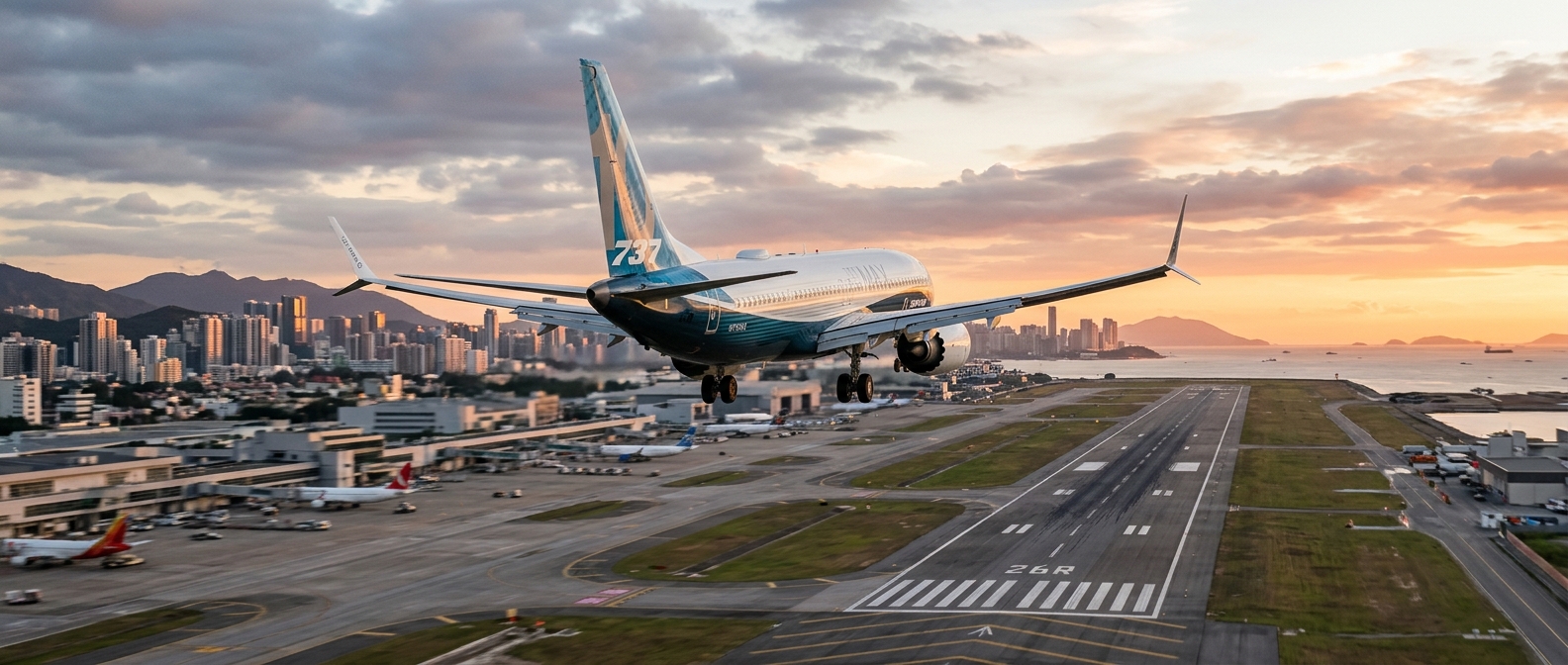
The Max 10 is Finally Here: What Boeing’s October 20th Certification Means for Your 2027 Fares
After years of delays, the largest 737 is cleared for takeoff, promising more seats and lower costs on high-traffic routes.
On October 20, 2026, the FAA finally certified the Boeing 737 Max 10, ending years of regulatory scrutiny and flight-test delays. For the average traveler, this isn't just a headline about a manufacturer's recovery; it’s the starting gun for a massive shift in how much you’ll pay for a transcontinental ticket in 2027.
The Max 10 is the largest member of the 737 family, designed to carry up to 230 passengers. It is Boeing’s direct answer to the Airbus A321neo, which has been eating Boeing’s lunch on high-density routes for half a decade. Now that the FAA has cleared the way for airlines to put Boeings long-delayed 737 Max 10 into service, the capacity wars are about to begin in earnest.
If you’re planning travel for the 2027 season, this certification changes your strategy. Here is how to navigate the arrival of the "Stretch Max" and what it means for your wallet.
The Capacity Crunch Ends at JFK and LAX
Airlines don't buy planes because they like the smell of new plastic; they buy them to lower "seat-mile costs." The Max 10 is roughly 5% more efficient per seat than the Max 8. When United or Delta swaps a 160-seat aircraft for a 230-seat Max 10 on a route like Newark (EWR) to Los Angeles (LAX), they suddenly have 70 extra "units of inventory" to sell.
When supply jumps by nearly 40% on a single tail number, prices soften. We saw this when JetBlue introduced the A321LR on transatlantic routes—fares dropped because the capacity was suddenly there to be filled. By mid-2027, as the Max 10 delivery stream hits its stride, expect a "fare war of the giants" on the following corridors:
- New York (JFK/EWR) to San Francisco (SFO)
- Chicago (ORD) to Orlando (MCO)
- Seattle (SEA) to Phoenix (PHX)
If you are a bargain hunter, 2027 is the year to stop looking at "budget" carriers for these routes. The legacy carriers (United, Delta, Alaska) will be so desperate to fill these 230-seat behemoths that their "Basic Economy" fares will likely undercut the low-cost carriers who are still flying smaller, less efficient planes. Use a flight search tool to track these specific routes six months out; the price volatility will be higher than usual as airlines figure out the Max 10’s load factors.
The "Hidden" Seat Map Trap
Newer doesn't always mean better for your knees. The Max 10 is a "stretched" aircraft, which means Boeing added fuselage plugs in front of and behind the wing. For you, this means the cabin is incredibly long—it feels more like a bowling alley than a plane.
Here is the counterintuitive tip: Avoid the mid-cabin. Because of the Max 10’s length, Boeing had to add an extra set of emergency exit doors just behind the wing to meet evacuation requirements. On many airline configurations, the row immediately in front of these doors will have limited or zero recline. Conversely, the row at the exit will have massive legroom but often "missing" windows or narrower seats because the tray tables are tucked into the armrests.
If you’re flying the Max 10 on United, try to snag a seat in the first four rows of Economy Plus or go all the way to the back. The very back of a stretched aircraft often feels more stable during turbulence than the middle, despite what common wisdom says about the "center of gravity."
Tracking the "Tail" to Save Your Trip
We’ve all been there: you book a flight on a "737-800" and show up to find a 20-year-old cabin with no power outlets and a flickering overhead screen. With the Max 10 entering service, the "equipment swap" lottery is going to get wild.
Airlines will use the Max 10 to replace aging 757s and older 737-900ERs. To ensure you’re actually getting the new bird (and the faster Wi-Fi and larger overhead bins that come with it), you need to look at the tail number. Once a flight is assigned an aircraft—usually 48 to 72 hours before departure—you can plug that tail number into a flight tracker. If the registration starts with N (for US-based planes) and ends in a sequence associated with the new Max 10 deliveries, you’re in luck.
The Ryanair Factor: Europe's 2027 Summer
While the news focus is often on US carriers, Ryanair has a massive order for the "Max 10" (which they often refer to as the 737-10 to avoid the "Max" branding). For those traveling through Europe in 2027, this plane will be the backbone of routes into high-traffic hubs.
Expect an explosion of cheap seats into airports like London Stansted (STN) and Dublin (DUB). If you’re visiting Dublin, you might find yourself landing and heading straight to a local spot like the Gravediggers to celebrate your €19 fare. These planes allow Ryanair to move more people without needing more "slots" (takeoff and landing permissions), which are incredibly hard to get in Europe.
Why 2027? (The Certification Lag)
You might wonder why an October 2026 certification matters for 2027 fares. It’s the "induction gap." Even though the FAA has signed the papers, Boeing still has a backlog. Pilots need to be "differences trained" on the Max 10 (it handles slightly differently on takeoff due to its length and a new "levered" landing gear design). Airlines need to fly "proving runs" without passengers.
Realistically, the Max 10 won't be flying in significant numbers until the second quarter of 2027. This gives you a strategic window. If you are booking a wedding, a graduation trip, or a summer 2027 vacation now, look for the "737-10" or "737-MAX10" in the aircraft type field. If it's there, the airline is betting on that capacity—and the prices are likely lower to ensure they don't fly 230 empty seats.
A Warning on "Narrowbody Fatigue"
The Max 10 can fly for about six hours. This means airlines will try to use it on routes that used to be served by widebody planes (like the 767). Warning: Just because the plane is new doesn't mean a six-hour flight in a narrowbody is comfortable. The 3-3 seating configuration on a 737 is narrower than the 2-3-2 or 2-4-2 configuration on a widebody. If you have the choice between a Max 10 and a slightly older Boeing 787 or Airbus A330 for a transcontinental hop, take the widebody every time. The extra inch of shoulder room and the "two-aisle" feel make a massive psychological difference on a five-hour flight from Boston to Seattle.
The One Tool You’ll Need
As these new planes roll out, schedules will be in flux. Boeing’s delivery schedule is notoriously "fluid." An airline might schedule a Max 10 for your June 2027 flight, only to swap it for an older, smaller Max 8 if the delivery is delayed.
Keep a flight tracking app on your home screen. Check it once a week leading up to your trip. If you see the aircraft type change from a "737-10" to a "737-8," your seat assignment might have been purged or moved to a middle seat because the seat maps don't align. Catching this early is the difference between an exit row and a seat next to the lavatory.
Aviation moves at a glacial pace until it doesn't. After years of "Coming Soon" posters, the Max 10 is finally a reality. It represents the end of the "narrowbody shortage" that has kept domestic fares artificially high since the pandemic. 2027 is looking like the year the traveler finally regains some leverage—provided you know which row to avoid and which tail number to track.
Don't just book the first flight you see. The Max 10 is coming, and it’s bringing a lot of empty seats that airlines are desperate to fill. Wait for the schedule loads in early 2027, and then strike.