
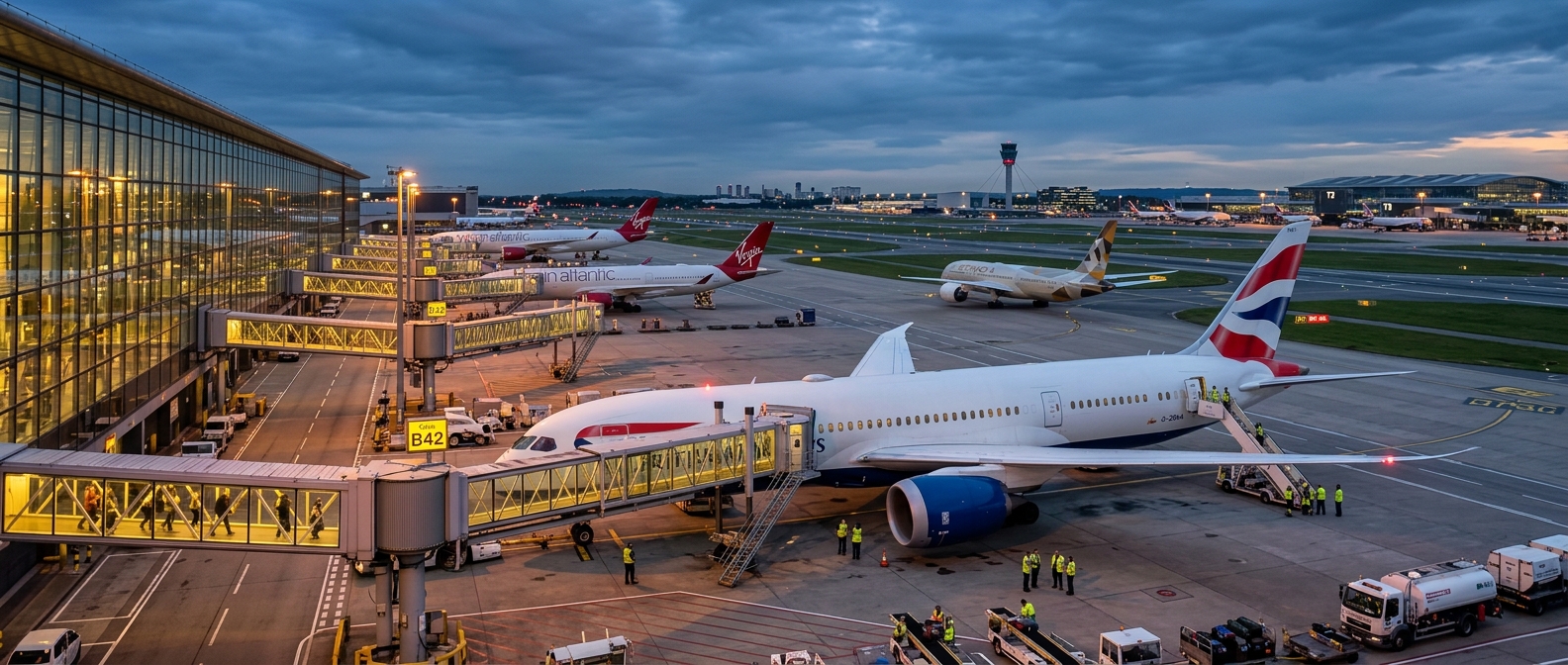
The LHR Transit Trap: Why You Might Need a UK ETA Just to Change Planes Next Month
The October 1st digital mandate has a hidden clause for transit passengers that could see you denied boarding at your origin even if you never leave the airport.
The LHR Transit Trap: Why You Might Need a UK ETA Just to Change Planes Next Month
You are standing at the gate at JFK, coffee in hand, ready to board a Virgin Atlantic flight to Delhi with a quick two-hour layover at London Heathrow. You aren't leaving the airport. You aren't even clearing customs. You’re just walking from Terminal 3 to Terminal 5 to catch your connection. But when the gate agent scans your passport, the light flashes red.
"Do you have your UK ETA?" they ask.
You explain you're just transiting. It doesn’t matter. As of October 1, 2026, the UK government has confirmed that the Electronic Travel Authorisation (ETA) requirement applies to all non-visa nationals, including those who remain "airside" and never set foot outside the terminal. If you don't have that digital green light on your passport record, the airline is legally required to deny you boarding at your point of origin.
This isn't just a minor rule change; it’s a fundamental shift in how international transit works through one of the world’s busiest hubs.
The End of the "Airside" Exception
For decades, international transit was a legal limbo. As long as you stayed behind the security scanners and didn't pass through immigration, you weren't technically "in" the country. You were just a body in motion between jurisdictions.
The UK is effectively ending that loophole for travelers from countries that previously enjoyed visa-free access, such as the US, Canada, Australia, and eventually, the EU. The logic from the Home Office is simple: they want to screen everyone before they even take off. By October 1, 2026, the digital border becomes absolute. If your plane touches British tarmac, you need permission to be there—even if that permission only lasts for the ninety minutes it takes to find your next gate.
This is a trap for the "set it and forget it" traveler. We are used to checking visa requirements for our destination, but we rarely think about the paperwork for a two-hour window spent sitting in a Wagamama at Terminal 5.
Who Exactly Needs This?
Currently, the ETA is being rolled out in phases. It started with Gulf Cooperation Council (GCC) states, but the October deadline brings the hammer down on everyone else. If you hold a passport from a country that doesn't currently require a visa for short stays (the "non-visa nationals"), you are in the crosshairs.
What’s particularly tricky is that the ETA is tied to your physical passport. If you’ve recently renewed your passport, your old ETA (if you had one from a previous trip) is void. It’s a £10 fee, which seems nominal until you realize the cost of a missed flight and a last-minute rebooking is closer to £1,000.
If you're planning a trip that touches UK soil, it’s worth securing travel insurance that specifically covers "documentation errors" or "denied boarding," as many standard policies will leave you high and dry if you simply forgot to apply for the proper authorization.
The "Hidden" Benefit of the ETA Trap
Here is a genuinely surprising tip that most travelers haven't considered: the ETA actually makes your layover safer.
Heathrow is notorious for "conformance" issues and tight connections. If your inbound flight from Los Angeles is delayed and you miss your connection to Nairobi, you might be stuck in London for 12 to 24 hours. Without an ETA, you are stuck sleeping on a plastic bench in the terminal because you aren't allowed to clear immigration to go to a hotel.
With an ETA, you have the legal right to pass through the e-gates. You can hop on the Heathrow Express, grab a decent meal, and sleep in a real bed at the Sofitel London Heathrow instead of shivering under a foil blanket in Terminal 2. In a way, that £10 is the cheapest "layover insurance" you’ll ever buy.
The Logistics: How to Avoid the Denied Boarding Call
The application process is handled entirely through the "UK ETA" app or the official government website. It takes about 10 minutes. You’ll need to take a photo of your passport and a "selfie" for biometric matching.
Most approvals come through in minutes, but the government warns it can take up to three working days. Do not wait until you are in the Uber to the airport. Airlines receive a digital signal when they scan your passport at check-in; if that signal says "No ETA Found," their systems will physically prevent them from issuing a boarding pass. There is no "I'll do it when I land" option.
For frequent flyers who jump between different regions, keeping track of these digital mandates is becoming a full-time job. Between the UK’s ETA, the US’s ESTA, and the upcoming EU ETIAS, the era of the "unencumbered" passport is over.
Why LHR is Different from Other Hubs
You might wonder why you don't need this for a transit in Singapore (Changi) or Dubai (DXB). The UK is moving toward a "total digital border" model. They want to know the identity of every person in their airspace.
While you're waiting for your connection, you might want to check your flight's real-time status. Since you’ll be switching between airport Wi-Fi networks—which are famously insecure and prone to data harvesting—using a secure VPN is non-negotiable. It keeps your banking info and personal data encrypted while you’re browsing from the lounge.
The "New Normal" Checklist
If you are flying through London (LHR), Gatwick (LGW), or Manchester (MAN) after the October deadline, your pre-flight checklist needs to look like this:
- Check Passport Expiry: Ensure you have at least six months left.
- Apply for ETA: Do this at least a week before departure. It’s valid for two years (or until your passport expires).
- Download PingWing: Use the PingWing flight tracker to monitor your arrival gate and connection terminal. Heathrow is massive; knowing you’re landing at T2 and departing from T5 before you even touch down saves precious minutes.
- Print the Confirmation: Even though it’s digital, having a PDF or a printout of your ETA reference number can save you from a headache if the airline's system is acting up.
The Future of the Layover
This mandate is a sign of things to come. The "transit zone" is disappearing. In its place is a world where your digital footprint must precede your physical arrival.
For the savvy traveler, this is just another hurdle to automate. Get the ETA, keep it on file, and enjoy your transit. If you're staying longer than a few hours and want to stay connected without paying £10 a day in roaming fees, grabbing a UK eSIM before you land is the smartest way to ensure you can call that Uber or check the train schedules the moment you clear the e-gates.
The "Transit Trap" only catches those who assume the old rules still apply. The borders are changing; make sure your paperwork changes with them. Heathrow is a fantastic airport for people-watching and high-end shopping, but it’s a terrible place to find out you’re legally barred from boarding your next flight.
Don't let a £10 digital permit be the reason your £2,000 vacation goes off the rails. Apply early, track your flights, and keep moving. The world is getting smaller, but the gatekeepers are getting a lot more digital.