
The IKN Commercial Switch: When Can You Actually Book a Flight to Nusantara?
With the Independence Day rush over, travelers are eyeing the new capital’s airport, but a pending regulation is the only thing standing between you and a commercial ticket.
The IKN Commercial Switch: When Can You Actually Book a Flight to Nusantara?
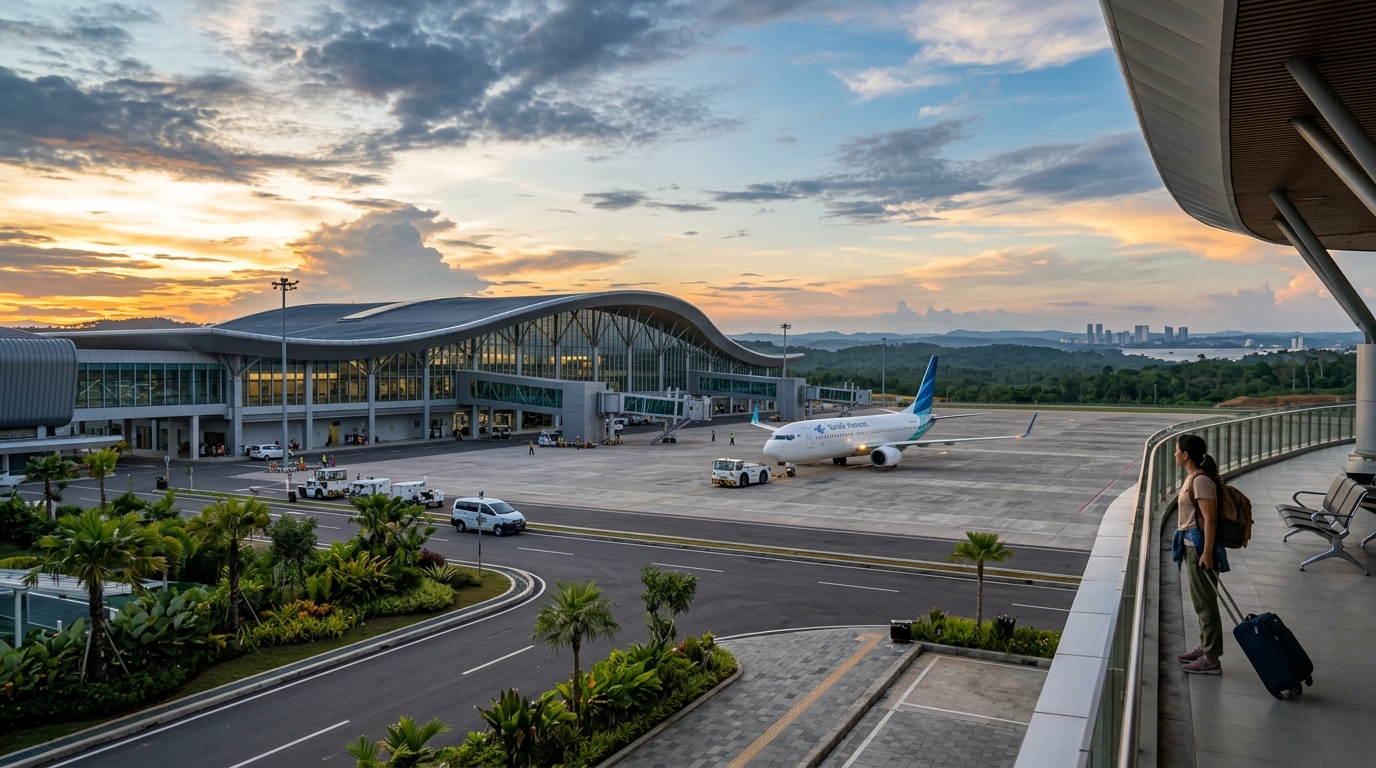
The runway at Nusantara International Airport (WALK) is technically alive, but for the average traveler, it remains a ghost. If you were watching flight trackers during Indonesia’s Independence Day celebrations this August, you saw a flurry of state aircraft and VVIP jets touching down in the heart of East Kalimantan. But try to search for a commercial flight from Jakarta (CGK) or Surabaya (SUB) today, and you’ll find nothing but a "no flights found" screen.
OIKN head Basuki Hadimuljono confirmed in August 2026 that Nusantara International Airport is currently tethered by a Presidential Regulation (Perpres) that limits its use to VVIP traffic. Until that regulation is officially revised to grant the airport "public commercial" status, those 3,000 meters of pristine asphalt are off-limits to your favorite budget carriers and full-service airlines alike.
If you are planning a business trip or a curiosity-fueled visit to the new capital this year, you need to stop waiting for the "WALK" IATA code to go live on booking engines and start planning for the reality on the ground.
The Regulatory Bottleneck: What’s the Hold-Up?
Aviation isn't just about runways and towers; it’s about legal designations. Right now, WALK is legally a private driveway for the President and state guests. Transitioning to a commercial hub requires more than just a pen stroke on a Perpres. It triggers a cascade of requirements: Customs, Immigration, and Quarantine (CIQ) facilities must be fully staffed, and ground handling contracts for commercial luggage—not just diplomatic pouches—must be finalized.
Basuki’s August update suggests the government is eager to flip the switch, but the bureaucracy of safety audits and commercial licensing usually takes months, not weeks. Realistically, we are looking at a "soft opening" for commercial narrow-body aircraft (like the A320 or B737) toward the very end of 2026. Until then, your flight path involves a detour.
The "Backdoor" Routes: BPN vs. AAP
Since you can’t land in Nusantara yet, you have two choices: Balikpapan (BPN) or Samarinda (AAP).
Most travelers default to Balikpapan’s Sultan Aji Muhammad Sulaiman Sepinggan International Airport . It’s the smart choice. BPN is a mature hub with a legitimate lounge scene and frequent connections to Jakarta, Singapore, and Kuala Lumpur.
If you’re coming from Jakarta, Garuda Indonesia and Pelita Air offer the most reliable schedules. If you’re hunting for a deal, check Flight Search for the morning banks; arriving in BPN after 2:00 PM usually means fighting the heavy shift-change traffic on the road toward the IKN site.
Samarinda (AAP) is closer to the northern sectors of the new capital, but the airport is prone to weather delays and has a much shorter runway, limiting the size of aircraft that can land there. Unless your specific destination is the northern forest outskirts, stick to BPN.
The Ground Game: From Balikpapan to the Core
The moment you land at BPN, the race begins. The traditional route to Nusantara used to take two and a half hours of bone-shaking travel through winding hills. However, the new IKN Toll Road has changed the math.
Sections 3A, 3B, and 5A are largely operational for authorized vehicles, cutting travel time down to about 45–60 minutes. As a civilian, your access to the toll road can be hit-or-miss depending on the week’s construction schedule. If you’re heading to the Sumbu Kebangsaan —the central ceremonial axis of the city—you need a driver who knows which access gates are open to the public.
Don't rely on ride-hailing apps for the long haul. Grab and Gojek work fine within Balikpapan city limits, but many drivers will cancel a trip to IKN because they can't find a return fare. Instead, Rent a Car with a driver for the day. It’s the only way to ensure you aren't stranded in a city that is still, effectively, a massive construction site.
The Surprising Tip: Watch the "Ghost Flights"
Here is something most travelers don't know: check the flight trackers for "calibration flights."
Before an airport like WALK opens to the public, the Ministry of Transportation runs dozens of "ghost flights" using Beechcraft King Air or Hawker jets. These planes fly repetitive patterns to test the Instrument Landing System (ILS).
If you start seeing daily, consistent calibration activity on your tracker app, it’s a signal that the commercial switch is weeks away, not months. Airlines like Lion Group (Batik Air, Super Air Jet) usually load their schedules into the Global Distribution System (GDS) about 30 to 45 days before the first commercial flight. If you see "BPN-WALK" or "CGK-WALK" appear with "Schedule Subject to Government Approval," that is your cue to book.
Connectivity and the Digital Nomad Trap
Nusantara is marketed as a "Smart Forest City," but the reality in August 2026 is that signal strength is a patchwork quilt. The "Core Area" (KIPP) has excellent 5G coverage near the government buildings, but the moment you step 500 meters into the residential or forest zones, your bars will drop to zero.
If you are roaming from overseas, don't rely on your home carrier's "world pass." The local towers prioritize Indonesian Telkomsel or Indosat signals, often de-prioritizing roaming partners during high-traffic periods. Grab an Indonesia eSIM before you leave the tarmac at BPN. It ensures you have a local data handshake, which is vital for using the digital permits required to enter certain zones of the new capital.
The "IKN Checklist" for Late 2026
If you’re determined to be among the first to land at WALK once that Presidential Regulation is revised, keep these three things in mind:
- The Runway Length: While the runway is 3,000 meters, the taxiways and apron are still being optimized. Early commercial flights will likely be restricted to narrow-body planes. Don't expect a wide-body A330 from Jakarta on day one.
- Accommodation Scarcity: There are very few hotels within the IKN core. Most visitors still stay at the Swiss-Belhotel in Balikpapan or the Hotel Nusantara. If you book a flight, book your bed in the same hour. They disappear fast.
- The "Dust Factor": This is a city under construction. If you’re visiting the construction viewing decks or the new Plaza Seremonial , bring a high-quality mask and closed-toe shoes. The red Kalimantan dust is relentless and will ruin a pair of white sneakers in ten minutes.
The "Commercial Switch" is coming. It’s a matter of legal ink, not just engineering. Until that Perpres is signed, treat Balikpapan as your base camp. The transition from VVIP playground to public gateway is the final hurdle in making Nusantara a real destination rather than a political set piece.
Keep an eye on those calibration flights. When the King Airs stop circling and the Batik Air logos start appearing on the arrivals board, you’ll know the wait is over. Just don't expect the "new city" smell to be anything other than fresh asphalt and tropical rain.