
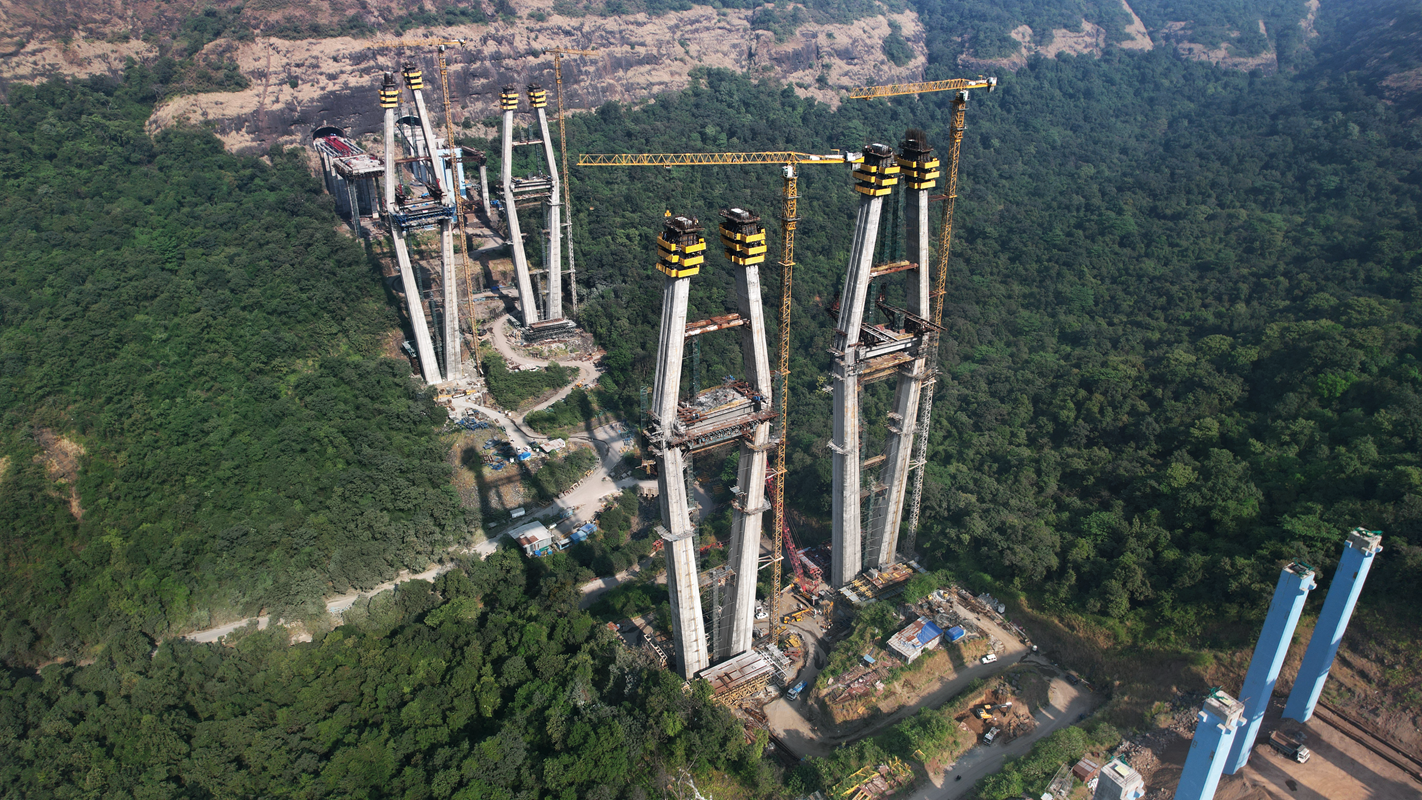
The End of Ghat Delays: Mumbai-Pune ‘Missing Link’ Set to Open May 2026
With a May 1, 2026 opening date confirmed, the Mumbai-Pune Missing Link project will finally bypass the dreaded Khandala Ghat, cutting travel time and improving safety for airport transfers.
If you have ever been stuck behind a slow-moving, 16-wheeler trailer on the steep inclines of the Khandala Ghat while your boarding time at Mumbai International looms dangerously close, you know a very specific brand of travel anxiety. For decades, the 19-kilometer stretch between Khopoli and Lonavala has been the Achilles' heel of the Mumbai-Pune Expressway—a bottleneck of sharp curves, landslide risks, and unpredictable traffic jams.
That is about to change. As of March 2026, the ambitious "Missing Link" project is 98% complete. With civil works entering the final stretch, the Maharashtra State Road Development Corporation (MSRDC) has officially targeted May 1, 2026—Maharashtra Day—for the grand inauguration.
For the frequent flyer navigating the "Golden Triangle" of Mumbai, Pune, and the newly operational Navi Mumbai International Airport, this isn't just a road project; it is a fundamental shift in how we plan our journeys.
What Exactly is the "Missing Link"?
The Missing Link is a 13.3-kilometer bypass designed to streamline the most treacherous section of the existing 95-kilometer Mumbai-Pune Expressway. Currently, the expressway merges with the old NH-4 highway near the Khopoli exit , forcing high-speed traffic into a congested, winding six-lane ghat section that struggles to handle the 60,000+ vehicles that traverse it daily.
The new alignment stays at a much more consistent elevation, bypassing the hair-pin turns of the Bor Ghat entirely. By creating a straighter, flatter path through the Sahyadri mountains, the project achieves three major goals:
- Distance Reduction: It shortens the expressway by approximately 6 kilometers.
- Time Savings: It shaves 25 to 30 minutes off the average journey.
- Safety: It moves traffic away from the most landslide-prone and accident-prone curves of the Khandala section.
Engineering on a Global Scale
To call this project a "road" is an understatement. It is an engineering marvel that features some of the most advanced infrastructure in Asia.
The centerpiece of the project is a pair of massive twin tunnels. The first tunnel is roughly 1.75 kilometers long, but the second is a staggering 8.92 kilometers, reaching depths of up to 170 feet beneath the surface of Lonavala Lake. These are not your standard highway tunnels; they are among the widest road tunnels in the world, featuring 8 lanes plus dedicated emergency lanes.
Between these tunnels, the road emerges into the air via a 650-meter-long cable-stayed bridge that spans the breathtaking Tiger Valley . With pylons soaring 182 meters high—roughly the height of a 50-story building—this bridge is now the tallest of its kind in India. For travelers, the view will be spectacular, but for the engineers, the challenge was immense, requiring specialized wind-pressure testing and slope stabilization to ensure the structure could withstand the intense monsoons and high-velocity winds of the Western Ghats.
Why Frequent Flyers Should Care
If you live in Pune and fly out of Mumbai (BOM), or vice versa, the Missing Link is a game-changer for your "buffer time."
Historically, the Khandala Ghat has been the great unpredictable variable. A single broken-down truck or a minor landslide during July’s heavy rains could turn a three-hour drive into a six-hour ordeal. Just last month, in February 2026, a tanker accident near the Adoshi Tunnel caused a 32-hour traffic suspension, leaving thousands stranded.
With the opening of the Missing Link, travelers can finally expect a predictable, high-speed transit. The new stretch is designed for speeds up to 120 kmph. This predictability is vital for those connecting to the Navi Mumbai International Airport (NMIA), which is now handling an increasing volume of domestic and international traffic.
With the Missing Link operational, the travel time from Pune to the Navi Mumbai airport is expected to drop to approximately 90 minutes to two hours, depending on where in Pune you start. This makes NMIA a much more attractive option for Pune-based travelers than the traditional Chhatrapati Shivaji Maharaj International Airport (BOM) in North Mumbai, which often requires navigating the additional traffic of the Chembur-Sion corridor.
Staying Connected on the Move
As the expressway moves into long, deep tunnels, the MSRDC has installed advanced Intelligent Traffic Management Systems (ITMS) and high-speed ventilation to ensure safety. For the modern traveler, however, the biggest concern is often staying connected to track flight delays or coordinate airport transfers.
The "Zero-Fatality" Mission
Safety has been the primary driver behind the ₹6,695 crore investment. The existing ghat section is notorious for blind curves and "S-turns" that are difficult for heavy vehicles to navigate, often leading to brake failures and multi-vehicle collisions.
The Missing Link is designed as a "Zero-Fatality Corridor." The infrastructure includes:
- Cross-Passages: Emergency exits every 300 meters within the tunnels.
- Fire Suppression: High-pressure water mist systems and advanced fire detection.
- Real-time Monitoring: AI-based incident detection that alerts the control room the moment a vehicle stops or an obstruction is detected.
By separating the high-speed light motor vehicles from the heavy freight that will likely continue to use portions of the old route, the risk of high-speed collisions is significantly reduced.
What to Expect on May 1st
Current reports indicate that the Pune-bound corridor is already finished, with only a small six-meter stretch of final concrete work remaining on the Mumbai-bound side near the Kusgaon exit.
Throughout April 2026, we expect to see final load-bearing tests on the Tiger Valley bridge and safety certifications for the tunnel ventilation systems. Once the ribbon is cut on May 1st, there will be no additional toll charges for using the Missing Link; it is considered an augmentation of the existing expressway, meaning your current FASTag remains the only requirement.
Final Travel Tips for the Road
Until the official opening, if you have a flight to catch, the old rules still apply:
- The "Three-Hour Rule": Always add a three-hour buffer to your journey if traveling during the monsoon or on Sunday evenings.
- Check the Weather: Landslides are still a risk on the current ghat section during heavy rain.
- Monitor the Feed: Use PingWing to keep an eye on your flight’s status before you leave Pune; if your flight is delayed, you might save yourself a stressful dash through the hills.
The completion of the Missing Link represents the end of a 24-year wait to truly "finish" the Mumbai-Pune Expressway. For the travelers, commuters, and pilots who make this journey every week, May 1st can't come soon enough. The "Ghat" is finally being tamed.