
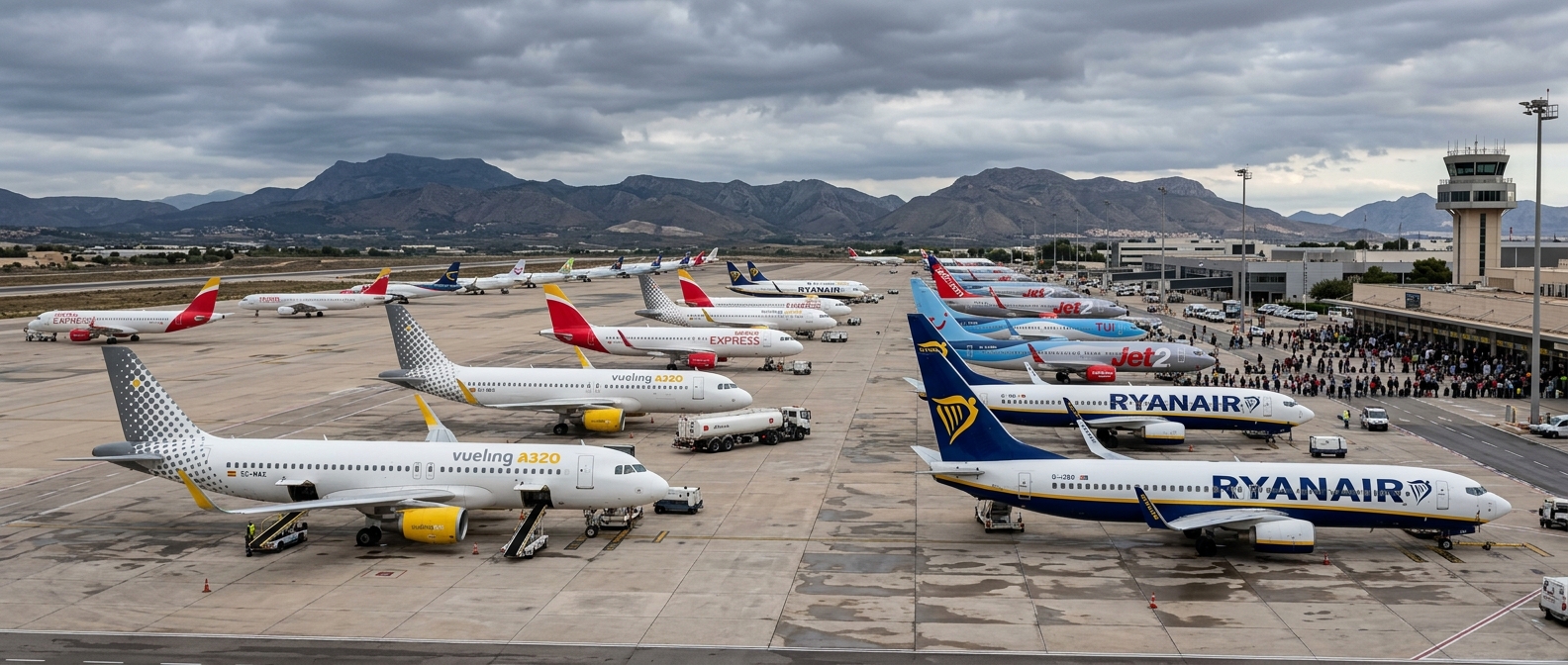
The Eclipse Hangover: Why Flights from Spain and Iceland are Still Grounded
Travelers who flocked to the August 12 total solar eclipse are facing a week-long logistical nightmare of cancellations and 400 percent price hikes.
The Eclipse Hangover: Why Flights from Spain and Iceland are Still Grounded
The shadow of the moon passed over the North Atlantic in less than two hours, but the logistical footprint it left behind is still paralyzing European airspace. According to the Eurocontrol Operations Update from August 18, the August 12, 2026, total solar eclipse triggered record-breaking air traffic in Spain and Iceland, leading to a "system-wide recovery period" that has yet to clear.
Six days later, the "Eclipse Hangover" is in full swing. If you are one of the hundreds of thousands currently refreshing a departure board at Madrid-Barajas (MAD) or Keflavik (KEF), you aren't just dealing with a busy summer week. You are caught in a perfect storm of crew duty-time expirations, air traffic control (ATC) flow management bottlenecks, and a 400 percent price surge that has made "buying your way out" an impossible luxury for most.
The Slingshot Effect: Why the Delays Are Getting Worse
Aviation operates on a razor-thin margin of error. When the eclipse path of totality swept through northern Spain and the entirety of Iceland, it didn't just bring tourists; it brought a volume of private aviation and "extra" charter flights that the infrastructure wasn't built to sustain.
The problem we are seeing today, August 18, is the "slingshot effect." When a flight is delayed by six hours on August 12, the crew on that plane hits their legal "Duty Time" limit sooner. They must rest. If there is no backup crew in a secondary hub like Palma de Mallorca or Reykjavik, the next flight is canceled. This ripples. By day six, the system hasn't recovered; it has compounded. Airlines like Iberia, Vueling, and Icelandair are currently playing a high-stakes game of Tetris, trying to get planes and people back into their "correct" slots.
If you’re still waiting for a flight out of Spain, ensure your phone stays connected to local networks to receive real-time gate changes, which are happening every 15 minutes in some hubs. Picking up a Spain eSIM is the fastest way to avoid the "no-service" dead zones in crowded terminals like MAD Terminal 4.
The 400% Markup: The Math of Desperation
A standard one-way ticket from Reykjavik to New York (JFK) that usually hovers around $450 is currently listing for $1,900 on several major carriers. In Spain, the situation is even more dire for those trying to reach London or Paris.
This isn't just "surge pricing" in the Uber sense. It's a capacity collapse. When an airline cancels a flight due to "operational constraints" (the catch-all term for the eclipse mess), they are legally required to rebook you. However, when the next four days of flights are already 100% booked by people who had tickets months in advance, the airline has to buy seats from competitors or wait for someone to blink.
The Counterintuitive Play: Stop trying to fly home.
If you are stuck in Barcelona (BCN) and your flight to Chicago is canceled, do not look for the next flight to Chicago. Look for a flight to Marrakech (RAK) or Casablanca (CMN). Morocco is a short, relatively cheap hop from Spain, and its flight paths to North America haven't been touched by the eclipse-induced ATC chaos. It sounds insane to fly to Africa to get to America, but spending $200 on a hop to Morocco and $600 on a fresh ticket from there is often $1,000 cheaper than waiting for a "re-protection" flight that might not materialize until next week.
Iceland’s Bottleneck: No Way Out but the Air
Iceland is a different beast. Unlike Spain, you can't just hop on a Renfe train to escape the madness. At Keflavik (KEF), the delays are exacerbated by the sheer lack of physical gates for the number of aircraft trying to rotate through.
Travelers are currently camping out near the Laugavegur shopping district, waiting for "the text." If you are in this position, your priority shouldn't be the airport; it should be your legal standing. Because the eclipse was a scheduled celestial event, many airlines are trying to claim "extraordinary circumstances" to avoid paying out EU 261/2004 compensation.
Don't buy it. While a volcanic eruption is an act of God, a scheduled eclipse is a predictable surge in traffic. If your flight is delayed more than three hours or canceled with less than 14 days' notice, you are likely owed up to €600. You can check your eligibility and start a claim through AirHelp before you even leave the terminal.
How to Track the "Inbound" (The PingWing Method)
The biggest mistake travelers make during a recovery period is trusting the "Delayed" status on the airport screen. Those screens are often the last to update.
To know if your flight is actually going to happen, you need to track the inbound aircraft. If you are flying from Madrid to London on flight IB3166, your plane is likely coming from somewhere else first—perhaps Lisbon or Rome. If that inbound plane hasn't even taken off from its origin, your "1-hour delay" in Madrid is a lie. Use the PingWing app to look up your flight number and see exactly where the physical aircraft is located. If it’s two countries away and your departure is in 90 minutes, it’s time to head to the customer service desk—or better yet, call the airline's international service line (e.g., call the US number for an airline while you're in Spain) to beat the local queue.
Practical Survival: The Logistics of the Long Wait
If you are resigned to staying another 48-72 hours, get out of the airport hotels. They are price-gouging and depressing. In Madrid, head to the neighborhood around the Plaza de Olavide . It’s residential, the tapas are still reasonably priced, and it’s a direct shot on the Metro to the airport when things finally clear up.
For those in Iceland, if you can’t get a room in Reykjavik, look toward the town of Akranes . It’s a 50-minute drive, but far enough away from the KEF madness that you might actually find a bed for under $300.
A Quick Checklist for the Grounded:
- Check Inbound Status: Use a tracker to see where your actual plane is.
- Screenshot Everything: Save your original boarding pass, the cancellation notice, and any "we are working on it" emails. You’ll need these for insurance.
- The "Ghost" Booking: If you can afford the temporary hit to your credit card, book a refundable "backup" flight on a different airline for 48 hours from now. If your original airline comes through, cancel it. If they don't, you've got a life raft.
- Insurance is Your Best Friend: If you have travel insurance, now is the time to call them. Many policies cover "trip delay" or "trip interruption," providing a daily allowance for food and lodging that beats a $15 airport voucher.
The Long View
The total solar eclipse of 2026 was a once-in-a-lifetime experience. For many, that two-minute window of totality was worth the subsequent 100 hours of airport purgatory. But as the "system-wide recovery" stretches toward the end of August, the lesson is clear: the aviation industry still hasn't figured out how to handle the surge of "astro-tourism."
Next time there's a "must-see" event, don't book your return flight for the day after. Give it four days. Or better yet, book a rental car and drive three cities away from the "totality zone" before you even think about stepping into an airport.
The moon has moved on, and eventually, the planes will too. But for now, the best tool you have isn't a boarding pass—it's information. Keep tracking, stay patient, and remember that a "canceled" flight is just a very long, very expensive layover in a beautiful part of the world. Just make sure you're getting paid for the trouble.