
The Anak Krakatau Ash Cloud: 5 Things to Do if Your Jakarta Flight is Still Grounded
Thousands of travelers are currently stranded after the September 5th eruption closed eight major Indonesian airports, and this guide explains your immediate rebooking and compensation rights.
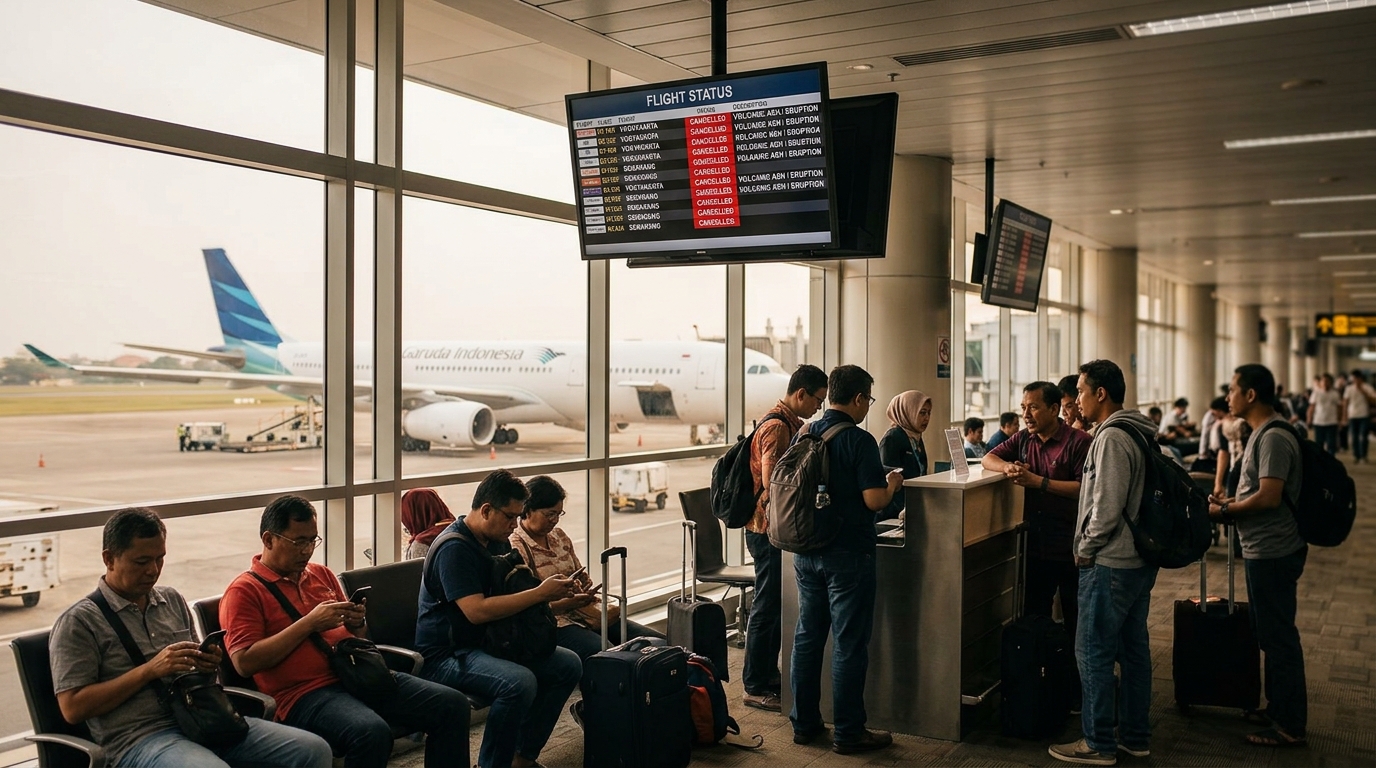
The air in Jakarta smells like a struck match. It’s a thick, metallic scent that clings to your clothes the moment you step outside the terminal at Soekarno-Hatta (CGK). On the flight information boards, the red "Cancelled" text has become a static wallpaper, a digital testament to the power of the Anak Krakatau eruption that began on September 5th.
As reported by Al Jazeera on September 7, 2026, thousands of travelers are currently stranded as ash clouds have shuttered eight major Indonesian airports, including the primary gateways in Jakarta and Yogyakarta. If you are reading this from a plastic chair in Terminal 3 or a nearby transit hotel, you aren't just looking for news—you’re looking for a way out.
The volcanic ash from the "Child of Krakatau" is glass-like and abrasive. It melts inside jet engines, turning them into expensive, non-functional sculptures. This isn't a mechanical delay; it’s a geographical one. Here are five things you need to do right now if your Jakarta flight is still grounded.
1. Bypass the Airport Queue with the "International Dialing" Trick
The line at the airline service desk in CGK is likely five hundred people deep. It is a slow-moving river of frustration. Don’t stand in it.
While everyone else is waiting for a face-to-face conversation with a stressed gate agent, you should be on the phone. But here is the trick: do not call the Indonesian customer service number. It will be jammed or offline. Instead, use a VoIP service or your roaming data to call the airline’s international offices in Singapore, Australia, or the UK.
If you’re flying Garuda Indonesia, try their Sydney or Tokyo office. If you’re on Emirates or Qatar, call their home hubs. These agents have access to the same rebooking systems but aren't currently being shouted at by a mob of travelers. They can often secure you a seat on the first "cleared" flight or reroute you through an open airport like Denpasar (DPS) or Surabaya (SUB) before the local staff even processes the first ten people in the physical line.
2. Secure a Reliable Digital Lifeline
Airport Wi-Fi is notoriously fickle under pressure. When ten thousand people are all trying to refresh flight trackers and WhatsApp their families simultaneously, the bandwidth collapses. You cannot manage a crisis on one bar of signal.
If you haven't already, get an Indonesia eSIM to ensure you have a dedicated data connection that doesn't rely on the airport’s infrastructure. You’ll need this to monitor the Volcanic Ash Advisory Centers (VAAC) in Darwin, which provides the actual data airlines use to decide when it’s safe to fly again. Having your own data also means you can book a Grab or a Bluebird taxi to get out of the airport zone if the "all clear" doesn't come by nightfall.
3. Know the "Right to Care" vs. "Compensation" Reality
There is a lot of misinformation floating around the terminal about "mandatory" cash payments. Let’s be blunt: because a volcanic eruption is classified as an "extraordinary circumstance" (an Act of God), airlines are generally not required to pay you financial compensation for the delay under Indonesian law or most international regulations.
However, they are required to provide a "Right to Care." This means:
- Meals and Refreshments: Usually provided as vouchers after a 2–4 hour delay.
- Communication: Access to emails or phone calls.
- Accommodation: If the delay is overnight, the airline must provide a hotel room and transport to get there.
Keep every single receipt. If the airline refuses to book a hotel for you because their systems are "down," book a reputable place yourself and keep the itemized bill. You can later use a service like AirHelp to navigate the bureaucracy of claiming back these essential expenses, even if a cash "payout" for the lost time isn't on the table.
4. The Gambir Escape: Moving South or East
If the VAAC reports suggest the ash cloud will linger over West Java for more than 48 hours, stop waiting for a plane. Jakarta is a massive transit hub with a highly efficient rail network that many international travelers ignore.
Head to Gambir Station in Central Jakarta. From here, you can board the "Argo Bromo Anggrek" or "Argo Wilis" luxury trains. These are clean, air-conditioned, and surprisingly fast. A 9-hour train ride to Surabaya (SUB) might seem long, but Juanda International Airport in Surabaya is often outside the primary ash trajectory of Krakatau.
The Surprising Tip: Check the flight status of cargo planes. Cargo pilots often have different risk tolerances and schedules. If you see DHL or FedEx planes starting to move on your tracking app, it’s a lead indicator that the passenger airlines will follow within 3 to 6 hours.
5. Audit Your Insurance "Exclusion" Clauses
Not all travel insurance is created equal. Some policies have a specific "Volcanic Ash" exclusion, a remnant of the 2010 Eyjafjallajökull eruption in Iceland that cost the industry billions.
Open your policy PDF and search for "Natural Disaster" or "Civil Aviation Authority grounding." If your current policy is vague or you realize you’re uncovered, it’s too late to buy a new one for this event—insurance doesn't cover "known events." However, if you are planning to move your trip to a different region of Indonesia to wait out the cloud, ensure your Travel Insurance is active for the remainder of your stay, especially covering medical emergencies which can be triggered by poor air quality from the ash.
If you have a high-end credit card (like an Amex Platinum or a Chase Sapphire), call their concierge. They often have "Trip Delay" coverage that is much easier to trigger than standard insurance, sometimes providing up to $500 for a hotel and "essential purchases" like a change of clothes if your bags are trapped in the plane's hold.
The Waiting Game
The most dangerous thing you can do is check out of your hotel and head to the airport just because you "hope" things have changed. If the Indonesian DGCA (Directorate General of Civil Aviation) hasn't officially issued a NOTAM (Notice to Airmen) reopening the airspace, the terminal is just a high-stress waiting room.
Instead of sitting at the gate, take a taxi to a neighborhood like Senopati . It’s one of the city's best culinary districts. Eat some proper Nasi Padang, find a cafe with strong Wi-Fi, and manage your rebooking from a position of comfort.
Volcanoes operate on geological time, not airline schedules. You cannot outrun the cloud, but you can certainly out-plan the thousands of other people trying to leave the city. Stay mobile, stay connected, and remember: the best travel stories rarely start with a flight that took off on time.
The Ring of Fire is a reminder that we are guests on this planet, and sometimes, the earth needs to vent. Your job is simply to have a backup plan for when it does. Keep your eyes on the trackers and your documents in your carry-on. You'll be in the air soon enough.