
The $45 TSA Verification Fee: Why Your Next Airport ID Check Might Cost You
A new identity verification fee is quietly rolling out at US checkpoints this month—here is how to avoid the extra charge.
The $45 TSA Verification Fee: Why Your Next Airport ID Check Might Cost You
Forty-five dollars. That’s the price of a decent steak frites in Manhattan, three months of a premium streaming service, or—as of this month—the cost of simply proving who you are at a US airport.
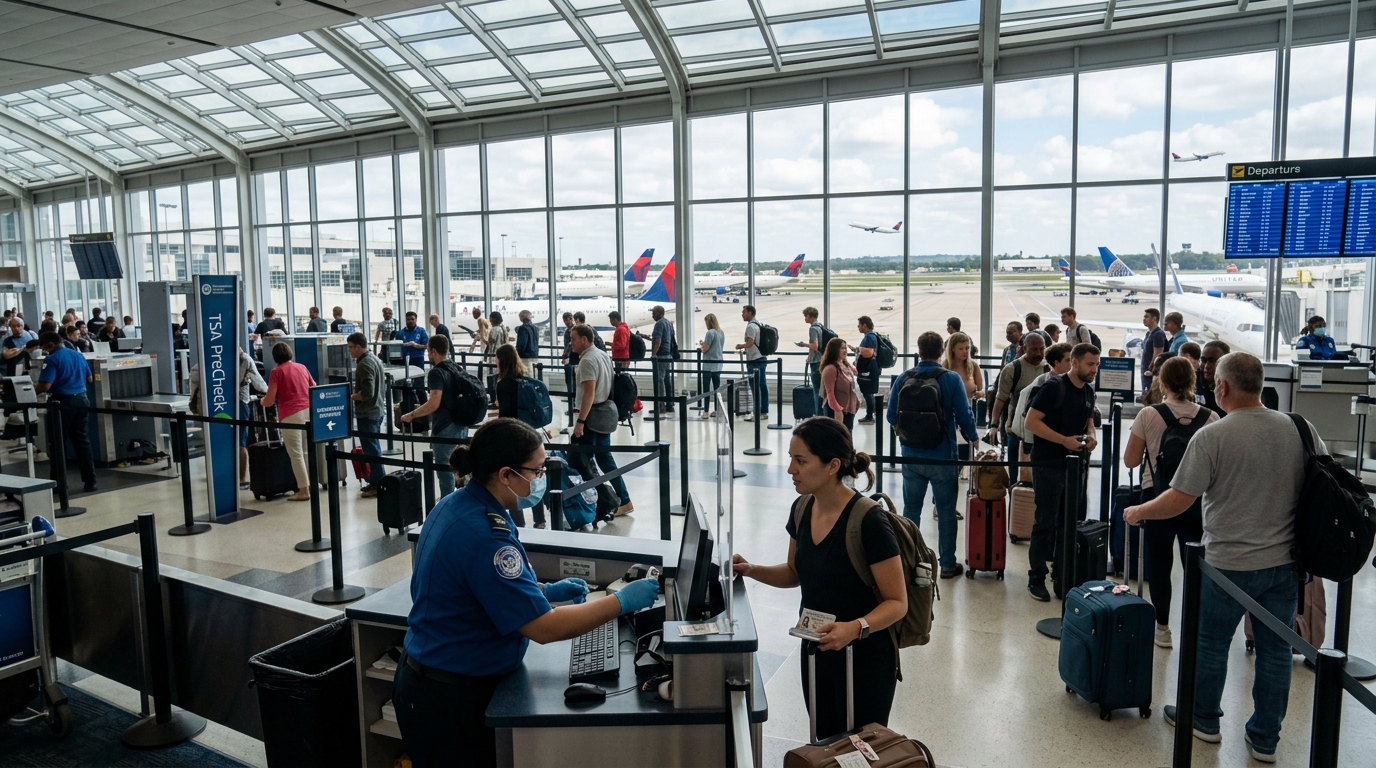
As reported by Jet Set Genius on September 2, 2026, the TSA has officially begun rolling out a new $45 "Manual Identity Verification Fee" at checkpoints across the country. If you show up at a security lane in LAX or JFK without a REAL ID-compliant license or a valid digital credential, and the agent has to perform a manual lookup to verify your identity, you’re footing the bill for their time.
This isn't just another government surcharge; it’s a push to force travelers into the digital-first, biometric future of aviation. Here is what is actually happening at the podium and how you can keep that $45 in your pocket for something that actually tastes good.
The End of the "I Forgot My ID" Grace Period
For years, there was a poorly kept secret among frequent flyers: if you forgot your wallet, you could still fly. You’d show up early, talk to a supervisor, answer a few questions about your previous addresses or the color of your first car (thanks to public record databases), undergo a secondary pat-down, and eventually get cleared. It was a hassle, but it was free.
That era is over. The TSA’s new policy treat manual verification as a premium administrative service. The $45 fee is triggered the moment a TSO (Transportation Security Officer) has to initiate a manual identity call-center verification because your physical ID is either missing, non-compliant, or unreadable by their CAT-2 (Credential Authentication Technology) scanners.
If you’re flying out of a major hub like Hartsfield-Jackson Atlanta International (ATL) or Chicago O’Hare (ORD), expect the enforcement to be rigid. The "dog ate my driver's license" excuse now comes with a processing fee that must be paid via credit card or mobile pay right there at the checkpoint. No cash. No IOUs. No payment, no flight.
Why September 2026 is the Turning Point
You might be wondering why this is happening now, specifically as we edge closer to the final REAL ID deadline in May 2027. The TSA is essentially "pre-gaming" the deadline. By attaching a financial penalty to manual verification, they are incentivizing the 15% of the traveling public who still haven't upgraded their state licenses to finally visit the DMV.
But it’s also about throughput. Manual verification takes an average of 10 to 15 minutes per passenger. In a line of 200 people, three "identity-challenged" travelers can cause a massive bottleneck. The $45 fee is a congestion charge for the security line.
If you find yourself frequently caught in these administrative loops, it might be time to look into comprehensive travel insurance that covers travel delays. While most policies won't pay your TSA fine, they can be a lifesaver if a security delay causes you to miss a non-refundable connection.
How to Bypass the Fee (The Digital Workaround)
The good news is that the TSA doesn't actually want your $45; they want you to use their automated systems. The easiest way to avoid the charge—even if you lose your physical wallet—is to set up a Digital ID before you leave for the airport.
Currently, several states (including Arizona, Maryland, Georgia, and California) allow you to add your driver’s license to your Apple Wallet or Google Wallet. When you reach the CAT-2 scanner, you simply tap your phone or watch, much like you would for a latte. It’s encrypted, it’s fast, and it counts as a verified credential, meaning no manual lookup and no $45 fee.
A pro-tip for the tech-savvy: If you are setting up these digital credentials or accessing state DMV portals while on public airport Wi-Fi, please use a Secure VPN. Your Social Security number and birthdate are often required for these setups, and airport "Free Wi-Fi" is a playground for packet-sniffers looking to intercept that exact data.
The Counterintuitive Tip: The Passport Card Loophole
Most people think of their passport as a bulky book they only dig out for trips to Paris or Tokyo. But if you’re worried about the new TSA fees, the Passport Card is the most underrated tool in your travel kit.
It’s a wallet-sized card that costs significantly less than a full passport book. It is a REAL ID-compliant federal document. I keep mine tucked into a hidden sleeve in my carry-on. If my primary wallet is stolen at a bar the night before a flight, I have a federal ID ready to go. Because it’s a "trusted" federal document with a high-quality chip, it scans instantly in the TSA’s CAT-2 machines, bypassing the need for any manual verification or the associated $45 "clumsiness tax."
What Happens if You Refuse to Pay?
The TSA is a federal agency, not a private club. However, they have the right to deny entry to the sterile area of the airport (the gates) if you cannot be verified. If you cannot provide a compliant ID and refuse to pay the manual verification fee, you simply won't be allowed past the podium.
At that point, your airline will likely mark you as a "no-show." Most "Basic Economy" tickets provide zero recourse for this. You won’t just be out $45; you’ll be out the cost of your entire flight.
The "PreCheck" Shield
Does TSA PreCheck protect you from this fee? Mostly, yes.
PreCheck members have already been vetted and had their biometrics/documents verified during the enrollment process. However, if your PreCheck status isn't printing on your boarding pass (perhaps because your name on the ticket doesn't perfectly match your KTN), and you also don't have a compliant ID, you are back in the "Manual Verification" lane.
Check your flight status and your boarding pass details early on the PingWing app to ensure everything is synced. If you notice your middle name is missing or your birthdate is off, fix it with the airline before you get to the TSA podium.
The Future of the Checkpoint
We are moving toward a "Zero-Touch" security experience. In airports like Detroit (DTW) and Atlanta (ATL), Delta has already pioneered biometric bag drops and boarding gates. The $45 fee is the "stick" to the "carrot" of biometric convenience.
The TSA’s goal is to have 90% of passengers processed via facial recognition or digital tap-to-pay style ID verification by 2028. Those who resist—or those who are simply disorganized—will find that the "public" part of public infrastructure is becoming increasingly expensive.
If you’re heading to an enrollment center to update your documents, many are located in convenient urban centers rather than just the airport. For instance, if you're in New York, the enrollment center at Manhattan West is often much faster than trying to squeeze in an appointment at the terminal.
A Final Reality Check
Travel is becoming a series of micro-transactions. We pay for seat selection, we pay for overhead bins, we pay for Wi-Fi, and now, we pay for the privilege of being manually identified by a federal employee.
Don't let a lost license or an old ID card ruin your budget before you’ve even reached the gate. Check your expiration dates today. If your license doesn't have that little gold star in the top right corner, or if you haven't uploaded your ID to your phone's digital wallet, do it now.
The TSA is betting $45 that you’re too busy to prepare. Prove them wrong.
I’ve spent fifteen years navigating terminals from SIN to LHR, and the one thing that never changes is that the "unprepared traveler" always pays the highest price—usually in time, but now, quite literally, in cash. Go digital, carry a backup, and keep your forty-five bucks for a celebratory drink at the lounge instead.