
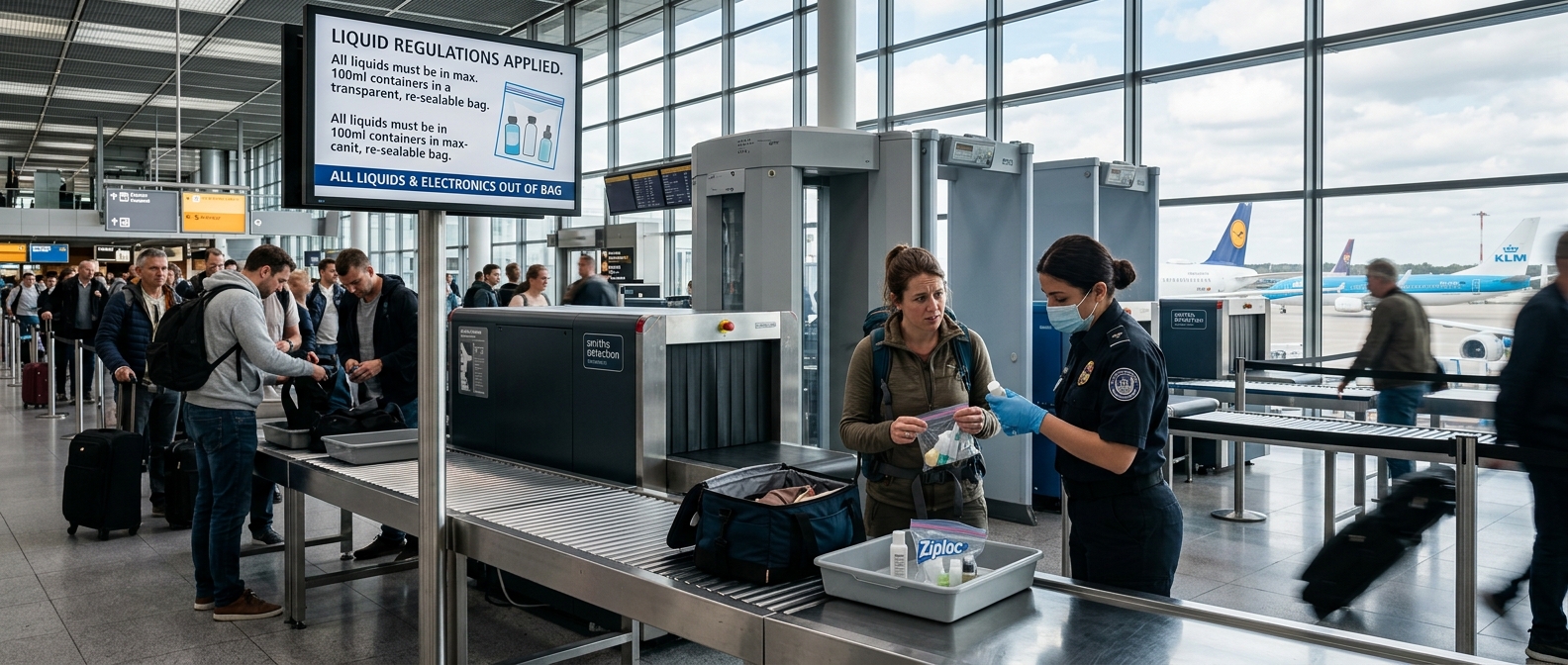
The 100ml Rule is Back: Why Your Smart Scanner Airport Just Failed You
Travelers are being caught off guard as EU airports revert to strict liquid limits despite having advanced 3D scanners.
The plastic baggie is back, and it’s arguably more annoying than ever.
In a move that feels like a collective step backward for aviation technology, the European Commission has officially reinstated the strict 100ml limit for all passengers across EU airports as of August 2026. This isn't because of a new threat, but because the much-hyped "C3" 3D scanners—the ones that were supposed to let us keep our laptops and full-sized bottles in our bags—have hit a technical snag that calls their reliability into question.
If you’ve spent the last year enjoying the freedom of breezing through London City, Shannon, or Milan Linate without decanting your shampoo into tiny bottles, prepare for a rude awakening. The high-tech honeymoon is over, at least for now. Here is how to navigate this reversal without losing your expensive skincare (or your mind) in the security bin.
Why the Tech Failed You
The C3 scanners use Computed Tomography (CT) to create high-resolution 3D images of your bag’s contents. In theory, they can differentiate between water and liquid explosives with surgical precision. In practice, the European Commission found "technical issues" where the machines couldn't consistently guarantee the same level of security for containers over 100ml.
They’ve called the return to the 100ml rule a "precautionary measure." Translation: the tech isn't quite ready for the wild, varied world of traveler liquids. Until the software is patched or the hardware is recalibrated, we are back to the 2006 status quo.
The New "Security Theater" Reality
The most frustrating part of this change is the inconsistency. You might fly out of an airport that still has the old 2D scanners and expects the plastic baggie out on the tray. Then, you might return through a hub like Amsterdam Schiphol, which has the advanced 3D scanners but is now legally forced to make you stick to the 100ml limit—even if they let you keep the bottles inside the bag.
This "hybrid" state of security is a recipe for confiscated perfumes. Do not assume that because the scanner looks modern, the rules have changed back. As of August 2026, if you are in the EU, the 100ml rule is the law of the land, regardless of the machine’s price tag.
The "Solid State" Travel Hack
The only way to truly "beat" the 100ml rule is to stop carrying liquids altogether. The market for solid toiletries has exploded, and it’s no longer just about those drying bars of soap your grandmother used.
- Toothpaste Tabs: Brands like Kaylaan or Bite offer dehydrated tablets. They don’t count as liquids, they don't leak, and they take up zero space.
- Sunscreen Sticks: These are a game-changer. You can find high-SPF sticks from brands like Shiseido or Supergoop that glide on and, crucially, stay in your bag during security checks.
- Solid Cologne/Perfume: Wax-based scents are often more concentrated and last longer than alcohol-based sprays.
- Laundry Strips: If you’re doing a long-haul trip and need to wash clothes in a hotel sink, don't pack liquid detergent. Use dehydrated strips.
By switching to solids, you save that precious 1-liter plastic bag space for the things that must be liquid, like your expensive facial serums or essential medications.
The Contact Lens Case Secret
Here is a tip most frequent flyers overlook: the contact lens case.
If you’re going away for a weekend, you do not need 100ml of eye cream or foundation. A standard contact lens case has two leak-proof compartments that are perfect for a three-day supply of creams. It fits in the palm of your hand, satisfies every security agent from LHR to JFK, and leaves more room in your clear bag for your Gin & Tonic miniatures.
Logistics: Don't Get Caught in the Queue
Security lines are getting longer because travelers are confused. They’re arriving at the front of the line with 200ml bottles of fancy water or full-sized hairspray, thinking the "smart scanners" will handle it. They won't.
If you’re caught in a logic loop at the airport or your flight is delayed because of security bottlenecks, check your rights. If the chaos causes a significant delay or a missed connection, you might be eligible for reimbursement. Using a service like AirHelp can help you navigate the compensation claim process if the airline is at fault for the resulting scheduling mess.
Connectivity and Planning
Before you even leave for the airport, check the specific terminal rules on the airport’s official app or website. Rules are shifting weekly as airports adjust their throughput expectations. If you're traveling through Europe, make sure your data is sorted so you can check these updates on the fly. I usually grab a Europe-wide eSIM before I land to avoid hunting for Wi-Fi while trying to figure out if I need to pull my laptop out of my bag.
Also, be wary of airport Wi-Fi when you're looking up sensitive travel documents or booking last-minute hotels near the terminal. Public networks are notorious for being insecure. I always keep a Secure VPN active on my phone and laptop to keep my data encrypted while I’m killng time in the departure lounge.
The Best "Liquid" Strategy for August 2026
- The Sacrificial Bottle: Carry an empty, high-quality reusable bottle (like a Chilly’s or Larq). Fill it up after security. Most EU airports now have filtered water stations near the gates.
- The Pharmacy Run: If you absolutely need full-sized products, don't pack them. Buy them "airside" (after security). Shops like Boots or Relay sell full-sized sunscreens and shampoos that you can carry onto the plane in their sealed shopping bags.
- The Double-Bag: Always carry a spare 1-liter clear Ziploc bag. The ones provided at the airport are often flimsy and rip at the worst moment. Having your own heavy-duty version saves you from a literal mess on the conveyor belt.
Where to Stay if You Miss the Window
If the security u-turn causes you to miss a late-night flight, don't settle for a plastic chair. If you’re at Schiphol, for instance, the Hilton Amsterdam Airport Schiphol is a short, covered walk from the terminal and far better than an airport bench.
Always ensure you have Travel Insurance that covers "missed departures" due to extraordinary security delays. In the current climate of changing regulations, that small premium is the difference between a stressful night and a reimbursed hotel stay.
The Final Word
The return of the 100ml rule is a reminder that travel technology is rarely a straight line of progress. We move forward, we hit a bug, and we retreat to what we know works.
Don't be the person arguing with the security agent about the "advanced 3D scanner" standing right behind them. They know it’s ridiculous. You know it’s ridiculous. But the rule is back, and the bin is waiting. Pack light, pack solid, and keep your liquids small—at least until the next software update.