
The 22-Hour Marathon: How to Survive Qantas’ New Non-Stop Sydney to London Route
With the first Project Sunrise flights finally taking off, travelers need a survival strategy for the world’s longest commercial flight.
The 22-Hour Marathon: How to Survive Qantas’ New Non-Stop Sydney to London Route
Twenty-two hours. That is the time it takes to drive from New York to Miami and back again, or to watch the entire Lord of the Rings extended trilogy twice over. Soon, it will also be the amount of time you spend inside a single carbon-fiber tube.
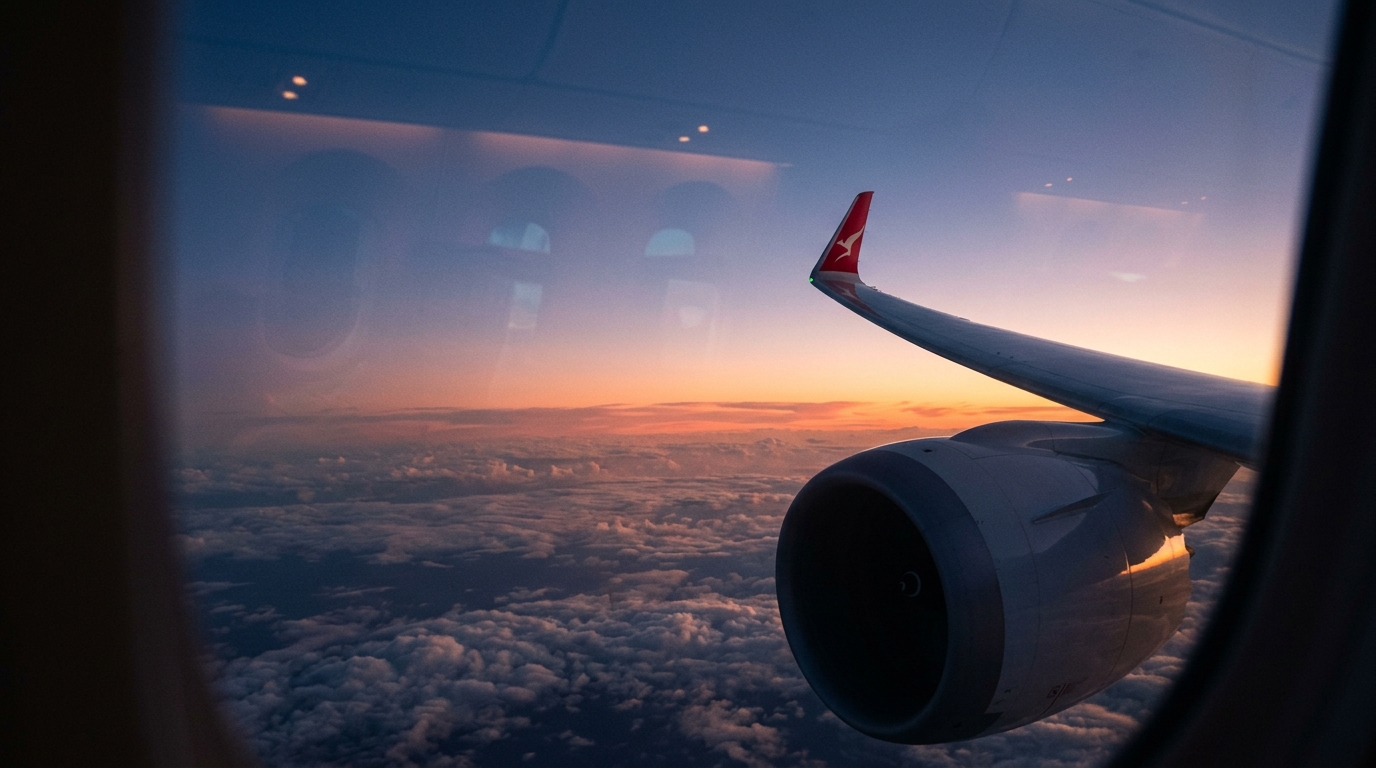
Qantas recently confirmed that the first Airbus A350-1000ULR (Ultra Long Range) aircraft will be delivered in time for the inaugural Sydney-to-London non-stop service starting in late 2026. This Project Sunrise launch marks the final frontier of commercial aviation—a direct leap across the globe that bypasses the traditional "Kangaroo Route" stops in Singapore or Perth. But while the engineering is a marvel, the human body wasn’t exactly designed to sit at 35,000 feet for nearly an entire day.
If you’re planning to be on those first record-breaking flights, you need a strategy. This isn't just about packing a neck pillow; it’s about physiological survival.
The A350-1000ULR: A Different Kind of Metal
Standard A350s usually pack in upwards of 300 passengers. Qantas is configuring theirs with just 238 seats. This is a deliberate move to reduce weight for the massive fuel load required, but it also means more breathing room for you.
The plane itself is the first line of defense against the "ultra-long-haul slump." It features higher cabin humidity, lower effective cabin altitude (meaning more oxygen in your blood), and a dedicated "Wellbeing Zone" located between Premium Economy and Economy. This isn't just a galley with a basket of apples; it’s a sculpted space with integrated handles for stretching, guided exercise programs on screens, and a self-service snack station.
The Strategy of "The Shift"
When you’re facing 22 hours, do not look at the flight as one block of time. That is a recipe for a mid-flight existential crisis somewhere over the Indian Ocean. Instead, break the flight into three distinct "shifts."
- The Adjustment (Hours 1–7): This is about setting the rhythm. Don't immediately dive into the movie library. Use this time to sync your gut to London time. If it’s breakfast time at Heathrow (LHR), eat breakfast, even if the Sydney (SYD) sun is setting.
- The Deep Sleep (Hours 8–15): This is the "dead zone." Even if you aren't a good plane sleeper, this is when you must commit to horizontal or semi-reclined rest. Noise-canceling headphones are non-negotiable here.
- The Home Stretch (Hours 16–22): This is where the mental fatigue hits. Use the Wellbeing Zone. Move your legs. This is also the time to finalize your arrival logistics so you don't land in a fog.
To ensure your arrival at Heathrow is as smooth as the flight, make sure you have your connectivity sorted before you even leave Australia. Buying a UK eSIM ahead of time allows you to bypass the overpriced airport kiosks at LHR and get straight to ordering a ride or checking the Elizabeth Line schedule the moment your wheels touch the tarmac.
The Counterintuitive Tip: Pre-Flight Fasting
You’ve heard "stay hydrated" a thousand times. Here is something you probably haven't heard: Stop eating six hours before you board.
Research into circadian rhythms suggests that our internal clocks are governed as much by our digestive systems as they are by light. By fasting before the flight and then eating your first meal specifically at the "correct" mealtime of your destination (London), you effectively "reset" your internal organs. It’s a brutal way to start a trip, but it significantly reduces the three-day "zombie" phase typically associated with crossing ten time zones.
The Survival Kit: Beyond the Basics
Forget the generic amenity kit. For a 22-hour marathon, you need a bespoke arsenal.
- Magnesium Supplements: Not only does magnesium help with muscle relaxation (essential in a cramped seat), but it also aids in sleep quality without the heavy grogginess of melatonin or prescription sleep aids.
- A "Mid-Flight Refresh" Bag: Pack a small pouch with a fresh T-shirt, clean socks, and a travel-sized toothbrush. Changing your clothes in the lavatory at the 11-hour mark provides a psychological "reset" that is surprisingly powerful.
- Saline Nasal Spray: The A350 has better humidity, but 22 hours of recycled air will still turn your sinuses into a desert. A quick spray every few hours prevents the "traveler's sniffle" caused by dried-out mucous membranes.
- Compression Socks: On a flight this long, Deep Vein Thrombosis (DVT) is a legitimate risk, not just a warning in a brochure. Wear medical-grade compression socks from the moment you leave for the airport.
Seat Selection: The "Dead Zone" Myth
Most people aim for the front of the cabin to exit faster. On Project Sunrise flights, the opposite might be better. In the 238-seat A350 configuration, the rear of the aircraft is often less crowded, and being closer to the Wellbeing Zone means you’re more likely to actually use it.
If you are flying Economy, look for the "extra legroom" seats, but be wary of those near the galleys. On a 22-hour flight, the constant clinking of trays and flight attendant chatter can become a form of low-grade torture. Aim for the middle of the Economy cabin, away from both the toilets and the heavy-traffic galley areas.
The Mental Game: Digital vs. Analog
Twenty-two hours is too long for screens. Your eyes will strain, and your brain will feel fried if you try to watch eight movies in a row.
Follow the 3-2-1 rule:
- 3 Hours of Audio: Podcasts or audiobooks that require less visual focus.
- 2 Hours of Analog: A physical book or a notebook. There is something grounding about the tactile nature of paper when you’re suspended in a pressurized tube.
- 1 Hour of Movement: Visit the Wellbeing Zone. Do the calf raises. Stretch your hip flexors.
Landing and Recovery
When you finally descend into London, the temptation will be to head straight to your hotel and collapse. Don't.
The best way to anchor your body to a new timezone after a marathon flight is light exercise in natural sunlight. If you’re staying central, head straight to Hyde Park . Walk on the grass—barefoot if the weather permits (a practice known as "grounding"). The combination of Vitamin D and physical movement tells your brain that the journey is over and the new day has begun.
While Qantas is doing everything possible to make the A350-1000ULR a "flying hotel," the reality is that 22 hours is a test of endurance. You are essentially an athlete in a very slow-motion race. Prepare your body, curate your environment, and remember that the prize isn't just the destination—it's the fact that you just conquered the longest flight in human history without losing your mind.
Before you book that marathon ticket, check your current travel coverage. A 22-hour flight involves complex logistics and a lot of moving parts; having reliable travel insurance is the only way to ensure that a mechanical delay or a missed connection doesn't turn your record-breaking journey into an expensive headache.
The Kangaroo Route is changing forever. In 2026, the world gets smaller, but the seats stay the same size. Plan accordingly.