
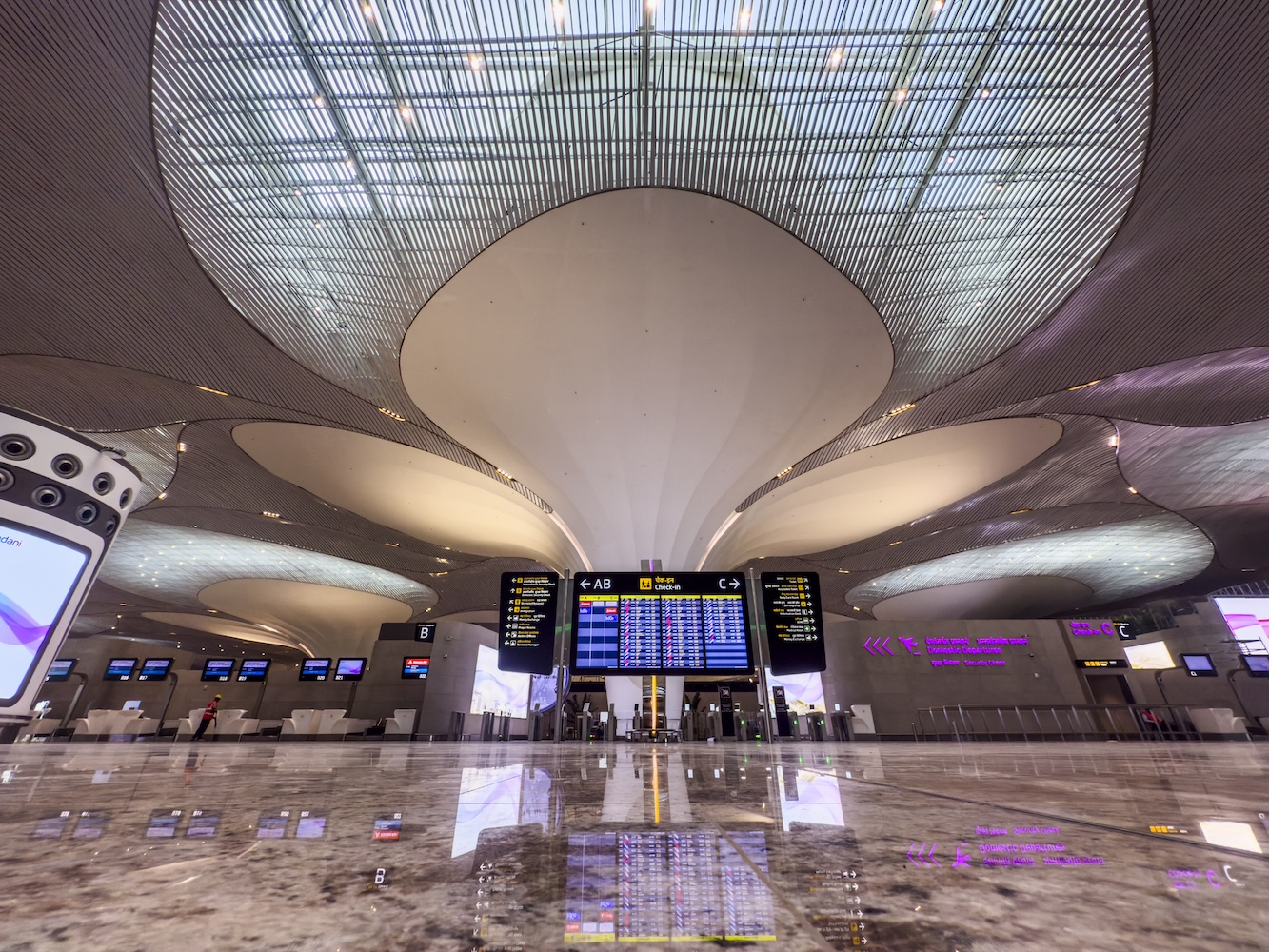
Reaching Navi Mumbai International Airport: The Ultimate Guide for Mumbai, Pune, and Thane Travelers
As Navi Mumbai International Airport nears its launch, we break down the best ways to reach it via the Atal Setu, upcoming Metro lines, water taxis, and more.
For decades, Chhatrapati Shivaji Maharaj International Airport (CSMIA) has been the sole gateway for air travelers in the Mumbai Metropolitan Region (MMR). But with the city’s skies reaching a saturation point, all eyes have shifted toward Ulwe. The DB Patil International Airport, better known as Navi Mumbai International Airport (NMIA), is no longer just a blueprint—it is a fast-approaching reality.
For frequent flyers in Mumbai, Thane, and Pune, the opening of NMIA represents a massive shift in travel logistics. Depending on where you live, this "second" airport might actually become your primary choice. However, navigating the transition requires understanding a completely different set of transit corridors.
Whether you are looking to shave an hour off your commute from Pune or trying to bypass the infamous Western Express Highway traffic from South Mumbai, here is the definitive guide on how to reach Navi Mumbai International Airport.
The Game Changer: From South and Central Mumbai
Historically, reaching Navi Mumbai from the island city was a test of patience. The opening of the Atal Bihari Vajpayee Sewri–Nhava Sheva Atal Setu (MTHL) has fundamentally altered this journey.
1. By Road (The Atal Setu Route) If you are traveling from South Mumbai neighborhoods like Colaba, Worli, or Prabhadevi, the Atal Setu is your fastest bet. Starting at Sewri , the bridge deposits you at Chirle , which is just a stone's throw from the airport site. What used to be a two-hour crawl through Chembur and Vashi is now a 20-to-30-minute breeze across the sea.
2. The Upcoming Airport Metro (Line 8) For those who prefer public transit, the Mumbai Metro Line 8 (Gold Line) is the most anticipated development. This 35-kilometer express line is designed to connect the existing CSMIA in Santacruz directly to the new NMIA. With limited stops, it aims to ferry passengers between the two airports in under 40 minutes. While this is still under development, it will eventually be the gold standard for "airport hopping" if you have a connecting flight.
The Pune Perspective: Why NMIA is Your New Best Friend
For residents of Pune, reaching Mumbai’s current airport often feels like an expedition. You have to navigate the Expressway, then battle the internal city traffic of Kalamboli, Vashi, and Chembur before even hitting the airport approach roads.
Navi Mumbai International Airport is strategically located on the "Pune side" of the Mumbai region. For travelers coming from Pune, NMIA will likely cut down travel time by 45 to 60 minutes.
1. Via the Mumbai-Pune Expressway The airport is located near the tail end of the Expressway. Instead of continuing toward Vashi, travelers will take the exit toward Ulwe. This bypasses the most congested parts of the Navi Mumbai-Mumbai entry points. If you are taking a private cab or a bus from Swargate , you can expect a much more predictable arrival time.
2. Future High-Speed Rail and Hyperloop Ambitions While the Pune-Mumbai Hyperloop remains a futuristic "maybe," the proposed High-Speed Rail (Bullet Train) corridor includes a stop at Navi Mumbai. In the medium term, improved bus rapid transit systems (BRTS) and dedicated airport shuttles from Pune are expected to launch concurrently with the airport’s first phase.
Coming from Thane and the Northern Suburbs
Thane travelers have long suffered the "middle-child" syndrome of Mumbai transit—stuck between the traffic of the Eastern Express Highway and the bottlenecks of Shilphata.
1. The Thane-Belapur Road Currently, the most direct route is the Thane-Belapur Road. However, as the airport opens, the extension of the Navi Mumbai Coastal Road will provide a smoother link from Ghodbunder Road and Thane city directly toward the airport periphery.
2. Navi Mumbai Metro Line 1 The recently operational Navi Mumbai Metro Line 1, which runs from Belapur to Pendhar, will eventually see extensions that link more closely with the airport’s integrated terminal. For Thane residents, taking a suburban train to Belapur and switching to the Metro or an airport shuttle will be a viable budget-friendly alternative.
The Scenic Route: Water Taxis and Ferries
One of the most unique aspects of NMIA’s accessibility is its proximity to the water. To reduce the load on the roads, the government has been pushing for water transport.
Water taxi services currently operate between the Gateway of India and the Belapur Jetty . From the jetty, the airport is a short 10-to-15-minute drive. There are plans to build a dedicated jetty even closer to the airport at Ulwe, allowing travelers to literally "sail to their flight." This is not just a novelty; during monsoon season or peak rush hours, the sea route offers a level of punctuality that the Sion-Panvel Expressway simply cannot match.
Suburban Rail: The Lifeline
The Mumbai Local is already preparing for the airport’s arrival. The Nerul-Belapur-Uran local train line is the primary rail link.
- Closest Station: The Kharkopar station on the Uran line is currently the closest functional railway point to the airport site.
- The Future: A dedicated "Airport Station" is part of the long-term master plan, integrated directly into the terminal building, similar to major international hubs like London Heathrow or Singapore Changi.
Practical Tips for the Transition Phase
Until the airport is fully operational and the surrounding infrastructure is matured, travelers should keep a few things in mind:
- Monitor Your Terminal: Once NMIA opens, airlines will likely split their operations. Some domestic carriers may shift entirely to Navi Mumbai, while internationals remain at CSMIA. Always double-check your departure terminal on your flight tracking app.
- Account for Tolls: The Atal Setu (MTHL) and the Mumbai-Pune Expressway come with significant toll costs. If you are hiring a car, ensure these are factored into your budget. For a stress-free journey, you can pre-book an airport transfer that handles the logistics and tolls for you.
- Stay Connected: If you are an international traveler landing at NMIA for the first time, Navi Mumbai’s infrastructure is sprawling. Having a reliable data connection is vital for GPS and ride-hailing apps. Picking up a local India eSIM before you land will save you the hassle of hunting for a physical SIM kiosk in a brand-new terminal.
- Traffic Buffers: While the Atal Setu is fast, the approach roads at Kalamboli can still be unpredictable due to heavy truck traffic moving toward the JNPT port. Always add a 30-minute buffer to your GPS estimates.
Summary of Connectivity by City
| Origin | Best Mode (Current) | Best Mode (Future) | Estimated Time |
|---|---|---|---|
| South Mumbai | Atal Setu (MTHL) | Metro Line 8 (Express) | 35-50 mins |
| Pune | Mumbai-Pune Expressway | High-Speed Rail / Shuttles | 2 - 2.5 hours |
| Thane | Thane-Belapur Road | Navi Mumbai Coastal Road | 45-60 mins |
| Andheri/Juhu | JVLR to Eastern Exp. Hwy | Metro Line 8 | 60-90 mins |

The Bottom Line
Navi Mumbai International Airport is set to become one of the most well-connected aviation hubs in South Asia. For the first time, travelers from Pune and Thane will have a world-class facility that doesn’t require a trek through the heart of Mumbai’s congestion.
As the project nears completion, the "Mumbai vs. Navi Mumbai" airport debate will likely vanish, replaced by a seamless multi-modal network. Whether you arrive by sea, rail, or the majestic Atal Setu, the way we fly out of Maharashtra is about to change forever.