
Nariman Point in the 1980s: Reliving the Glory Days of Asia’s Wall Street
Long before the skyscrapers of Dubai or the tech hubs of Bangalore, Nariman Point was the undisputed financial capital of the East. We look back at the 1980s, when this strip of reclaimed land was the most expensive real estate on Earth.
To the modern traveler landing at Chhatrapati Shivaji Maharaj International Airport, Mumbai is a sprawling, multi-nodal megalopolis. You might find yourself heading to the glass-and-steel towers of the Bandra Kurla Complex (BKC) for a meeting, or exploring the hipster cafes of Bandra. But if you were a business traveler in the 1980s, your world revolved around a single, windswept tip of land at the southern edge of the city: Nariman Point.
Today, Nariman Point is a prestigious, if slightly nostalgic, business district. But in the 1980s, it was something much more potent. It was "Asia’s Wall Street." It was a symbol of a post-independence India finally flexing its commercial muscles, a place where the air smelled of salt spray, diesel fumes, and pure ambition.
The Miracle on Reclaimed Land
The story of Nariman Point is one of literal grit. In the mid-20th century, the area was nothing but the Arabian Sea. The reclamation project, spearheaded by Khursheed Nariman (a visionary municipal corporation member after whom the area is named), sought to extend the city’s footprint. By the 1970s and early 80s, what emerged was a grid-like business district that looked like a slice of Manhattan had been dropped onto the shores of the Konkan coast.
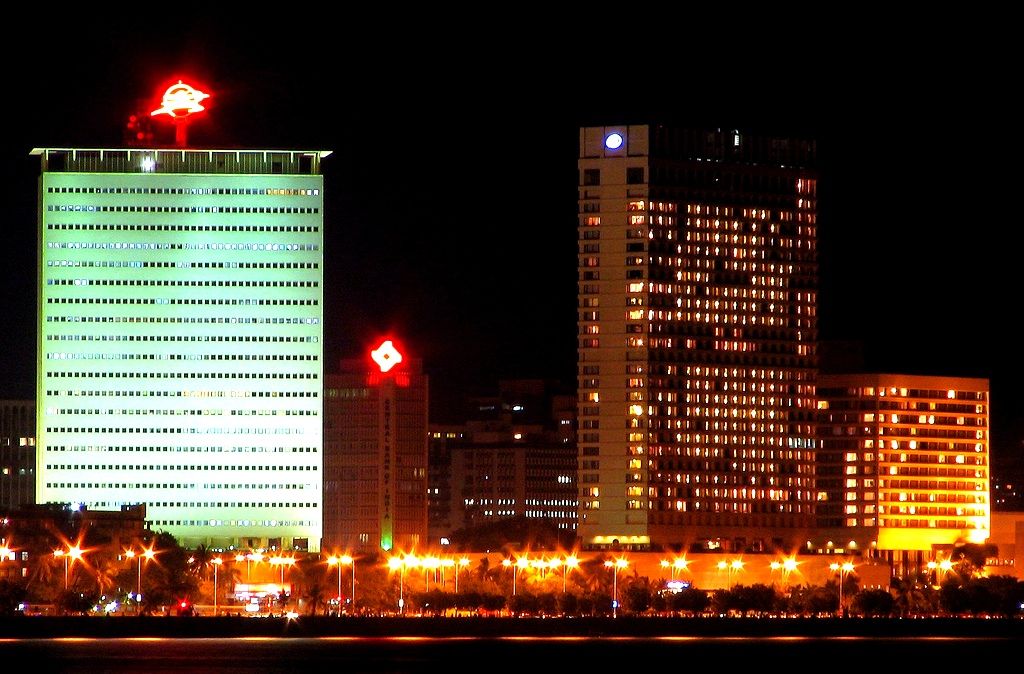
For the 1980s traveler, the skyline was a marvel. It was dominated by the Air India Building, with its iconic red centaur logo spinning atop the roof—a beacon for every flight descending into the city. Next to it stood the Express Towers, once the tallest building in South Asia, designed by the legendary architect Joseph Allen Stein.
These weren't just office blocks; they were cathedrals of commerce. In an era before the internet, if you wanted to do business in India, you had to be here. Shipping magnets, diamond merchants, and the heads of public sector banks all shared the same few square kilometers.
The Most Expensive Dirt on Earth
It is a forgotten trivia point for many younger travelers, but in the mid-1990s—a trajectory that began with the boom of the 1980s—Nariman Point held the title for the highest commercial real estate rentals in the world. It famously surpassed Tokyo’s Ginza and New York’s Manhattan.
The 1980s was the decade that set this feverish pace. This was the era of the "License Raj," where navigating government bureaucracy was a full-time job. Because the Mantralaya (the state administrative headquarters) was within walking distance, Nariman Point became the essential base of operations for every major corporation.
The atmosphere was electric. The streets were lined with Ambassador and Padmini cars. Power suits—often made of heavy tropical wool despite the stifling humidity—were the uniform of the day. To have a visiting card with a "Nariman Point" address was the ultimate sign that you had arrived.
The Business Traveler’s Ritual: The Oberoi and Beyond
If you were flying into Mumbai for a deal in 1986, your itinerary was predictable and prestigious. You would likely stay at The Oberoi , which opened its doors in the mid-80s and immediately became the epicenter of the district’s social life.
The hotel wasn't just a place to sleep; it was the city's premier "deal room." The lobby was a theater of power plays. In the evenings, the elite would migrate to the "Kandahar" restaurant or grab a drink while looking out over the "Queen’s Necklace."
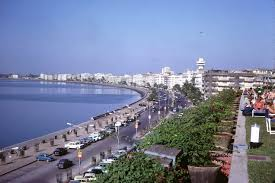
Even if you were a traveler on a more modest budget, Nariman Point offered a spectacle. The promenade at Marine Drive provided the necessary breathing room for the thousands of clerks and middle managers who poured out of the buildings at 5:00 PM. The sight of the sun setting over the Arabian Sea, with the silhouettes of the Tetrapods lining the shore, remains one of the few things about Nariman Point that hasn't changed since the 80s.
The Logistics of the 80s Boom
Traveling to Nariman Point in the 80s was an exercise in patience. Mumbai’s traffic was legendary even then, and the suburban railway was the lifeblood of the district. Every morning, Churchgate Station would vomit out a sea of humanity—thousands of "white-collar" workers in crisp Nehru jackets or button-downs, marching in unison toward the towers of Nariman Point.
For the international traveler, the transition was jarring. You would fly into the old Sahar International Airport, navigate the humid chaos of customs, and take a long, bumpy taxi ride south. There were no sea links or coastal roads then. You saw the heart of the city, block by block, until the colonial grandeur of South Mumbai gave way to the modern, boxy silhouettes of the business district.
The Shift: Why the Crown Slipped
By the late 1990s and early 2000s, the "Wall Street" of Asia began to lose its luster. The very things that made it exclusive—its location at the narrow tip of a peninsula—became its downfall. There was no room to grow. The infrastructure groaned under the weight of its own success.
When the Maharashtra government began developing the Bandra Kurla Complex (BKC) in the center of the city, closer to the airport and the residential suburbs, the exodus began. Major banks and consulates started moving north. The gleaming towers of Nariman Point suddenly felt a bit cramped, their elevators a bit too slow, and their parking non-existent.
Why You Should Visit Nariman Point Today
For the modern traveler, Nariman Point is no longer the frantic, high-stress hub it was in the 80s. In many ways, it’s better for it. It has transitioned into a "heritage" business district.
Walking through the area today feels like a trip through a specific era of architectural optimism. You can still see the Air India building, though the airline's headquarters have moved. You can visit the National Centre for the Performing Arts (NCPA) , which remains the cultural heart of the city.
The best way to experience it is on foot, starting from the Gateway of India, walking past the High Court and the University of Mumbai, and ending at the tip of Nariman Point as the sun goes down. You’ll see the Art Deco buildings of Marine Drive—a UNESCO World Heritage site—contrasted against the 80s skyscrapers.
A Legacy in Stone and Sea
Nariman Point in the 1980s represented a dream of what modern India could be. It was a place of high stakes and higher rents, a coastal fortress of capitalism. While the financial center of gravity has shifted elsewhere, the district remains the "soul" of Mumbai’s commercial history.
For the frequent flyer who appreciates the "why" behind a destination, Nariman Point is a must-visit. It’s a reminder that cities are living organisms—they grow, they peak, they pivot. In the 80s, this was the center of the Asian world. Today, it’s a beautiful, breezy reminder of where the journey began.