
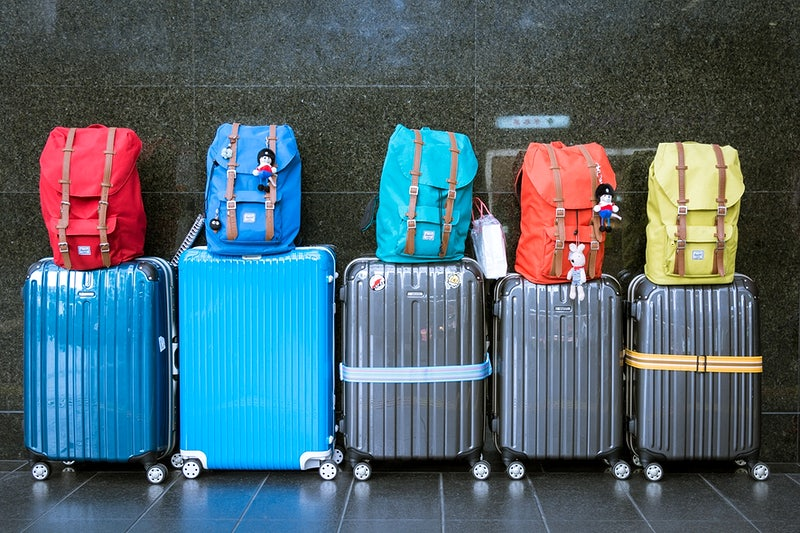
The One-Bag Rule is Here: How to Survive India’s Strict 2026 Cabin Baggage Policy
New enforcement of the 7kg single-bag limit is catching travelers off guard—here is how to pack your laptop and essentials into one piece.
The security officer at Indira Gandhi International (DEL) Terminal 3 didn't care that my second bag was "just a small laptop sleeve." He pointed to the scale, then the gate, and then the check-in counter a mile back through the crowd.
As of mid-2026, the Bureau of Civil Aviation Security (BCAS) has officially ended the era of "one bag plus a laptop." Enforcement of the strict one-cabin-bag policy—with a hard 7kg limit—is now mandatory for all flights departing Indian airports. Whether you are flying a budget carrier like Akasa Air or a full-service legacy like Air India, the rules are the same: if it doesn't fit in one single piece of luggage, it’s going in the hold.
This isn’t just a minor inconvenience for "New Airline Baggage Rules 2026 What Travelers Need to Know"; it is a fundamental shift in how we move through airports like BOM, BLR, and MAA. If you want to avoid the ₹500-per-kilo "gate baggage" fee or the stress of watching your MacBook Pro being tossed into the cargo hold, you need a new strategy.
The 7kg Math: Why Your Bag is Already Too Heavy
Most travelers start their packing journey with a disadvantage. A standard hardshell carry-on suitcase typically weighs between 2.5kg and 3.5kg when empty. If you’re working with a 7kg limit, you’ve already lost nearly 50% of your allowance before you’ve packed a single sock.
The math for a modern professional traveler looks something like this:
- Standard Hardshell Case: 3.0kg
- 14-inch Laptop + Charger: 2.1kg
- Toiletry Kit: 0.8kg
- One change of clothes: 0.7kg
You are now at 6.6kg. You haven't even packed shoes, a power bank, or a second shirt. This is why the "One-Bag Rule" is catching so many people off guard. To survive, you have to change the equipment.
Switch to a high-quality, lightweight travel backpack. Brands like Peak Design or Osprey offer 30L to 40L packs that weigh under 1.5kg. By shaving 1.5kg off the bag itself, you’ve just bought yourself enough weight for three more days of clothing or a heavy-duty camera lens.
The Laptop Loophole (And Why It’s Closing)
For years, the unwritten rule was that a laptop bag was a "personal item" that didn't count toward the weight. In 2026, that loophole is effectively sealed. Security personnel at major Indian hubs are now instructed to ensure that "One Bag" means exactly that.
If you are carrying a laptop, it must be inside your main carry-on. This creates a protection problem. Most lightweight bags lack the structural integrity of a hardshell suitcase. To combat this, invest in a rigid, hardshell laptop sleeve rather than a padded one. It adds minimal weight but prevents your screen from cracking when a fellow passenger tries to jam their overstuffed duffel into the overhead bin above yours.
The "Wearable Luggage" Strategy
This is the most effective, albeit slightly ridiculous-looking, way to beat the scale. The weight limit applies to your bag, not to your person.
I have seen seasoned flyers at Bangalore’s Kempegowda International Airport (BLR) wearing multi-pocket "safari" vests or heavy trench coats in 30-degree weather. Why? Because a Kindle, a 20,000mAh power bank, a heavy DSLR, and a bag of cables can weigh nearly 2kg. If those items are in your pockets during the weigh-in, they don't count toward your 7kg limit.
Once you pass the gate and board the plane, you can take the vest off and tuck it under the seat in front of you. It’s a legal, functional workaround for the strict enforcement.
Connectivity and the "Digital Weight"
One thing you should never "pack" is physical hardware for connectivity. Between physical SIM cards, international roaming hubs, and local dongles, the clutter adds up.
Instead of hunting for a SIM kiosk at the airport or carrying a second "travel phone," switch to a digital-first approach. Since you'll need reliable data the moment you land to check your PingWing flight status or book a ride, grabbing a pre-paid India eSIM before you even leave home is the smartest way to shed a few grams of "tech weight." It’s one less thing to lose and zero weight on the scale.
The Secret of Compression Cubes
If you are still folding your clothes, you are losing the baggage game. Compression packing cubes are no longer optional under the 2026 rules. They don't just organize; they remove the air between fibers.
By using compression cubes, you can fit five days of clothes into a space usually reserved for two. This allows you to use a smaller, lighter bag. Pro tip: pack your heaviest clothes (denim, jackets) at the bottom of the bag, closest to the straps or wheels. This keeps the center of gravity stable and makes the bag feel lighter when a gate agent decides to "test" the weight by lifting it manually—a common tactic at smaller regional airports like IXC or PNQ.
Where the Checks Actually Happen
Don't assume that because you've cleared security, you're safe. Under the new BCAS mandate, airlines have set up "Secondary Weight Checks" at the boarding gate.
- Delhi (DEL): Focus is on Terminal 1 and 2 (LCCs). They are ruthless with the scale right before the jet bridge.
- Mumbai (BOM): Terminal 2 is more relaxed, but the walk to the far gates (80-90 series) often has mobile weighing stations.
- Bangalore (BLR): The new Terminal 2 is high-tech, but they use automated sensors at the self-bag drop that can flag oversized cabin luggage before you even get to security.
If you’re worried about timing or delays caused by these extra checks, use a real-time tracker. Checking cheap flight options ahead of time can also show you which airlines are currently reporting the highest "on-time" ratings despite the new security bottlenecks.
The "Shopping Bag" Trap
India’s airports have become luxury shopping malls. If you buy a bottle of single malt at the Duty-Free or a box of sweets at the airport, that bag is technically a second bag.
While some gate agents will turn a blind eye to a single Duty-Free bag, many are now insisting that these items be stuffed into your main carry-on. Always leave about 10% of "buffer space" in your one bag for these last-minute purchases. If your bag is already at 7kg and bursting at the seams, that box of Mysore Pak might cost you a ₹2,000 checked-bag fee.
Finding Quality Gear Near You
If you find yourself in a major city and realize your current bag is too heavy, head to a specialized travel gear store. In Mumbai, the markets around Colaba Causeway often have lightweight export-quality bags, though you'll need to haggle. In Delhi, the AeroCity area has several premium outlets where you can find technical travel packs that meet the 2026 specifications.
A Mindset Shift: The Zen of One Bag
Traveling with 7kg isn't about deprivation; it's about speed. When you only have one bag, you are the first person out of the airport. You aren't standing at a luggage carousel at 2:00 AM in Chennai watching empty black suitcases circle while yours is nowhere to be found.
The 2026 enforcement is a headache, yes. But it’s also an invitation to audit what you actually need. Most of us pack for "what if" scenarios that never happen. We pack three pairs of shoes for a three-day trip. We pack a physical book we never open.
The "One-Bag Rule" forces you to pack for the reality of your trip, not the fantasy of it. And in an aviation landscape that is only getting more crowded and more regulated, being light on your feet is the ultimate travel hack.
Next time you’re at the gate and you see a traveler arguing with an agent about their "small" second bag, you’ll be the one already boarded, bag stowed, watching the flight status on your phone, ready to go. The rule is here to stay. Pack accordingly.