
Changi Terminal 5: A Deep Dive into Singapore’s Future Mega-Terminal
Changi Terminal 5 is more than just an expansion; it’s a 50-million-passenger "city-airport" of the future. Here’s everything you need to know about its design, tech, and groundbreaking transport links.
For years, Singapore Changi Airport has been the gold standard of aviation. Whether it’s the butterfly garden in Terminal 3 or the towering indoor waterfall of Jewel, Changi consistently manages to make the "airport experience" feel less like a chore and more like a destination. But as air travel demand in the Asia-Pacific region continues to surge, Changi is preparing for its most ambitious leap yet: Terminal 5 (T5).
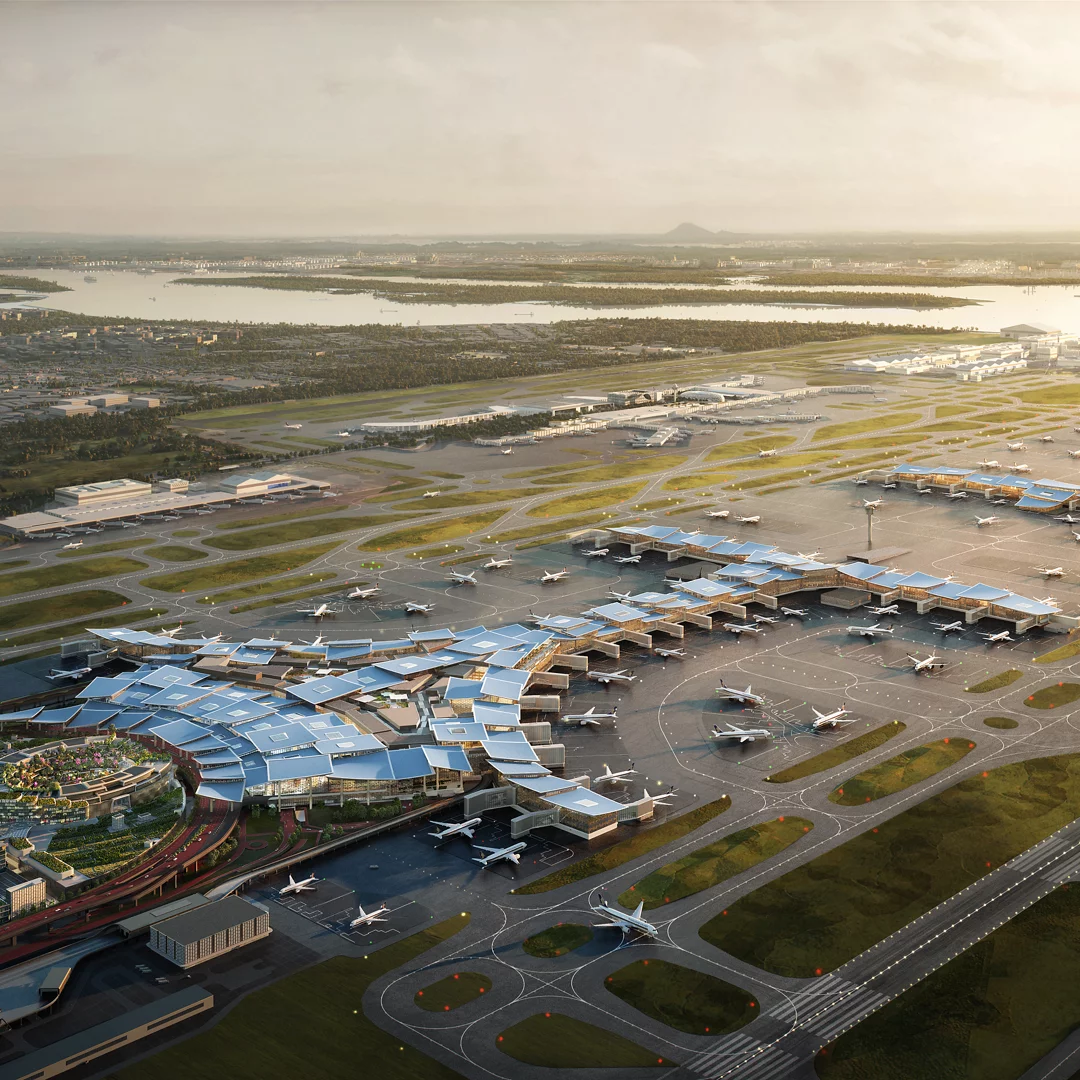
Located within the massive 1,080-hectare Changi East development—an area roughly the size of the existing airport itself—Terminal 5 isn't just a new building; it’s a second airport in its own right. Following the official groundbreaking in May 2025, the project is now in full swing, with a projected opening in the mid-2030s.
For the frequent flyer, T5 represents the next generation of "frictionless" travel. For the casual traveler, it promises a level of connectivity and comfort that might finally make layovers something to look forward to. Here is everything we know about the future of Changi and how you’ll be getting there.
The Scale of the "Mega-Terminal"
The sheer numbers behind T5 are staggering. Once operational, the terminal will be able to handle approximately 50 million passenger movements per year. To put that in perspective, that is more than the combined capacity of Terminals 1, 2, and 4. When T5 is fully integrated, Changi’s total capacity will skyrocket to 140 million passengers annually.
But Changi’s designers, led by Heatherwick Studio and KPF, are acutely aware of "terminal fatigue." No one wants to hike two kilometers to their gate in a sterile, echoing hall. The design philosophy for T5 is described as "mega-yet-cosy." Instead of one monolithic structure, the terminal is being built as a series of human-scale social spaces. The roof design features overlapping "leaves" that allow natural light to filter through, intended to evoke the dynamism of flight while creating intimate pockets for dining, shopping, and resting.

Getting There: The New Public Transport Hub
Perhaps the most significant upgrade for travelers is the Ground Transportation Centre (GTC) located directly within T5. Historically, Changi’s MRT connection has been a bit of a "stub" at the end of the East-West (Green) Line, requiring a transfer at Tanah Merah for most city-bound travelers. Terminal 5 is set to change the transit map of Singapore entirely.
1. The Thomson-East Coast Line (TEL) Extension
The TEL is the star of the show for T5. This line will be extended from its current eastern terminus at Sungei Bedok directly into the heart of Terminal 5.
- Direct City Access: Travelers will eventually be able to hop on a train at T5 and go directly to Orchard Road, Maxwell (for Chinatown), and Gardens by the Bay without a single transfer.
- Northern Connectivity: The TEL also stretches all the way north to Woodlands North, where it will eventually interface with the Johor Bahru-Singapore Rapid Transit System (RTS) Link, making T5 a gateway for those coming from Malaysia.
2. The Cross Island Line (CRL)
The Cross Island Line will also have a major station at T5. This is Singapore’s eighth MRT line and is designed to move people across the island with fewer transfers.
- Faster Commutes: The Land Transport Authority (LTA) has noted that a trip from Changi Airport to Ang Mo Kio via the CRL will take about 45 minutes—a 15-minute saving compared to the current hour-long journey.
- Regional Hubs: The CRL will connect T5 to the Punggol Digital District and the Jurong Lake District, essentially linking the airport to Singapore’s second CBD.
3. Inter-Terminal Connectivity
If you are worried about landing at T5 and needing to get to Jewel or Terminal 1, don't be. The project includes roughly 18 kilometers of tunnels. These aren't just for passengers; they are dedicated "veins" for automated people movers (APM), baggage handling systems, and airside vehicles. You’ll be able to move between T5 and the existing terminals seamlessly, maintaining Changi’s reputation as a single, integrated air hub.
Future-Proofing: Lessons from a Pandemic
T5’s design was famously paused during the COVID-19 pandemic to allow for a total rethink of airport safety. As a result, T5 is being built with "resilience" as a core pillar.
- Modular Sub-Terminals: The terminal can be partitioned into smaller sub-terminals during health contingencies. This allows the airport to segregate "high-risk" flights or convert specific zones into health testing centers without shutting down the entire facility.
- Contactless Everything: From check-in and bag drops to immigration and boarding, T5 will lean heavily on biometrics and AI. The goal is a "frictionless" journey where your face is your passport.
- Enhanced Ventilation: High-efficiency filtration systems that can be activated to prevent the spread of airborne pathogens are being integrated from the ground up.
Sustainability and Climate Resilience
Singapore is a low-lying island nation, and the Changi East site is no exception. To protect against rising sea levels caused by climate change, the entire T5 airfield is being elevated to 5.5 meters above the mean sea level.
On the green front, T5 is aiming for the Building and Construction Authority’s Green Mark Platinum Super Low Energy certification. The terminal will feature one of Singapore’s largest rooftop solar systems, capable of generating enough electricity to power 20,000 four-room HDB flats for a year. It is also being built to support sustainable aviation fuels (SAF) and will provide fixed ground power and cooling for aircraft, reducing the need for planes to run their engines while parked at the gate.
What This Means for You Today
While the first planes won't pull up to a T5 gate until the mid-2030s, the development is already reshaping the eastern end of Singapore. If you are a traveler visiting Singapore today, you can see the massive land reclamation and construction efforts from the window of any flight landing on the existing runways.
For those who want a taste of the "old" Changi charm before the mega-terminal era begins, a visit to Changi Village is still a must. It remains the best spot for local food and plane spotting, offering a view of the massive Changi East site where the future of aviation is being built.
If you’re heading to Singapore soon to see the progress yourself, grab a Singapore eSIM before you land to stay connected as you navigate the city’s ever-expanding MRT network.
Quick Facts: Changi Terminal 5
- Groundbreaking: May 2025
- Expected Opening: Mid-2030s
- Annual Capacity: 50 million passengers
- MRT Lines: Thomson-East Coast Line (TEL) and Cross Island Line (CRL)
- Key Design Feature: "Overlapping roof leaves" for a human-scale feel
- Environmental Goal: Green Mark Platinum Super Low Energy status