
The End of the Physical Passport: How Changi’s Full Biometric Rollout Works This Month
Changi has officially transitioned to 100 percent biometric clearance for residents—here is how to navigate the gates without reaching for your passport.
The End of the Physical Passport: How Changi’s Full Biometric Rollout Works This Month
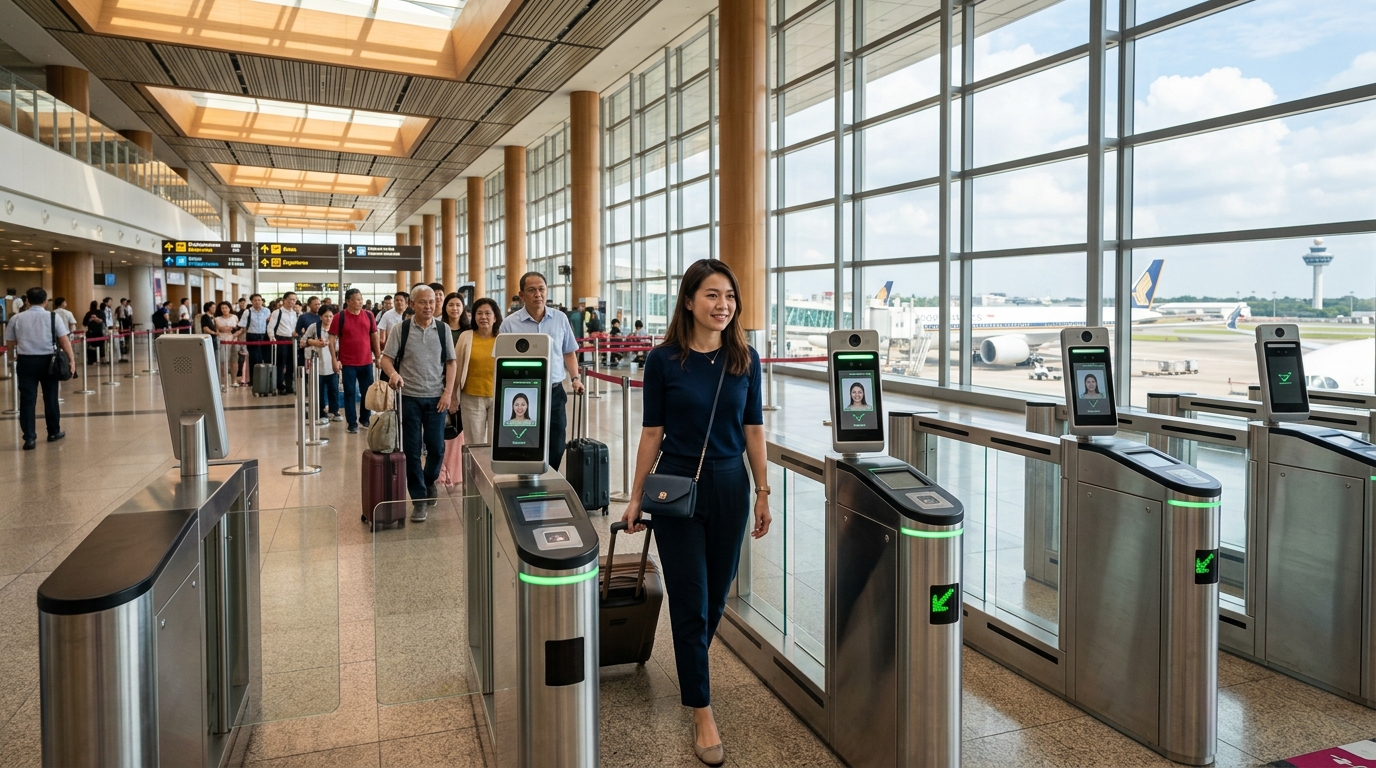
You are standing in front of the automated lanes at Changi’s Terminal 3. Your hands are empty. No navy blue booklet, no crinkled boarding pass, no frantic patting of your jacket pockets to ensure your life’s most important document hasn't slipped through a crack in the taxi. You look at a small glass pane, the gate whirrs open, and you walk through.
As of September 2026, this isn't a pilot program or a "tech-forward" experiment for a lucky few. Following the Immigration and Checkpoints Authority (ICA) full implementation of passport-less clearance, this is now the standard operating procedure for all Singapore residents. The physical passport has officially become a backup document for the departure process—a relic you keep in your carry-on for the sake of the authorities at your destination, rather than the ones at home.
Navigating Changi without a passport requires a slight shift in muscle memory. Here is how to handle the "Token-less" flow and the pitfalls that still trip up even the most frequent flyers.
The Three-Touchpoint Flow
The "New Changi" experience is built on a single biometric template captured during your initial enrollment (or updated via your Singpass data). There are three specific points where you used to need a passport, but now only need your face.
1. Automated Bag Drop
If you are flying Singapore Airlines, Scoot, or Lufthansa, the self-service bag drop machines now use the same high-resolution cameras found at immigration. You don't need to scan your passport to identify your booking. The machine recognizes your face, matches it to the flight manifest, and prints your luggage tag.
Pro Tip: If you’re wearing a wide-brimmed hat or heavy sunglasses, the machine will fail. It sounds obvious, but I’ve watched dozens of travelers struggle with the "Face Not Recognized" error simply because they forgot they were wearing a cap. Take it off before you even approach the kiosk.
2. Immigration Clearance
This is the big one. For Singapore citizens, Permanent Residents, and Long-Term Pass holders, the "Breeze Through" lanes are now the only lanes. You don't even need to scan your thumbprint anymore. The iris and facial recognition sensors work in tandem.
Walk into the lane, look at the camera, and keep walking. The system is designed to identify you in motion. If you stop and stare intensely at the camera like you’re posing for a portrait, you actually slow the system down. Just maintain a natural walking pace.
3. Boarding the Aircraft
The final hurdle used to be the gate agent checking your passport against your boarding pass. Now, most gates in Terminal 4 and the upgraded gates in Terminal 2 use biometric boarding. You walk toward the jet bridge, the camera pings your identity against the "cleared" list from immigration, and the doors open.
The "Destination Trap": Why You Can't Leave the Passport at Home
Here is the counterintuitive truth about "passport-less" travel: you still absolutely need your passport.
While Changi is living in 2026, many of your destination airports—be it JFK in New York, LHR in London, or even BKK in Bangkok—are still very much reliant on physical paper and ink. Changi allows you to depart without showing a passport, but if you show up at the boarding gate without it in your bag, the airline won't let you on the plane. Why? Because they are legally responsible for flying you back if the destination country refuses you entry for lacking a physical document.
Think of Changi’s biometrics as a way to eliminate friction, not a way to eliminate the document itself. Keep your passport in a dedicated, zipped pocket of your personal item. Do not put it in your checked luggage. If the biometric system glitches—which happens—you’ll need that physical backup to revert to manual processing.
The Surprising Hurdle: The "Digital Identity" Blackout
Since your identity is now tied to a digital backend, your phone has become more critical than ever. While you don't "need" the phone for the biometric gates to work, you do need it for the pre-flight digital requirements that the ICA system checks.
If your SG Arrival Card (for returning) or your airline’s digital check-in isn't synced correctly, the biometric gate will turn red. This usually happens because of a data mismatch—perhaps your middle name is on your passport but not your airline booking.
When things go wrong, you’ll need to pull up your digital booking or your Singpass profile immediately to resolve the issue with a ground agent. This is where travelers often get stranded. If you’ve just landed or are about to depart and your data is toggling between "searching" and "E," you're stuck. Before you even head to the airport, ensure your connectivity is seamless. I’ve found that having a dedicated Singapore eSIM is the most reliable way to ensure your digital credentials (and your flight tracking via PingWing) stay live, especially if you’re a visitor who has just been enrolled in the biometric system.
Who Is Actually Eligible?
Not everyone can walk through with just a smile. The September 2026 rollout has specific tiers:
- Singapore Residents: Full passport-less departure and arrival.
- Foreign Visitors: You must scan your physical passport upon your first arrival in Singapore. During this process, the ICA enrolls your iris and facial biometrics. On all subsequent trips (and your departure from this trip), you can use the automated lanes without a passport.
- Children: Children under six years old still generally need to use the manual lanes or be processed with a parent, as their facial features are changing too rapidly for the 2026 biometric algorithms to guarantee 100% accuracy.
The "Infrared-Friendly" Face
A genuinely surprising tip I’ve picked up after dozens of runs through the new T2 gates: the sensors use infrared light. If you use certain high-SPF sunscreens or heavy "glitter" makeup, the infrared can occasionally bounce back in a way that obscures your features. If you find yourself constantly being rejected by the "seamless" gates, try a lighter touch on the zinc-heavy skincare before you head to the airport.
Also, if you’ve recently had significant facial surgery or a traumatic injury, the system might flag a mismatch. In these cases, head straight to the manual "Assistance" counters. Don't waste time trying the automated gate three times; the system will eventually lock your profile for a security review, which takes much longer to clear.
The Future of the "Wait"
We used to measure airport efficiency by the length of the immigration queue. Now, the bottleneck has shifted. The bottleneck is no longer the "check," but the "prep." People who aren't ready—who have their hands full of duty-free bags, who are looking at their phones instead of the camera, or who are trying to scan a boarding pass that isn't needed—are the new "slow" factor.
The 100% biometric rollout at Changi is a marvel of engineering, but it requires us to be better travelers. It requires us to trust the air. You walk up, you look, you pass. No stamps, no stickers, no friction.
Just remember: just because the gate didn't ask for your passport doesn't mean the world has stopped requiring it. Keep it close, keep your phone charged, and enjoy the five minutes of your life Changi just gave back to you.
The next time you're heading to the gate, don't reach for your pocket. Just look ahead. The airport already knows who you are.