
Beyond the Terminals: The Forgotten History of Changi Village
Step out of the world's best airport and into a time capsule. Discover the colonial military roots, WWII secrets, and rustic charm of Changi Village.
For most travelers, "Changi" is a word synonymous with the cutting edge. It’s the home of the world’s best airport, the gravity-defying Rain Vortex at Jewel, and a transit experience so seamless it feels like the future. But just a few kilometers north of the gleaming terminals of Changi Airport (SIN) lies a place where the clocks seem to have stopped in the 1970s.
Changi Village is the anti-Jewel. Instead of glass and steel, you find low-rise public housing blocks and rain trees draped in strangler figs. Instead of high-end duty-free shops, there are local hardware stores and family-run stalls selling legendary Nasi Lemak. To the uninitiated, it looks like a sleepy seaside settlement. To those who know its history, it is a living museum of Singapore’s military past and a poignant reminder of the lives that occupied this land long before the first runway was paved.
If you have a long layover or a spare afternoon in Singapore, escaping the air-conditioned bubble of the airport for the humid, historical air of the village is one of the best travel hacks in the city.
The Military Stronghold: Before the Planes Took Over
Before Changi was an aviation hub, it was "Fortress Changi." In the late 1920s, the British Army Council identified this remote eastern tip of Singapore as a strategic defensive point for the naval base further north. What was then a landscape of coconut plantations and swampy marshes was transformed into a massive military cantonment.
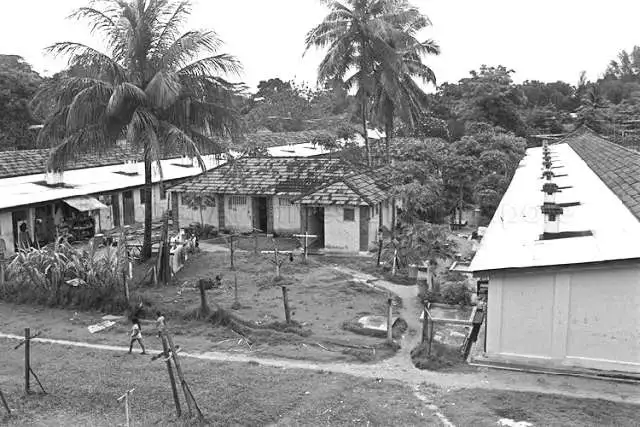
The British built three major barracks to house their forces: Roberts Barracks (now part of the Changi Air Base), Kitchener Barracks, and Selarang Barracks. These weren't just simple camps; they were sophisticated colonial hubs with Officers’ Messes, married quarters, and recreational clubs. You can still see traces of this era today along Hendon Road and Netheravon Road, where white-washed colonial bungalows with black timber frames stand as silent witnesses to the pre-war years.
The development was so extensive that Changi Village essentially grew as a support hub for the troops. It was here that local tradespeople, tailors, and cooks set up shop to serve the British servicemen. The village became a multicultural melting pot where soldiers from the UK, Australia, and New Zealand mixed with local Malay, Chinese, and Indian residents.
The Darkest Chapters: WWII and the Sook Ching Massacre
The history of Changi took a tragic turn during World War II. When Singapore fell to the Japanese in 1942, the military base was repurposed as a massive prisoner-of-war (POW) camp. Over 50,000 Allied soldiers were interned in the barracks around Changi, and civilians were held at the nearby Changi Prison.
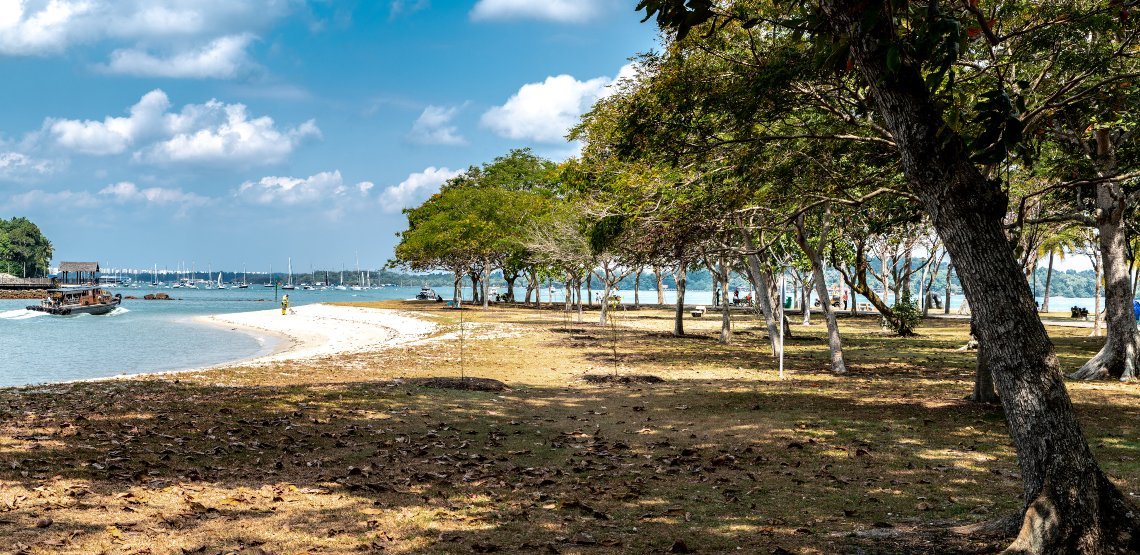
Perhaps the most somber site in the area is Changi Beach Park . Today, it’s a popular spot for family barbecues and cycling, but on February 20, 1942, it was the site of the Sook Ching massacre. Thousands of Chinese civilians were brought here by the Japanese military, led into the water, and executed. A simple stone plaque near the water’s edge now commemorates the victims, a stark contrast to the nearby sight of modern jets taking off into the horizon.
During the occupation, the Japanese also began work on the very first airstrip in the area, using POW labor to clear the land. This primitive landing strip would eventually become the foundation for the massive international airport we know today.
The "Most Haunted" Legend: Old Changi Hospital
No discussion of Changi’s history is complete without mentioning the Old Changi Hospital . Perched on Barrack Hill, this colonial-era medical facility was built in 1935 to serve the British military. During the war, it was captured by the Japanese and used as a healthcare facility for POWs.
After the war, it returned to British hands and later served the Singapore Armed Forces until it was vacated in 1997. Today, it is one of the most famous "haunted" sites in Southeast Asia. While the building is strictly off-limits to the public and managed by the Singapore Land Authority, you can still see its weathered, vine-covered facade from the road. The hospital’s eerie reputation—fueled by urban legends of ghostly nurses and spectral soldiers—has made it a cult icon for local history buffs and paranormal enthusiasts alike.
The Great Transformation of the 1970s
The Changi Village we see today was born out of a major pivot in the 1970s. Following the withdrawal of British troops in 1971, the local economy, which had relied heavily on the military presence, faced a crisis. The Singapore government stepped in to reinvent the area as a leisure and residential zone.
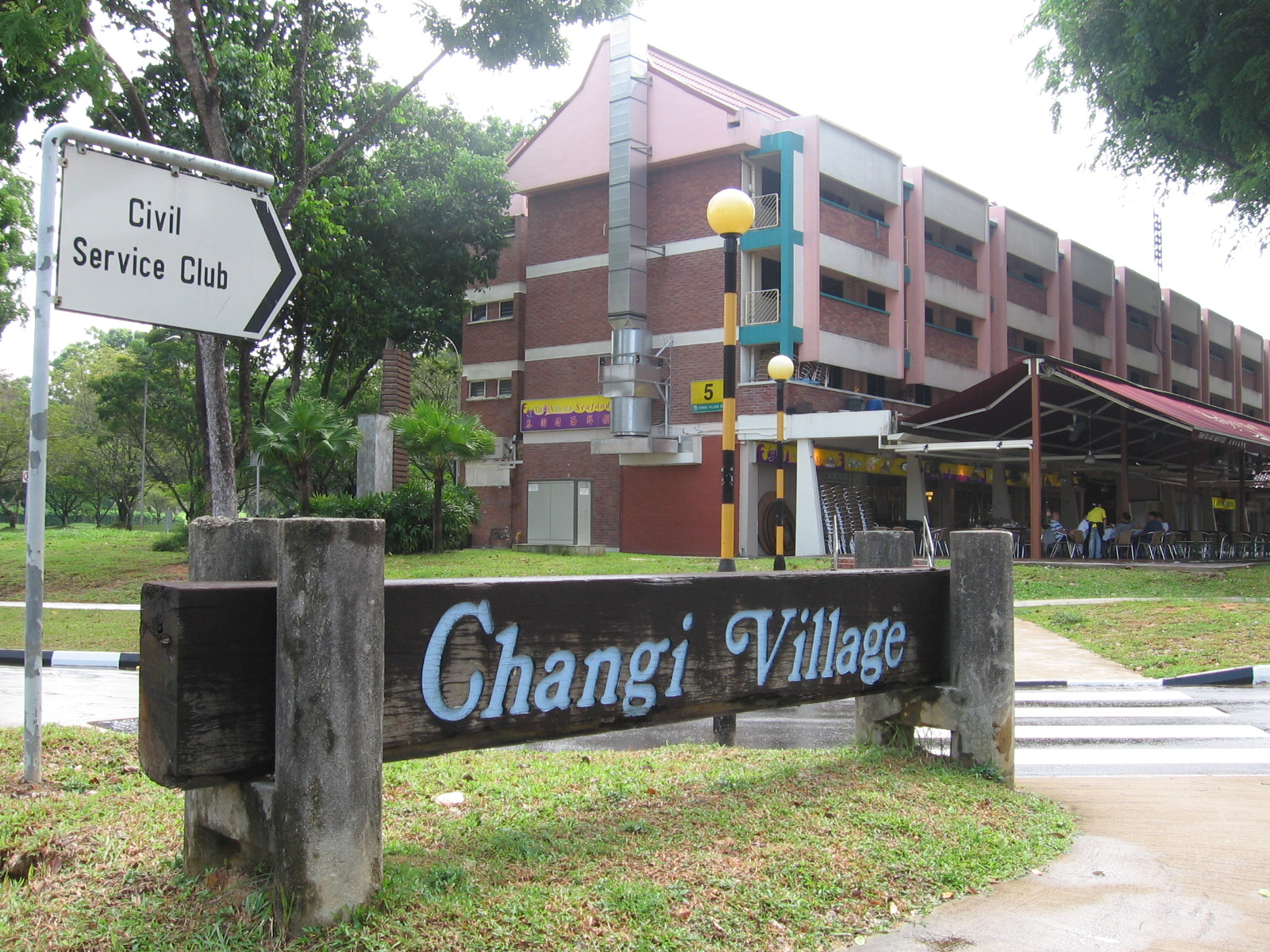
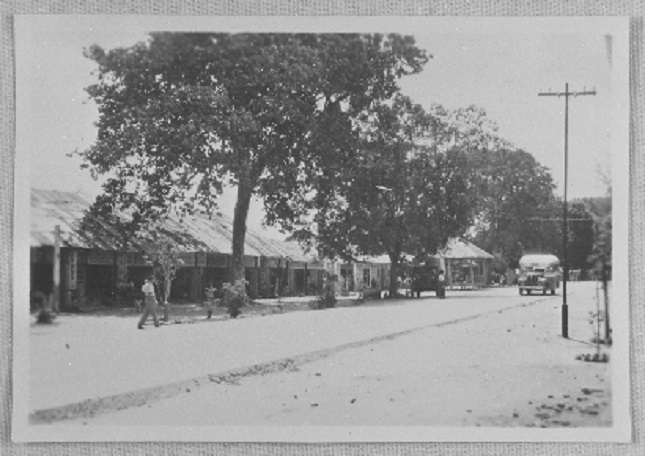
The old wooden shophouses were demolished and replaced by the distinctive low-rise HDB flats that give the village its current character. The Changi Village Hawker Centre was officially opened in 1975, providing a central hub for the street vendors who had previously operated from makeshift stalls along the roads.
As the village was being modernized, the massive land reclamation project for Changi Airport was underway just south of the settlement. Entire villages were cleared, and millions of cubic meters of sand were used to extend the coastline. When the airport opened in 1981, it permanently changed the geography of the east, leaving Changi Village as a quiet, "forgotten" corner of an island moving at breakneck speed.
Why Visit Changi Village Today?
For the modern traveler, Changi Village offers a "slow travel" experience that is rare in Singapore.
1. The Food Pilgrimage The hawker center is the undisputed heart of the village. It is famous island-wide for its Nasi Lemak. Stalls like Mizzy Corner Nasi Lemak and International Muslim Food Stall often have long queues of people waiting for a plate of fragrant coconut rice, crispy chicken wings, and spicy sambal. For a taste of the village’s military past, head to Charlie’s Corner. Founded by the father of the current owner, it began as a milk bar for British soldiers and now serves craft beers and Western comfort food in a setting filled with vintage memorabilia.
2. The Coastal Walk If you need to stretch your legs after a long flight, the Changi Point Coastal Walk is a 2.2km boardwalk that meanders along the shoreline. It’s divided into six sections, including the "Creek Walk" where you can watch bumboats head out to sea, and the "Cliff Walk," which offers elevated views of the Johor Straits. From the boardwalk, you can often see planes on their final approach to SIN, flying remarkably low over the water.
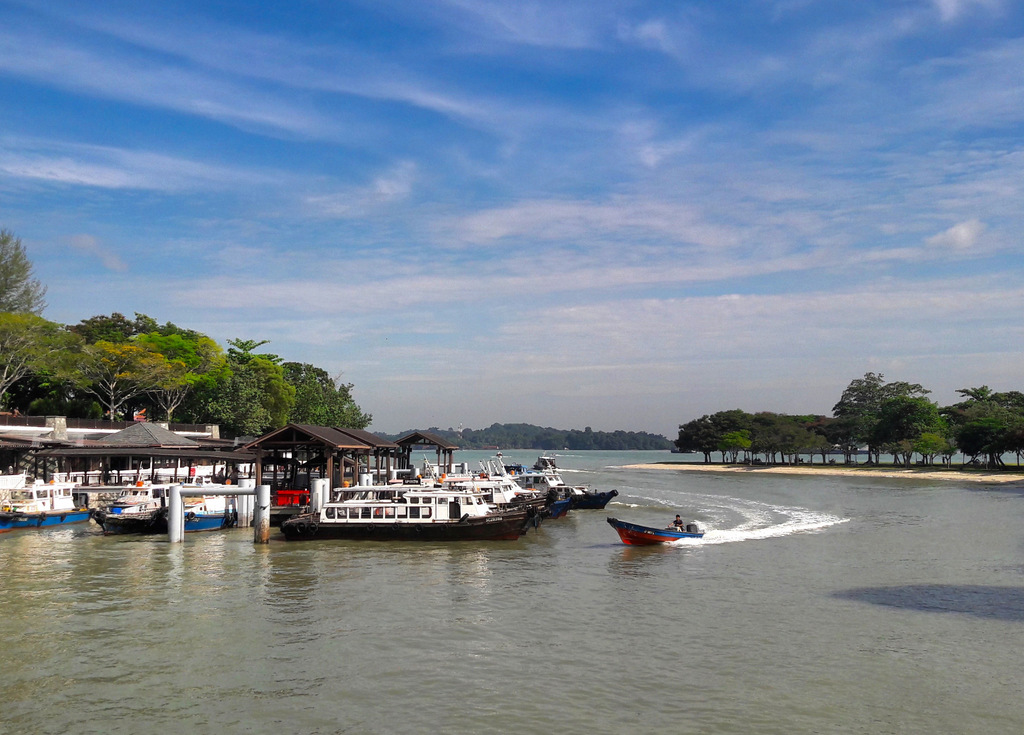
3. The Gateway to Pulau Ubin From the Changi Point Ferry Terminal , you can catch a $4 bumboat to Pulau Ubin. This small island is one of the last places in Singapore that still maintains a traditional kampung (village) lifestyle. It’s a world of granite quarries, mangrove forests, and wild hornbills—a perfect escape for nature lovers.
Practical Tips for a Changi Layover
If you find yourself with a 4- to 6-hour layover at Changi Airport, don't just stay in the lounge. Changi Village is only about 15 minutes away by taxi or private hire car.
If you're planning to explore the village or take a ferry to Pulau Ubin, you'll want to stay connected to check ferry times or book a ride back to the terminal. It’s much easier to get a Singapore eSIM before you land so you can bypass the airport Wi-Fi and navigate the village streets like a local.
To get there from the airport:
- Taxi/Grab: A 12–15 minute ride costing roughly SGD $12–$18.
- Bus: Take Bus 9 or 19 from the airport basement bus bays; the journey takes about 30–40 minutes but offers a great "scenic route" through the aviation industrial zones.
Changi Village is a reminder that history isn't just found in textbooks—it’s found in the smell of coconut rice, the salt spray of the ferry terminal, and the shade of a colonial-era rain tree. Next time you land at SIN, take a moment to look beyond the gates of the world’s best airport. There’s a whole other world waiting just down the road.