
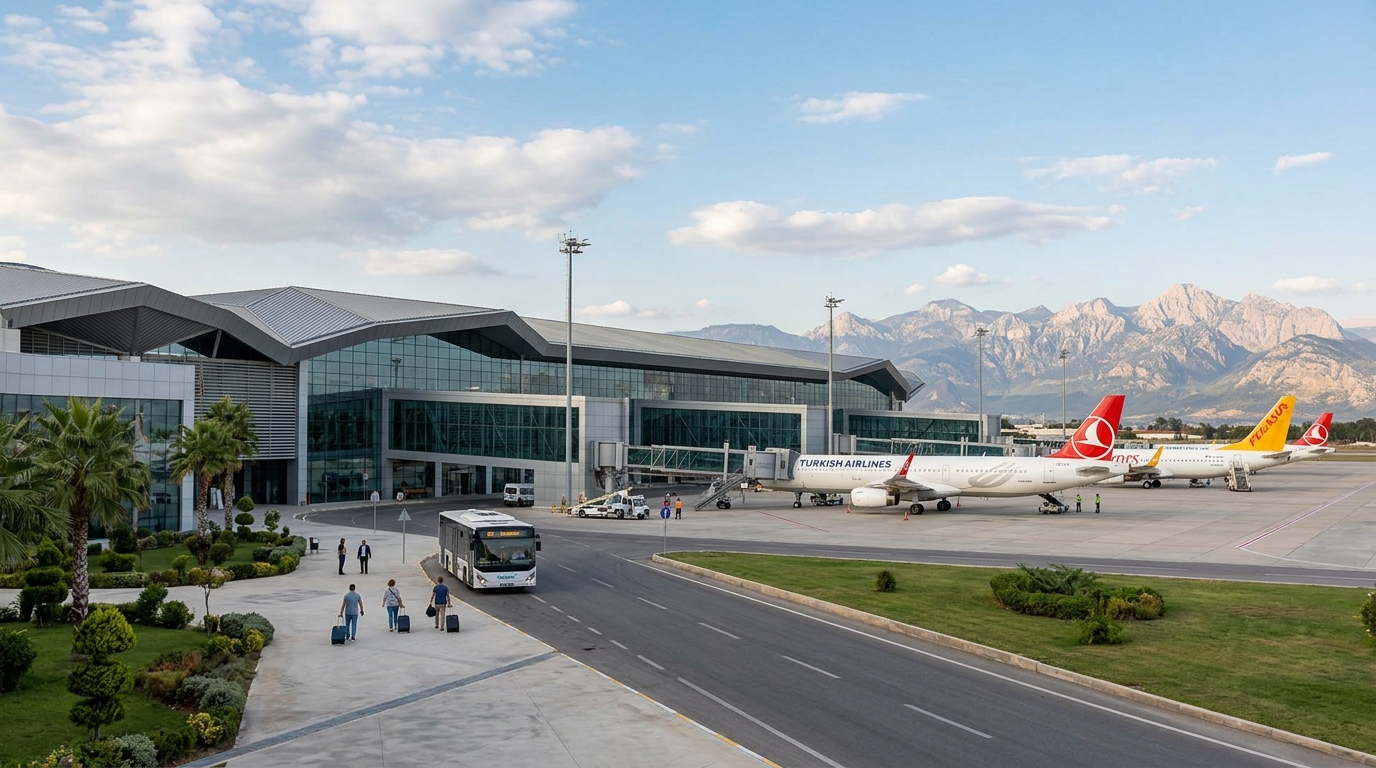
Antalya New Terminal 2 is Finally Open: How to Avoid the September Chaos
With the massive expansion phase complete this month, navigating Turkiye busiest holiday hub just changed for everyone.
Eighty million. That is the number now etched into the tarmac at Antalya Airport (AYT). As of August 22, 2026, the Phase 1 expansion of Terminal 2 is officially operational, effectively doubling the capacity of Turkiye’s primary Mediterranean gateway.
For years, Terminal 2 was the bottleneck of the Turkish Riviera—a place of long queues, sweat-dampened boarding passes, and the frantic hum of a facility pushed far beyond its limits. With the ribbon-cutting this month, the chaos was supposed to vanish. But if you’re flying into Antalya this September, don't let the "expanded capacity" headlines lull you into a false sense of security.
September in Antalya isn't the "quiet shoulder season" it used to be. It’s the sweet spot where European school holidays have ended, but the golf crowds, the "work-from-anywhere" crowd, and the Russian and German holidaymakers are still descending in droves. Navigating this newly expanded beast requires a different strategy than it did last summer.
The New T2 Layout: What’s Actually Different?
The expansion isn't just a fresh coat of paint. We’re talking about an additional 125,000 square meters of space. The check-in hall has been widened significantly, adding dozens of new desks to accommodate the surge in SunExpress and Pegasus flights that dominate this terminal.
If you are flying an international carrier like British Airways or Lufthansa, you will notice the flow has changed. The walk from the curb to the gate is longer—much longer. The "Phase 1" completion has prioritized sheer volume, meaning the distance between security and the furthest gates in the new wing can easily take 15 minutes at a brisk pace.
The biggest win for travelers is the upgraded baggage handling system. In previous years, waiting for a suitcase in T2 was a test of human endurance, often taking 60 to 90 minutes during the Saturday "changeover" rush. The new automated system claims to cut this by half. However, the sheer size of the new hall means you need to pay closer attention to the monitors; your bag might be on a belt that’s a three-minute walk from where you entered the hall.
The September Squeeze: Timing Your Arrival
September remains the busiest month for "adult" travel. The humidity drops, the sea is at its warmest, and the airport handles a staggering number of charter flights. Even with the new expansion, the "Peak Hour" remains a reality.
If your flight departs between 10:00 AM and 2:00 PM, the expansion won't save you from the initial security check at the terminal entrance. In Turkiye, you go through X-rays before you even reach the check-in desks. This is where the "September Chaos" still lives. To avoid the worst of it, aim to arrive exactly three hours before an international flight. Arriving four hours early is a mistake—you’ll just be standing in the entrance queue with the people from the flight before yours. Arriving two hours early is a gamble you will likely lose at the passport control desks, which are still scaling up their staffing levels to match the new terminal size.
Connectivity and the "Landing Hack"
The moment you clear the new, sprawling passport control area, you’ll be tempted to hunt for the airport Wi-Fi. Don't. It is notoriously fickle, often requiring a Turkish phone number for an SMS code that never arrives on a foreign SIM.
The most efficient way to handle your arrival—especially if you need to coordinate a pickup or check your PingWing flight status for a connecting leg—is to have your data ready before the wheels touch the runway. For most travelers heading into the city or toward the resorts in Belek, grabbing a Turkey-specific eSIM is the move that saves twenty minutes of faffing about in the arrivals hall. It allows you to bypass the overpriced physical SIM kiosks near the exit where the queues in September can be thirty people deep.
Ground Transportation: The D400 Reality
The airport expansion has solved the problem of storing people, but it hasn't solved the problem of moving them out of the airport precinct. The D400 highway, which connects the airport to Lara, Belek, and Side, remains a choke point.
If you are staying in the historic center, Kaleiçi , the tram (Antray) is still your best friend. It’s cheap, air-conditioned, and immune to the traffic jams that plague the airport exit road. However, if you are headed to the big resorts, you have two real choices:
- The Pre-Booked Transfer: If you see your name on a sign, you’re golden.
- Rental Cars: The rental car desks have been moved to a more spacious area, but the walk to the actual car park is now exposed to the sun for a longer stretch. If you’re planning to explore the coast toward Kaş or Fethiye, renting a car is essential, but try to send one person from your group to the desk while the others wait for the luggage to maximize your lead time.
The Counterintuitive Tip: The Terminal 1 Pivot
Here is something most travelers miss: Antalya has two international terminals (T1 and T2) and they are not connected internally. They are about 2.5 miles apart.
While T2 is the "shiny new toy" with the 2026 expansion, Terminal 1 actually remains the more "civilized" experience for certain flights. If you have the choice when booking—often dictated by the airline—Terminal 1 (which handles most Turkish Airlines international flights and some European legacies) is currently less congested because the "mass-market" charter traffic has been heavily diverted to the new T2 wing.
The surprise tip: If you find yourself with a five-hour delay in the new Terminal 2, don't sit at the gate. The new expansion includes a "hidden" outdoor terrace area near the food court. Most people stay huddled near the gates, but the terrace offers fresh air and a view of the Taurus Mountains that makes the wait feel significantly less like an airport-induced fever dream.
Beyond the Tarmac: Navigating the Region
Once you’ve successfully escaped the airport, the "September Chaos" shifts to the popular tourist sites. The expansion of the airport means more people than ever are hitting the local landmarks.
If you’re planning to visit the Antalya Museum , go on a Tuesday or Wednesday morning. Avoid the weekends entirely; the new airport capacity has made "weekend breaks" from Istanbul and Europe much more common. Similarly, if you're heading to the Land of Legends , buy your tickets online in advance. The queue at the gate is no longer just a "September thing"—it’s a "year-round thing" now that the airport can funnel 80 million people into the province.
The "New Normal" for AYT
The 2026 expansion is a marvel of engineering, but it’s also a reminder of how popular the Turkish South Coast has become. The "chaos" hasn't been eliminated; it has just been redistributed into a larger, shinier space.
Your success in navigating Antalya this month depends on your willingness to accept that the airport is now a city in itself. Wear comfortable shoes—the "gate-to-curb" distance is now comparable to London Heathrow or Dubai International. Keep your flight tracker open to monitor gate changes, as the new T2 wing is so large that a last-minute gate swap can mean a half-mile sprint.
Antalya is no longer the sleepy holiday airport of the 90s. It’s a high-volume hub that demands a bit of tactical planning. Get your data sorted, understand the T1 vs. T2 divide, and for heaven's sake, give yourself that extra hour. The Mediterranean is waiting, and it’s much better enjoyed with a cold Efes in Kaleiçi than staring at a "Final Call" screen from the wrong end of a 125,000-square-meter terminal.