
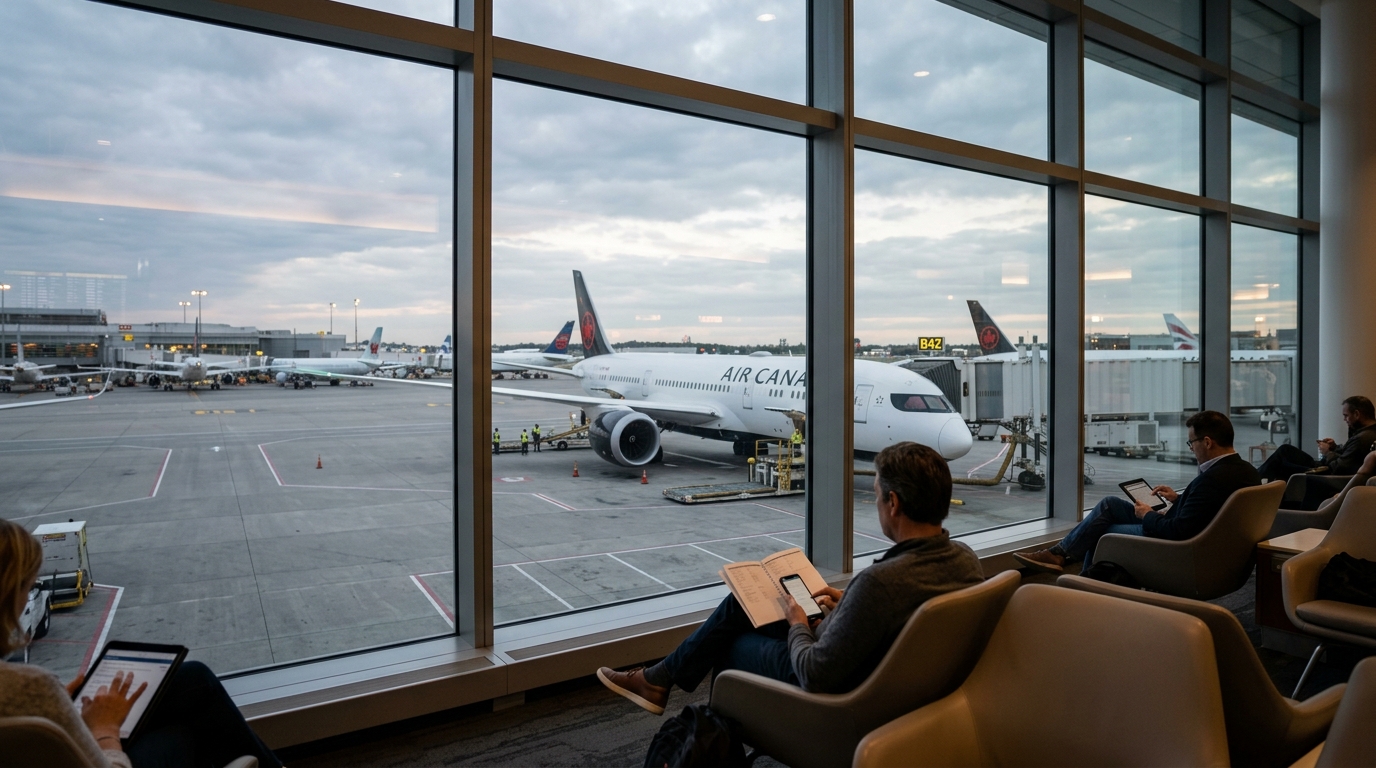
Air Canada Pilots Just Voted 98 Percent in Favor of a Strike: Your September Survival Guide
With a strike mandate officially issued, travelers need to know their refund rights and rebooking options before the September 17th deadline.
98 percent. In the world of labor relations, that isn't just a "yes" vote; it’s a tactical nuke.
On August 22, 2026, Air Canada’s pilots, represented by the Air Line Pilots Association (ALPA), delivered a staggering strike mandate. With nearly the entire pilot group ready to walk, the clock is now officially ticking toward a mid-September deadline. If a deal isn't reached by the end of the cooling-off period on September 17th, the country’s largest airline could grind to a halt, leaving thousands of passengers stranded from St. John’s to Singapore.
If you have a flight booked with Air Canada for the back half of September, you are currently holding a ticket for a plane that might never leave the tarmac. You shouldn't panic, but you definitely shouldn't wait for the "Your flight has been cancelled" email to start moving. Here is how you navigate the next three weeks without losing your mind—or your money.
The September 17th "Drop Dead" Date
The strike mandate doesn't mean pilots are walking out today. Under Canadian labor law, there is a mandatory 21-day cooling-off period that follows the end of federal conciliation. This puts the earliest potential strike date at September 17, 2024.
Expect the rhetoric to get loud. You’ll see photos of pilots picketing at YYZ (Toronto Pearson) and YUL (Montréal-Trudeau). This is posturing, but it’s posturing with teeth. Air Canada will likely offer a "goodwill" rebooking policy before the deadline hits. Take it. Usually, these policies allow you to move your flight to an earlier date or a date later in the year for free. If your trip is non-negotiable—like a wedding in Tuscany or a high-stakes meeting in London—move your flight to September 14th or 15th to beat the potential shutdown.
The APPR: Your Legal Shield
Canada’s Air Passenger Protection Regulations (APPR) are notoriously wordy, but they are your best friend right now. Here is the blunt reality: A strike is generally considered "within the carrier's control" but "required for safety purposes" or, in some specific legal interpretations, "outside the carrier's control" depending on the court.
However, recent rulings have leaned toward holding airlines accountable for labor disruptions. If Air Canada cancels your flight due to a strike, they are legally obligated to get you to your destination on the next available flight. If they can’t get you on one of their own planes within nine hours of your original departure time, they must book you on a competitor’s flight—yes, even if that means buying you a seat on WestJet, Porter, or United.
If they can’t rebook you at all, you are entitled to a full refund to your original form of payment. Do not let a gate agent or a chatbot pressure you into a travel voucher. Vouchers are where refunds go to die. Demand the cash back if you choose not to travel because of the delay. If the process becomes a nightmare, using a service like AirHelp can save you months of back-and-forth emails with corporate legalese.
The "Shadow Booking" Strategy
This is a pro move for travelers who absolutely cannot afford to be late. If you are flying for a mission-critical event, book a fully refundable backup ticket on a different airline (one not affiliated with Air Canada or Star Alliance) for roughly the same time.
Yes, it’s an upfront cost. But if the strike is averted, you cancel the backup ticket for a 100% refund. If the strike happens, you have a guaranteed seat while 100,000 other people are crashing the WestJet website trying to find a way home. It’s the ultimate insurance policy for your time.
Speaking of insurance, check your credit card's "Trip Interruption" fine print today. Most policies only cover "unforeseen" events. Since this strike vote is now public news, many insurance providers will consider a strike a "known event" for any policies purchased after today. If you haven't secured travel insurance yet, your window of opportunity is closing fast.
Where to Pivot: The Alternative Routes
If the strike happens, the Canadian skies will become a bottleneck. YYZ will be a ghost town for Air Canada tails but a mosh pit for everyone else.
- The Porter Pivot: If you’re flying domestic or to the US East Coast, Porter Airlines has been aggressively expanding their jet service out of Pearson. They aren't part of the strike, and their E195-E2 planes are actually more comfortable than Air Canada’s narrow-body fleet.
- The US Hub Bypass: If you're heading to Europe or Asia, don't look for other Canadian connections; they’ll be sold out. Look at flying south to JFK, ORD, or SEA on a separate ticket, then crossing the ocean from there.
- Ground Support: For those traveling the Toronto-Ottawa-Montreal corridor, the train is your only sane alternative. Book your VIA Rail tickets now. If you’re stuck in Toronto and need to catch a bus because the flights are grounded, the [Union Station Bus Terminal]( ) will be the busiest place in the province.
Don't Trust the Departure Board
In the 48 hours leading up to September 17th, the "official" flight status on the airline's website will be the last thing to update. Airlines hate admitting a flight is cancelled until the very last second because it triggers their compensation obligations.
Use a real-time tracker to see where your actual aircraft is. If you’re waiting at YVR for a flight to Sydney, but you see that the incoming plane from Brisbane is still sitting on the tarmac in Australia, you know you’re not leaving on time—regardless of what the "On Time" sign says at the gate.
If you do find yourself stranded at a major hub, don't just sit on the floor. If you're stuck at YYZ for an extended period, treat yourself to a day room at the [Fairmont Vancouver Airport]( ) if you're on the West Coast, or find a quiet lounge to regroup. To stay connected without paying the airline's "emergency" Wi-Fi rates, make sure you have a Canadian eSIM ready to go so you can tether your laptop and hunt for new flights without the airport's spotty public network dropping your connection.
The Surprising "Interline" Secret
Here is something the airlines won't tell you: Air Canada has "interline agreements" with dozens of carriers. During a massive disruption, their "re-protection" desk has the power to put you on a Lufthansa or ANA flight even if you didn't book through them.
The secret is to find the flight yourself. Don't go to the counter and ask "What can you do for me?" Go to the counter and say "I see there is one seat left on the United flight to Frankfurt departing at 8:00 PM. Under the interline agreement and APPR requirements, I would like you to move me to that seat." Specificity is the difference between a hotel voucher and a boarding pass.
Final Reality Check
A strike is the ultimate game of chicken. The pilots want a contract that reflects the massive pay raises seen at Delta and United; the airline wants to keep costs down as they recover from a volatile few years. Usually, a deal is reached at 11:59 PM on the final night because neither side wants to lose tens of millions of dollars a day.
But "usually" isn't a strategy.
Check your booking, know your APPR rights, and have a Plan B that doesn't involve waiting in a 4-hour phone queue. The 98% vote is a warning shot. Whether it turns into a full-blown grounding is out of your hands, but how you spend your September doesn't have to be.
If you’re feeling the stress of the unknown, just remember: the best time to fix a travel disaster is two weeks before it happens. Stay proactive, keep your tracker open, and don't be afraid to pull the trigger on a refund if the uncertainty is ruining your trip.
Safe travels—hopefully.