
The VNeID Trap: Why Your Physical ID Might Get You Denied at SGN This Week
A new enforcement phase for digital ID means travelers without the Level 2 app setup are facing massive domestic boarding delays.
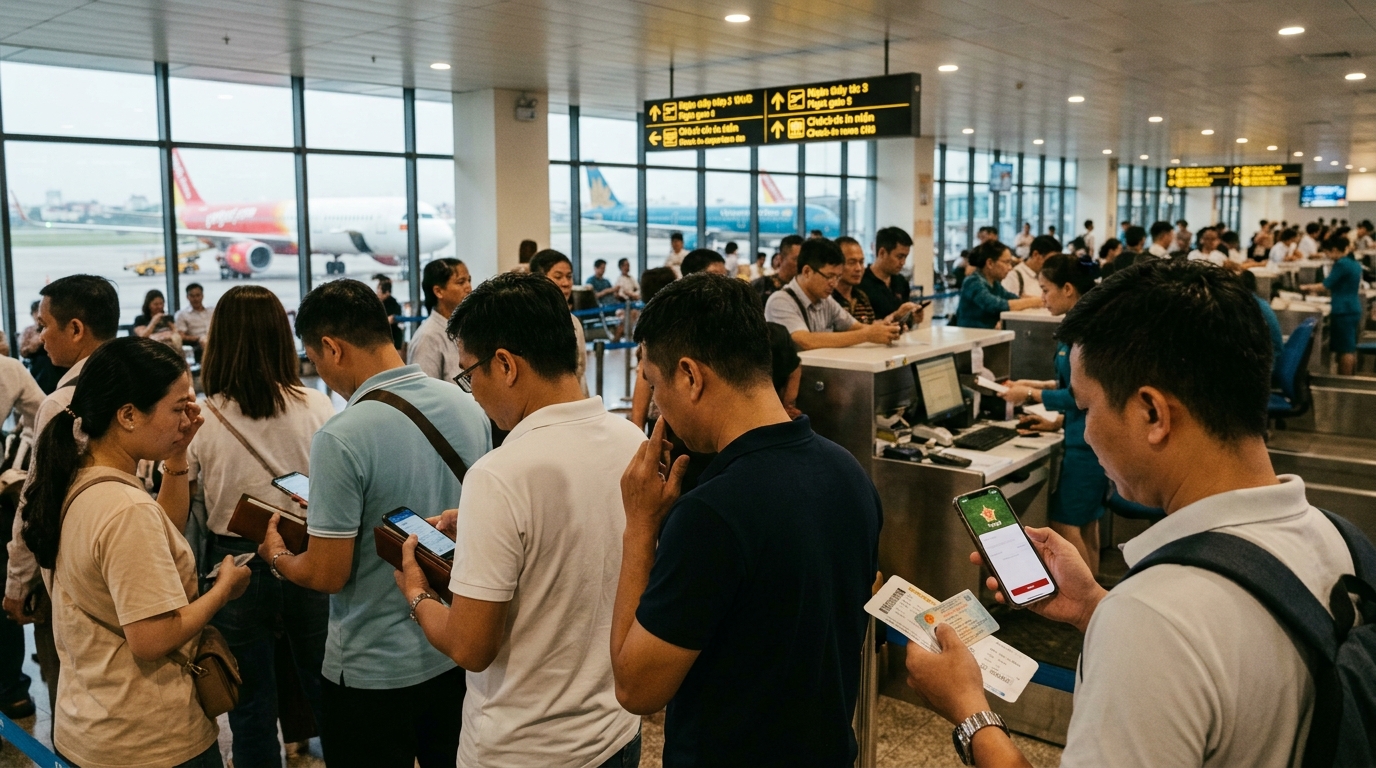
The red "X" on the scanner at Tan Son Nhat (SGN) is a sound you don’t want to hear at 5:00 AM. Especially when you’re standing in a humidity-thick security line with a 6:15 AM flight to Da Nang. You hold up your physical, chip-based citizen ID card—the one you’ve used a dozen times this year—but the officer shakes their head. They point to a printed sign taped to the plexiglass.
"VNeID Level 2," they mutter.
As of September 1, 2026, the Civil Aviation Authority of Vietnam (CAAV) has officially moved into the "full enforcement" phase of digital identification. While the law technically states physical IDs are still valid, the reality on the ground at SGN, HAN, and DAD is a different story. If you aren't set up with the VNeID Level 2 app, you aren’t just looking at a minor inconvenience; you are looking at a high probability of being denied boarding or, at the very least, being relegated to a "manual verification" line that moves with the speed of cold molasses.
The Physical ID Paradox
It feels counterintuitive. You have a government-issued, biometric, chip-based card in your hand. It is the definition of "official." However, the 2026 mandate isn’t just about verifying who you are; it’s about testing the infrastructure of a fully digital travel ecosystem.
Security checkpoints at major Vietnamese airports have been restructured. There are now "Digital Fast Lanes" equipped with QR scanners designed specifically for the VNeID Level 2 interface. These lanes are staffed and prioritized. The "Manual" lanes? They are often understaffed, serving as a bottleneck for everyone who hasn't updated their tech. I’ve seen travelers at the domestic terminal of Tan Son Nhat spend forty minutes in a queue of ten people because the manual verification process now requires extra steps of supervisor sign-offs that didn't exist last month.
Why Your Level 1 Status is a Guaranteed "Fail"
Most travelers think they are "all set" because they downloaded the app and saw their face on the screen. That is Level 1. Level 1 is useless at the airport.
Level 1 is essentially a digital photocopy. Level 2 is a verified biometric profile that has been cross-referenced with the national police database. To get Level 2, you have to physically visit a local police station (Công an) to have your fingerprints and portrait re-scanned into the system. If you haven't done that, your app won't generate the "Flight Mode" QR code that the scanners require.
If you are a Viet Kieu (Overseas Vietnamese) or a local resident who has been putting this off: the "trap" is that you cannot upgrade to Level 2 from your couch. If you realize your Level 1 status at the check-in counter, it is already too late. You are now at the mercy of the manual queue.
The Connectivity Crisis (and the Screenshot Myth)
Here is the most common mistake I see at the security gate: the "Screenshot Save."
Travelers, fearing the notoriously spotty airport Wi-Fi at SGN, take a screenshot of their VNeID QR code. They think they’re being smart. They aren’t. The VNeID system uses a dynamic QR code that refreshes every 60 seconds. A screenshot is a dead link. When the officer asks you to "refresh" the screen and you can't because your data is lagging, they will pull you out of line.
This is where having a dedicated local data connection becomes a flight-saving tool rather than a luxury. Do not rely on the "Free SGN Wi-Fi" which often requires a phone number verification that never arrives. If you’re flying into Vietnam from abroad and heading straight to a domestic transfer, make sure you have a Vietnam eSIM active before you even hit the domestic terminal. The app needs to "handshake" with the government server to validate the token. No data, no handshake, no flight.
The "Ghost" Lane Strategy
While everyone is grumbling about the digital mandate, there is a silver lining for those who are prepared. At Noi Bai (HAN) in Hanoi, the Level 2 lanes are currently the "Ghost Lanes." They are eerily empty.
Because so many people are still struggling with the registration process or are caught in the "Level 1 trap," those who actually have Level 2 are breezing through security in under three minutes. I recently watched a group of business travelers at the Vietnam Airlines Priority check-in get stuck for twenty minutes because one person didn't have the app, while a solo traveler with Level 2 bypassed the entire scrum.
If you value your time, the 15 minutes you spend at the local police station this week will save you hours of cumulative waiting over the next year.
What If the System Crashes?
Technology fails. It’s a fact of travel. If the VNeID server goes down—which has happened during peak holiday periods like Tet—the airport reverts to physical ID checks. This is the only time your physical card is your best friend.
The "Pro" move is to carry both, but lead with the app. If the app fails, you have the card as a backup. But if you lead with the card, you are choosing the slower path by default. If you are worried about the administrative mess of a missed flight due to these new security bottlenecks, it might be worth looking into travel insurance that covers "missed connections due to airport administrative delays." It’s a niche coverage, but in 2026, it’s becoming increasingly relevant in Southeast Asia.
The Surprise Hurdle: The Phone Number Match
Here is something nobody tells you until you’re at the registration desk: your VNeID account must be linked to a phone number that is registered under your exact name and ID number in the national telecommunications database.
If you are using a "junk" SIM card you bought at a street stall in District 1 , your Level 2 verification will likely fail. The police system checks if the SIM owner matches the ID owner. If you’ve been using your cousin’s old SIM or a corporate number not assigned to you, you need to head to a Viettel or VNPT store and fix that before you even attempt the VNeID upgrade.
A Final Reality Check
Vietnam is leapfrogging traditional paper-based systems at a staggering rate. The transition to VNeID Level 2 is part of a larger push to make SGN and HAN "Smart Airports." By 2027, the goal is for face-recognition gates to replace boarding pass scans entirely.
This week at SGN, the "trap" isn't the law—it's the friction. The physical ID hasn't been "banned," but it has been "deprioritized." In the world of high-volume domestic travel, deprioritization is just a polite word for a headache.
Check your app tonight. If you don't see that "Level 2" gold badge under your profile picture, change your morning plans. Visit the station. Get the scan. Because next time you’re at the gate, the most expensive thing you can own is a physical ID that nobody wants to look at.