
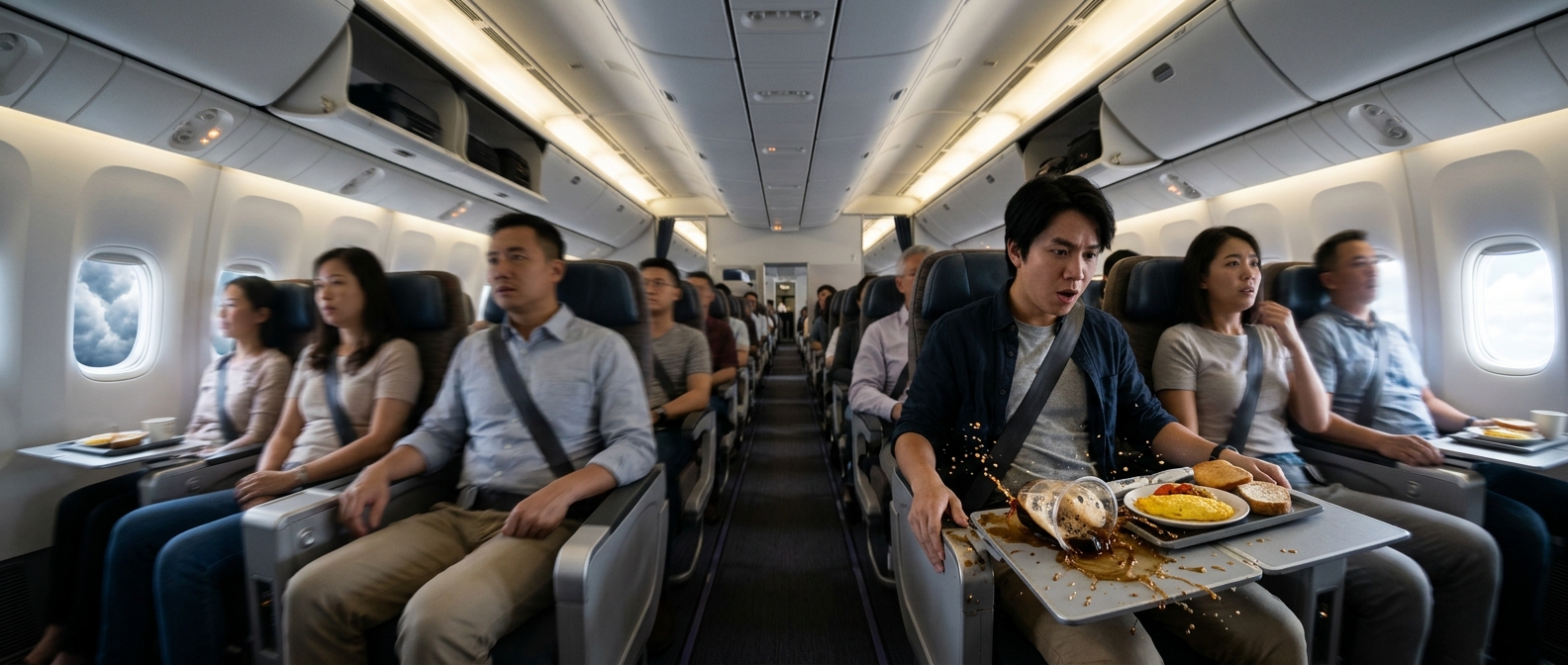
The SQ321 Effect: Why Airlines are Banning Hot Coffee During Turbulence This Week
Following recent severe turbulence incidents, major carriers are changing service protocols—here is how it affects your in-flight meal.
The SQ321 Effect: Why Airlines are Banning Hot Coffee During Turbulence This Week
Thirty seconds of weightlessness changed the way we eat at 35,000 feet. Following the severe turbulence encountered by Singapore Airlines flight SQ321, which resulted in a tragic fatality and dozens of injuries, the aviation industry has reached a tipping point regarding cabin safety. This week, as more carriers formalize their response to the Singapore Airlines turbulence news of October 2026, the "fasten seatbelt" sign has evolved from a mild suggestion into a total service blackout.
If you’re flying this week, don't expect a hot latte the moment the pilot warns of a few bumps. Major carriers including Qatar Airways, Korean Air, and Singapore Airlines have overhauled their Standard Operating Procedures (SOPs). The new mandate is simple: if the seatbelt sign is illuminated, all hot drink and meal services stop immediately. No exceptions. No "just one quick tea."
The Death of the "Precautionary" Service
For years, cabin crews operated in a gray area. If the seatbelt sign was on due to light "chop," flight attendants often continued serving coffee or distributing trays, risking their own safety to keep the schedule moving. SQ321 ended that culture of convenience.
When that Boeing 777 dropped 6,000 feet over the Irrawaddy Basin, the galley became a zone of flying projectiles. Scalding water and heavy ceramic plates became as dangerous as the turbulence itself. Now, airlines are prioritizing the "secured cabin" over the "satisfied passenger." This shift is particularly visible on long-haul routes into hubs like BKK or SIN, where Clear Air Turbulence (CAT) is becoming more frequent and less predictable due to shifting jet streams.
For travelers, this means the window of time to actually get fed is shrinking. On a six-hour flight, if you hit a two-hour patch of unstable air, you might find yourself landing with an empty stomach and a pounding caffeine-withdrawal headache.
The "Pre-Flight Fuel" Strategy
Since you can no longer rely on the flight attendant to deliver a hot meal during a bumpy cruise, your strategy must change before you even clear security. If you are flying through turbulence-prone corridors—like the Bay of Bengal or the "Intertropical Convergence Zone" near the equator—you need to treat the airport terminal as your primary dining room.
I’ve started making it a rule to eat a substantial, protein-heavy meal at the gate. If you're transiting through London, skip the soggy onboard sandwich and head to . It’s predictable, fast, and ensures you aren't at the mercy of a "service suspended" announcement three hours into your flight.
Similarly, if you're navigating the sprawling terminals of Singapore, don't wait for the onboard satay. Use your lounge access or find a spot like the to get your hot coffee fix on solid ground.
Why You Should Track Your Own Turbulence
Airlines use sophisticated weather radar, but as a passenger, you can stay one step ahead. Apps like PingWing allow you to monitor your flight's progress in real-time, but the real pro move is looking at the flight history of your specific route.
Before you fly, check the recent history of your flight number. If the last three days of the SIN-LHR route show consistent diversions or altitude changes over specific waypoints, you can bet the seatbelt sign will be on for those sectors. This is when I plan my "digital blackout"—I make sure all my work is saved and my laptop is stowed before we hit the predicted rough air.
If you're worried about the logistical headache of a turbulence-related diversion or a significant delay, having comprehensive travel insurance is no longer optional; it’s a basic requirement for the modern frequent flyer. Most policies now have specific clauses for "missed connections due to weather-related service changes," which can save you thousands if a pilot decides to land early because of cabin safety concerns.
The Counterintuitive Tip: Order the "Cold" Special Meal
Here is something most travelers haven't considered: the rise of the "Cold Tray" preference.
In response to the new safety protocols, some airlines are experimenting with meal tiers. If the seatbelt sign is on, they may still be able to hand out pre-packaged cold boxes (think wraps, salads, and chilled grain bowls) because these don't require the use of the ovens or the pouring of hot liquids.
When you manage your booking, check if there is a "Raw Vegetable" or "Fruit Platter" option. While it sounds less indulgent than the braised short rib, it is far more likely to be delivered to your seat during a moderately bumpy flight. While the rest of the cabin is waiting for the "all clear" to get their hot tray, you’ll be finished with your meal and ready to sleep.
The Psychology of the Crew (and How to Read It)
Pay attention to the flight attendants, not the "Fasten Seatbelt" sign.
There are two types of seatbelt sign activations. The first is the "Pilot's Discretionary" sign—the pilot sees a bit of green on the radar and flips the switch just in case. During this time, the crew might still be moving around, though they’ve stopped serving hot drinks.
The second is the "Immediate Seating" chime. If you hear the pilot say, "Flight attendants, please be seated immediately," that is your cue to not just buckle up, but to clear your tray table entirely. In the post-SQ321 world, crews are trained to drop what they are doing and sit in the nearest available seat—sometimes even an empty passenger seat—to avoid being thrown against the ceiling.
If you see your flight attendant looking out the window with a focused expression or checking their own jumpseat harness, stop asking for water. They are processing safety data you can't see.
Staying Connected During the "Wait"
Turbulence doesn't just affect your stomach; it affects your schedule. When service is suspended, it often precedes a change in flight path to find smoother air, which can add 30 to 45 minutes to your arrival time.
I always ensure my international eSIM is activated and ready to go the moment we touch down. There is nothing worse than being stuck in a "service suspended" cabin, knowing you’re going to be late for your meeting, and not being able to coordinate a new pickup because you’re waiting to buy a local SIM card at the airport.
A New Standard for the "New Normal"
The "SQ321 Effect" isn't just a temporary reaction to a news cycle; it’s a permanent shift in the philosophy of flight. We are moving toward an era where the cabin is treated more like a cockpit—a place where safety takes absolute precedence over hospitality.
We might complain about the lack of a mid-flight tea, but the alternative is far worse. I’ve seen the photos of the SQ321 cabin—the oxygen masks hanging, the ceiling panels ripped open, the wine splattered across the luggage bins like a crime scene. A lukewarm cup of coffee is a small price to pay for ensuring everyone on board walks off the plane under their own power.
Next time you’re at the airport, grab that double espresso at the gate. Pack a few extra snacks in your carry-on. And when that seatbelt sign pings on over the mountains, don't roll your eyes. Just tighten the strap, stow your tablet, and remember that "boring" flights are the only ones worth having.
If you're already planning your next trip and want to avoid the most turbulent-prone seasons, try using an AI Trip Planner to find the best routes and times to fly. It’s a lot easier to stay calm at 38,000 feet when you know you’ve done the homework before even leaving your house.