
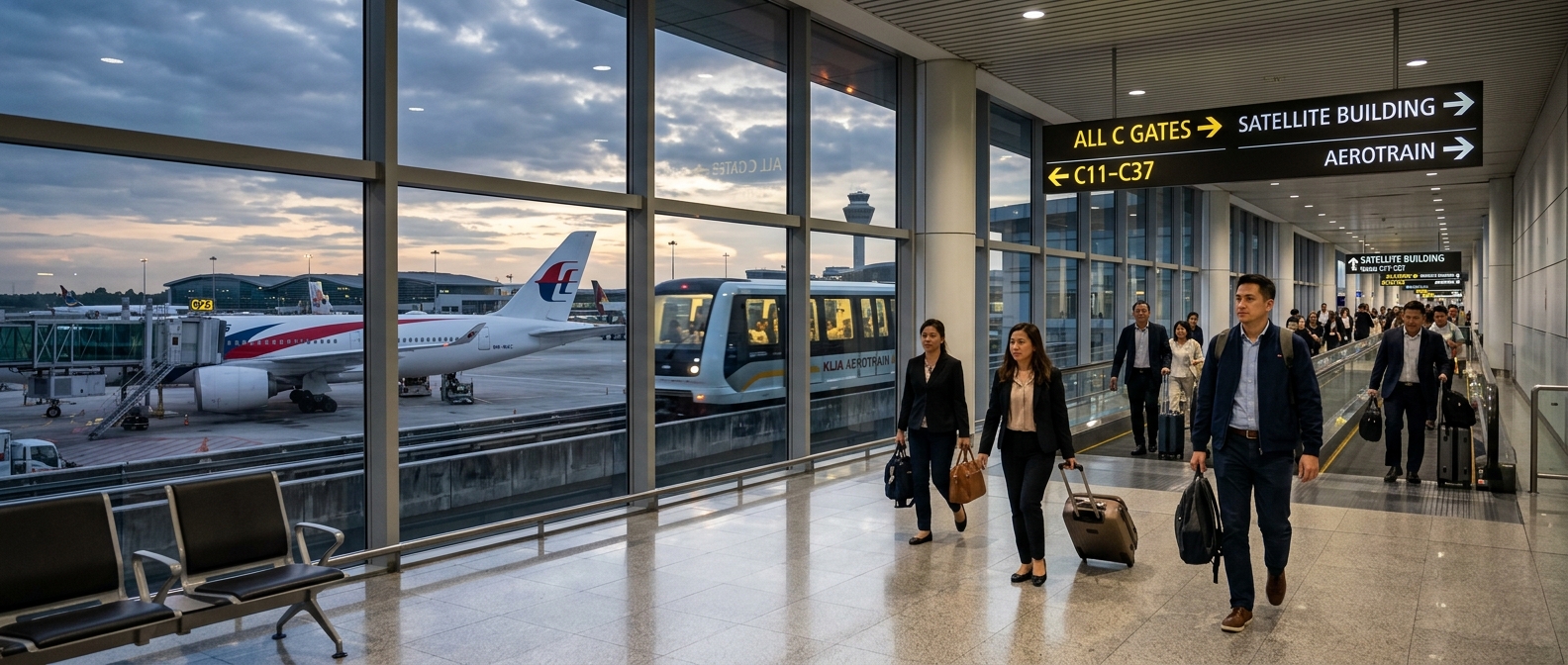
The Aerotrain is Back: How to Navigate KLIA Terminal 1 Without the Shuttle Bus Hassle
After years of maintenance delays, the KLIA Aerotrain has finally returned to full 24/7 service, changing how you time your gate arrival.
The hum is back. If you’ve flown through Kuala Lumpur International Airport (KLIA) anytime in the last three years, you know the silence that preceded it. That eerie, frustrating void where a sleek automated mover should have been, replaced instead by a fleet of diesel buses and a lot of confused travelers sweating in the tropical humidity.
As of August 12, 2026, Malaysia Airports Holdings Berhad (MAHB) has officially restored the KLIA Aerotrain to full, 24/7 service.
This isn't just a minor infrastructure update. For anyone who has spent the last few years sprinting from the bus lounge to Gate C11 while carrying two carry-ons and a duty-free bag, this is a total recalibration of the KLIA experience. The "bus era" was a logistical bottleneck that added a mandatory 15-to-20-minute buffer to every connection. Now, that buffer has evaporated. But navigating Terminal 1 efficiently in this post-restoration world requires more than just following the signs.
The Death of the "Shuttle Bus Shuffle"
For three years, the journey between the Main Terminal Building (MTB) and the Satellite Building—where most international long-haul flights depart—was a test of patience. You had to descend two escalators, wait in a queue that often snaked past the restrooms, and board a bus that felt more like a city commute than a premium airport transfer.
The return of the Aerotrain cuts the transit time between buildings to under three minutes.
The new Alstom-built trains are faster, smoother, and designed with higher frequencies. If you’re flying with Malaysia Airlines, Emirates, or Qatar Airways, you’re likely departing from the Satellite Building. In the "old" days (last month), I’d tell travelers to leave the Golden Lounge at least 40 minutes before boarding. Today? You can push that to 20 minutes and still have time to grab a coffee.
How to Time Your Gate Arrival Now
The biggest mistake travelers make at KLIA Terminal 1 is underestimating the walk after the train ride. The Satellite Building is a cross-shaped layout. If the Aerotrain drops you at the center, and your flight is at Gate C31 or C37, you still have a significant hike ahead of you.
Here is the new timeline for a stress-free departure:
- Immigration & Security (MTB): 15–30 minutes. KLIA has significantly improved its autogate access for 63 nationalities, including the UK, US, and Australia.
- The Train Ride: 3 minutes. Trains now run every 90 seconds during peak hours (07:00–10:00 and 18:00–22:00).
- The Satellite Trek: 5–10 minutes. This is the part people forget. The gates are spread out.
If you’re arriving on an international flight and connecting to a domestic destination (like Penang or Langkawi), the Aerotrain is your best friend. You’ll land at the Satellite Building, take the train to the MTB, and then head down to the Domestic Pier (G and H gates).
Pro Tip: If you see a massive crowd at the main Aerotrain platform, look for the secondary platform access. Most travelers follow the herd to the first set of doors. Usually, the rear car of the train is half-empty because people are too impatient to walk ten extra meters down the platform.
The "Jungle" Alternative You’re Ignoring
Most people treat the Aerotrain as the only way to get across. It isn’t. While the shuttle buses are being phased out of primary service, they remain as a backup. But there is a third way that most frequent flyers keep to themselves: the KLIA Jungle Boardwalk .
Located right in the center of the Satellite Building, this is a literal patch of rainforest enclosed in the airport. If you have a long layover and the air-conditioned recycled air is starting to wear you down, skip the shops. Walk through the boardwalk. It’s humid, it smells like wet earth, and it’s the most grounding experience you can have between a 12-hour flight from London Heathrow (LHR) and a hop to Sydney (SYD).
Connectivity and Logistics: Don't Wait for the Wi-Fi
KLIA’s free Wi-Fi has a reputation for being... temperamental. It’s fine for a quick WhatsApp message, but if you’re trying to check your gate status on PingWing or book a ride into the city, it often drops out exactly when you need it—like when you're moving between buildings on the Aerotrain.
I’ve learned the hard way that waiting until you land at KLIA to "figure out the data situation" is a recipe for standing awkwardly near a pillar for twenty minutes. If you're heading into Kuala Lumpur, grab a Malaysia eSIM before you even board your first leg. Having your data kick in the moment the wheels touch the tarmac means you can bypass the overpriced SIM kiosks in the arrivals hall and head straight for the KLIA Ekspres or a Grab car.
Where to Hide: Lounges and Naps
The restoration of the Aerotrain makes the Satellite Building much more accessible, which means the lounges there are going to get busier.
- The Golden Lounge (Satellite): Still the flagship. It has a laksa bar that is practically a pilgrimage site for Oneworld frequent flyers.
- Sama-Sama Express : If your layover is over six hours, don't try to sleep on the terminal chairs. This transit hotel is located inside the Satellite Building (near Gate C5). You don't need to clear immigration to use it.
- Plaza Premium Lounge: Located near Gate C11. It’s reliable, but since the Aerotrain returned, the "walk-in" crowds have increased. Book ahead if you’re traveling during the northern summer holidays.
The Surprising Tip: The "Reverse Transit" Hack
Here is something most travelers don’t realize: You can use the Aerotrain to access better food even if your flight departs from the Main Terminal Building.
Often, regional flights (within Southeast Asia) depart from the MTB (A and B gates). The food options there are... fine. But the Satellite Building has the high-end stuff. Because the Aerotrain is now back to 24/7 service and takes only minutes, you can clear security, jump on the train to the Satellite Building, have a proper meal at a place like Flight Club, and then take the train back to your gate in the MTB.
Just make sure you keep an eye on your flight's "Final Call" status. The train is fast, but it can't teleport you through a boarding queue.
Beyond the Airport: Getting to KL
Once the Aerotrain has whisked you back to the MTB and you’ve cleared immigration, you have three choices to get to the city:
- KLIA Ekspres: 28 minutes to KL Sentral. It’s non-negotiable if you’re traveling during rush hour (08:00–10:00 or 17:00–19:00).
- Grab: The Malaysian Uber. It’s cheap, but the "Level 1" pickup point at KLIA is a chaotic gauntlet.
- Private Transfer: If you’re traveling with a family or a lot of gear, booking a dedicated airport transfer is often only marginally more expensive than two Grabs and infinitely less stressful.
The New KLIA Standard
The return of the Aerotrain isn't just about a train. It’s about KLIA regaining its status as a top-tier global hub. For years, it felt like a "B-tier" experience compared to Singapore’s Changi (SIN) or Bangkok’s Suvarnabhumi (BKK), purely because of the transit friction.
With the trains running again, the airport feels cohesive. You can move from the check-in counters to the Satellite gates in a fluid motion. You can actually enjoy the architecture of the Kisho Kurokawa-designed terminal without being diverted into a bus pen.
My advice? Don't let the old "KLIA is a mess" reviews from 2024 and 2025 scare you. The friction is gone. Just remember to pack your walking shoes—the train is fast, but the Satellite Building is still huge.
And seriously, get that laksa at the Golden Lounge. It’s the only thing that hasn't changed, and thank goodness for that.